
Energy Efficiency Ratings on Appliances, Decoded

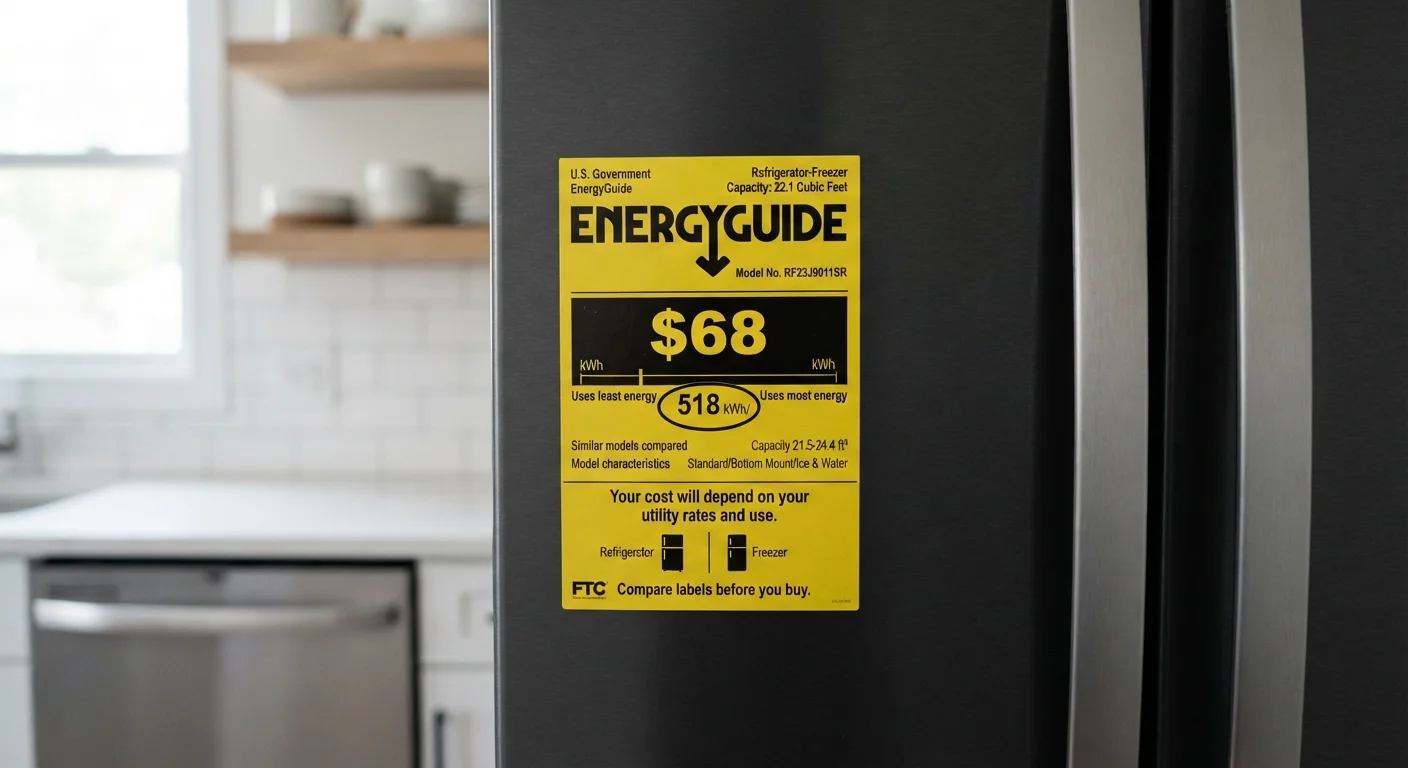
Photo: NemoFinds.com | Search, Explore, Read. editorial
Key Takeaways
- The yellow EnergyGuide label is federally required on most major appliances and shows estimated annual energy cost.
- ENERGY STAR is a voluntary certification for appliances that exceed minimum federal efficiency standards.
- Lower estimated annual cost on a EnergyGuide label means less energy used, not just a lower sticker price.
- Efficiency ratings are calculated under standardized conditions — actual costs depend on local utility rates and usage habits.
- A more efficient appliance may cost more upfront but can offset that through lower operating costs over its lifespan.
What the Yellow EnergyGuide Label Is Telling You
The bright yellow EnergyGuide label is hard to miss on appliances at any home goods store. It's not promotional — it's a federally mandated disclosure, required by the Federal Trade Commission (FTC) on most major home appliances. Think of it as a standardized nutrition label for energy use.
The label has three main elements:
- Estimated annual energy cost: The large dollar figure in the center. This is calculated using the DOE's standardized usage assumptions and a national average utility rate. Your actual cost will differ based on local energy prices and how you use the appliance.
- Estimated yearly electricity or gas use: Shown in kilowatt-hours (kWh) for electric models or therms for gas. This raw number lets you calculate costs using your own utility rate.
- Comparison scale: A horizontal bar showing where this model sits relative to the least and most efficient similar products currently available. A model on the left end uses less energy; one on the right uses more.
When comparing two appliances, look at both the estimated annual cost and where each falls on the comparison scale — not just the sticker price. See our guide to reading spec sheets for more on making sense of technical product information.
~$450
Average annual US household appliance energy cost
The US Energy Information Administration estimates appliances and electronics account for a significant share of home energy bills, with refrigerators and clothes washers among the largest contributors.
10–50%
Typical efficiency gain for ENERGY STAR certified appliances
According to the EPA, ENERGY STAR certified products are generally required to be 10% to 50% more efficient than the minimum federal standard, depending on product category.
80+
Product categories covered by ENERGY STAR
The ENERGY STAR program spans appliances, electronics, lighting, HVAC systems, building materials, and commercial equipment, according to the EPA.
ENERGY STAR: What the Certification Actually Means
ENERGY STAR is a voluntary program administered by the US Environmental Protection Agency (EPA). When a product earns the ENERGY STAR mark, it means it has met efficiency criteria that go beyond the federal minimum standards — typically by a meaningful margin, though the exact threshold differs by product category.
Key things to understand about ENERGY STAR:
- It's a floor, not a ceiling. Certification means an appliance is meaningfully more efficient than the baseline — but there may be even more efficient models in the same category that also carry the mark.
- Categories have different criteria. A washing machine and a smart thermostat are certified under entirely separate standards. The EPA publishes these specifications publicly if you want to compare them.
- Third-party verification exists. Manufacturers must have products tested by accredited laboratories. The EPA also conducts market surveillance to check that certified products actually perform as claimed.
Check the EPA's ENERGY STAR Product Finder
ENERGY STAR certification is a useful shorthand when comparing appliances at a similar price point. It's less useful as a standalone reason to choose one product category over another — a well-designed non-certified appliance used infrequently can still have a lower energy footprint than a certified one running constantly.
How to Use These Ratings When Thinking About an Appliance Purchase
Efficiency ratings are most useful as a comparative tool, not an absolute verdict. Here's a practical framework for applying them:
- Identify your actual usage pattern. A household running its dishwasher twice daily gets far more value from efficiency gains than one running it twice a week. High-use appliances — refrigerators, water heaters, clothes washers — are where efficiency improvements have the most financial impact over time.
- Factor in your local utility rate. The EnergyGuide label uses a national average energy cost. If your electricity rate is significantly above or below that average, recalculate using the kWh figure and your actual rate.
- Consider the full lifespan. Operating costs accumulate over years. Our appliance lifespan reference guide can help you estimate how long a given product typically stays in service, which informs how many years of energy savings you might reasonably expect.
- Use the comparison scale, not just the dollar figure. The dollar estimate shifts with energy prices. The relative position on the comparison bar — where this model sits against similar products — is a more durable indicator of efficiency.
This article is for general informational purposes only. Actual energy costs depend on your specific utility rates, usage habits, and local conditions. Consult your utility provider for personalized usage data.
Frequently Asked Questions
The content on this site is for informational purposes only and is not a substitute for professional advice. Always consult a qualified professional for guidance specific to your situation.