
Renovation vs. Repair: How Homeowners Decide Where to Draw the Line

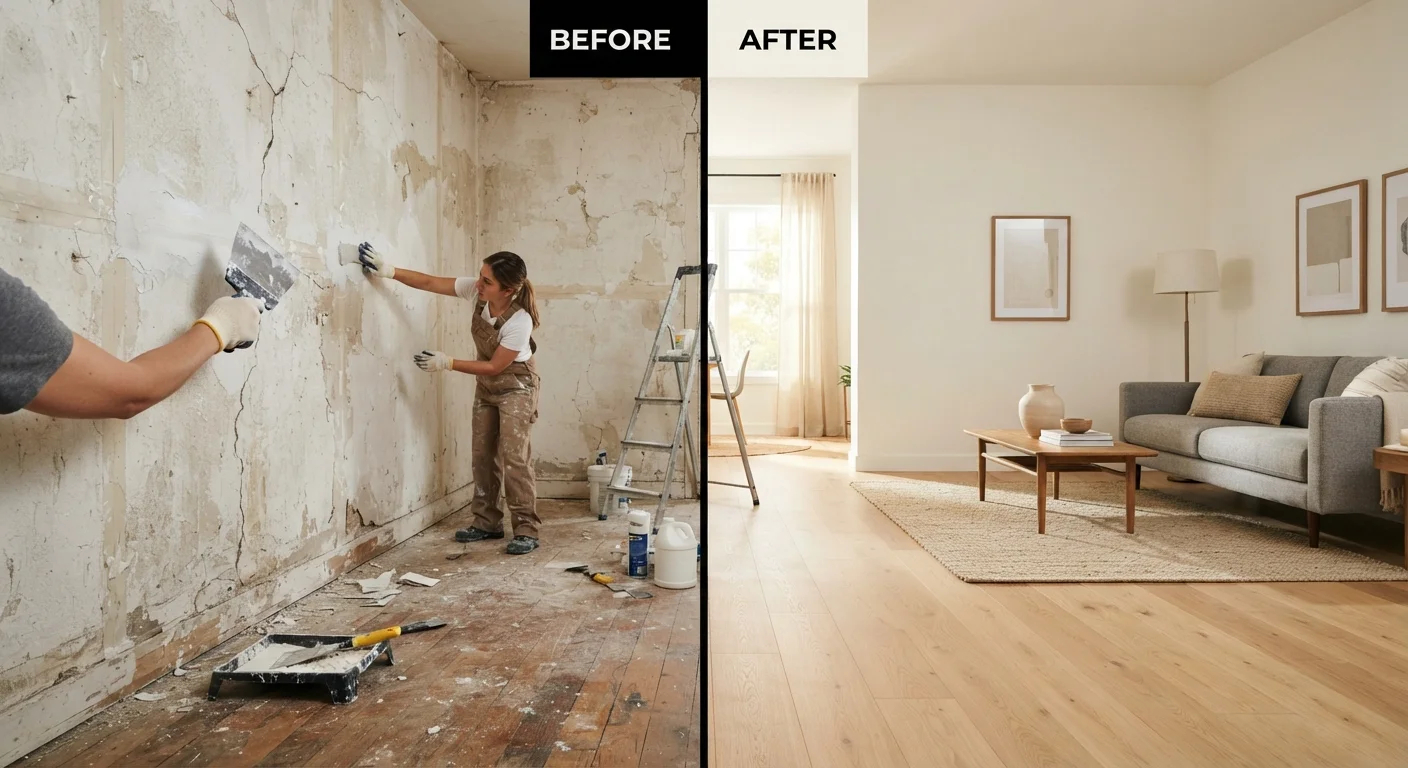
Photo: NemoFinds.com | Search, Explore, Read. editorial
Key Takeaways
- Repairs address specific failures; renovations improve or transform a space beyond its original condition.
- The 50% rule of thumb suggests replacing a system when repair costs exceed half its replacement value.
- Safety issues, structural concerns, and code violations typically push decisions toward renovation or full replacement.
- Renovations can affect your home insurance coverage — review your policy after major work.
- Neither choice is universally better; context, budget, and home age all shape the right decision.
Lower upfront cost in most cases
A targeted repair is almost always cheaper in the short term than full replacement or renovation, preserving cash for other priorities.
Faster resolution with less disruption
Repairs can often be completed in hours or days; renovations can mean weeks of contractor schedules, permits, and living in a work zone.
Sensible when systems have life left
If a component is relatively new and the failure is isolated, repairing it is often the straightforward financially sound choice.
Avoids over-improving for the neighborhood
In some markets, renovating beyond what comparable homes offer can be difficult to recoup in resale value — repairs keep you from over-investing.
Repeat repairs signal a deeper problem
Patching symptoms without addressing root causes often leads to escalating costs over time, sometimes exceeding what renovation would have cost upfront.
Old systems may be uninsurable or non-compliant
Some insurers restrict or exclude coverage for homes with outdated electrical panels or aging plumbing materials, making repair-only approaches a coverage risk.
Missed opportunity to modernize efficiency
Older HVAC, insulation, or window systems may be functional after repair but still significantly less energy-efficient than current alternatives.
Piecemeal fixes can reduce resale appeal
Buyers and inspectors often notice a pattern of repeated repairs, which can raise questions about overall home condition during a sale.
What Actually Separates a Repair from a Renovation
The words get used interchangeably, but they describe different scopes of work. A repair restores something to its previous functional state — patching a leaky pipe, replacing a broken window pane, fixing a tripped breaker. A renovation changes or improves beyond the original: rewiring an entire floor, replacing a roof system, reconfiguring a bathroom layout.
The distinction matters because the decision framework is different. Repairs are typically reactive and bounded. Renovations require planning for permits, contractor timelines, and often a larger disruption to daily life. Understanding which category your situation falls into helps you evaluate quotes, set realistic budgets, and avoid scope creep — the common trap where a "small fix" gradually expands into a major project without anyone explicitly deciding to go that route.
If you're early in homeownership and still figuring out where to direct your energy, this room-by-room priorities guide can help you triage what genuinely needs attention first.
The Core Factors That Shape the Decision
Most repair-or-renovate decisions hinge on a handful of concrete variables:
- Age and remaining lifespan of the system. A water heater with two years of expected life left isn't worth a significant repair investment. A five-year-old HVAC unit usually is.
- The 50% guideline. A widely cited rule of thumb holds that if a repair costs more than 50% of what replacement would cost, replacement is often the wiser financial move. This isn't a hard law, but it's a useful starting point for systems like furnaces, roofing, and major appliances.
- Frequency of the problem. One-time failures often warrant repair. Recurring issues — a basement that floods every heavy rain, a heating system that needs service every winter — suggest the underlying problem hasn't been solved.
- Safety and code compliance. Knob-and-tube wiring, asbestos insulation, and load-bearing structural damage are rarely "patch and move on" situations. When health or structural safety is at stake, the calculus shifts decisively toward renovation or replacement.
- Future plans for the property. If you're planning to sell within a few years, the return on a renovation investment matters. If you're staying long-term, comfort and functionality carry more weight than resale value.
50%
Repair cost threshold vs. replacement value
A commonly cited rule of thumb in home maintenance guidance suggests that when repair costs approach or exceed half the cost of replacement, replacement often becomes the more economical long-term choice.
1–3%
Of home value recommended for annual maintenance
Many housing finance resources suggest budgeting roughly 1–3% of a home's value annually for maintenance and repairs to avoid deferred-maintenance accumulation.
It's also worth keeping a seasonal maintenance checklist in your routine — catching small issues early is consistently the least expensive option.
Pros and Cons of Prioritizing Repairs
Repairs are the default choice for most homeowners most of the time — and for good reason. But they're not always the right call.
Lower upfront cost in most cases
A targeted repair is almost always cheaper in the short term than full replacement or renovation, preserving cash for other priorities.
Faster resolution with less disruption
Repairs can often be completed in hours or days; renovations can mean weeks of contractor schedules, permits, and living in a work zone.
Sensible when systems have life left
If a component is relatively new and the failure is isolated, repairing it is often the straightforward financially sound choice.
Avoids over-improving for the neighborhood
In some markets, renovating beyond what comparable homes offer can be difficult to recoup in resale value — repairs keep you from over-investing.
Repeat repairs signal a deeper problem
Patching symptoms without addressing root causes often leads to escalating costs over time, sometimes exceeding what renovation would have cost upfront.
Old systems may be uninsurable or non-compliant
Some insurers restrict or exclude coverage for homes with outdated electrical panels or aging plumbing materials, making repair-only approaches a coverage risk.
Missed opportunity to modernize efficiency
Older HVAC, insulation, or window systems may be functional after repair but still significantly less energy-efficient than current alternatives.
Piecemeal fixes can reduce resale appeal
Buyers and inspectors often notice a pattern of repeated repairs, which can raise questions about overall home condition during a sale.
The Insurance and Financial Dimension
One factor homeowners sometimes overlook: significant renovations can affect your home insurance coverage. Adding square footage, upgrading electrical systems, or finishing a basement can change your home's replacement value — meaning your existing policy may no longer cover a full rebuild. It's worth reviewing your coverage after any major project. This guide to annual policy reviews walks through what to check and when.
Renovations and Your Insurance Policy
On the financing side, repairs are typically paid out of pocket or through a home emergency fund. Renovations often involve home equity loans, lines of credit, or contractor financing — each with its own cost and risk profile. General information on managing home-related debt is available through resources like the Saving & Debt hub. For decisions involving your own finances, consulting a licensed financial adviser is always a sound step.
The repair-vs.-replace logic applies beyond the home too. The same trade-off analysis shows up with older vehicles, where cumulative repair costs eventually challenge the case for holding on.
The content on this site is for informational purposes only and is not a substitute for professional advice. Always consult a qualified professional for guidance specific to your situation.