
Automating Your Savings: The Mechanics Behind Consistent Habit-Building

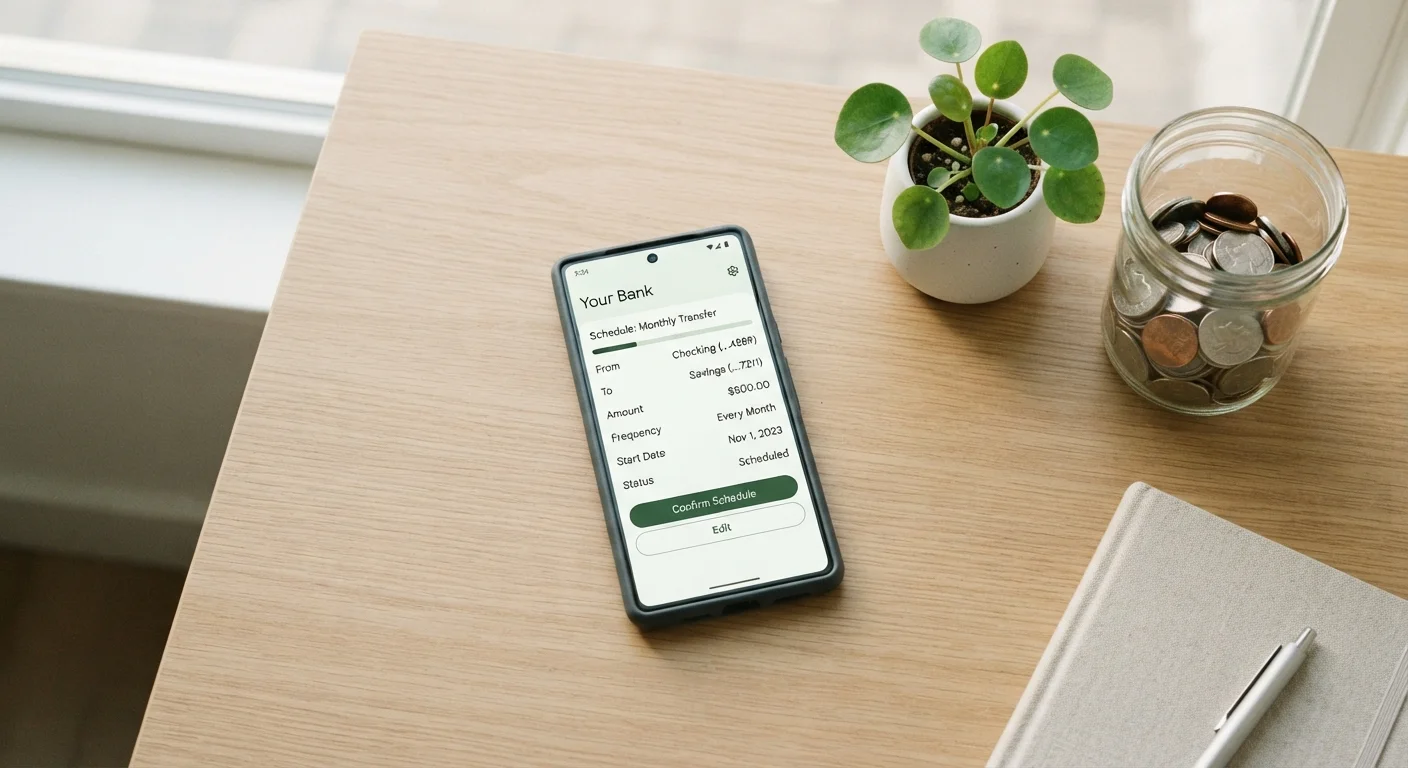
Photo: NemoFinds.com | Search, Explore, Read. editorial
Key Takeaways
- Automated transfers move money before you can spend it, removing the need for daily discipline.
- Even small recurring amounts build meaningful savings over time through consistency.
- Most banks and credit unions let you set up automatic transfers at no cost.
- Aligning transfer dates with your paycheck reduces the risk of overdrafts.
- Separate savings accounts reduce the temptation to dip into saved funds.
Why Automation Works Where Willpower Doesn't
Most people intend to save but transfer money only after spending — which means irregular amounts reach savings, or nothing does. Automatic transfers invert this sequence: funds move to savings immediately after income arrives, and you spend what remains. This 'pay yourself first' structure removes the daily decision entirely.
The behavioral science behind this is straightforward. Willpower is a finite resource that competes with every other decision in your day. Automation eliminates the decision. Research on default effects consistently shows that people stick with preset options far more reliably than they act on intentions alone — the same principle that makes employer retirement contributions so effective when they're opt-out rather than opt-in.
Automation also combats mental accounting errors. When savings sits in the same account as spending money, the brain tends to treat the full balance as available. A separate account with an automatic inflow changes what feels 'available' — a meaningful psychological shift. For a broader view of building financial structure, see our complete personal budgeting guide.
Name Your Savings Account After Its Goal
What You'll Need Before You Start
Setting up automation takes less than 30 minutes if you have the right accounts in place. Review the prerequisites and tools below before moving to the steps.
What you will need
Online or Mobile Banking Portal
Used to schedule and manage recurring automatic transfers between your accounts.
Separate Savings Account
Receives your automated transfers and keeps saved money distinct from spending money.
Budget Worksheet or App
Helps you calculate how much you can realistically automate without straining your checking balance.
If your savings goals include irregular predictable expenses — car maintenance, annual insurance premiums, holiday spending — consider pairing your general savings automation with a sinking fund strategy that routes separate smaller amounts toward each specific goal.
Step-by-Step: Setting Up Your Automated Transfer
Avoid Overdrafts When Automating
Calculate a sustainable transfer amount
Before touching your bank's settings, spend ten minutes reviewing last month's take-home income and essential expenses — rent, utilities, groceries, debt minimums, and transportation. Subtract those from your income. The remaining discretionary amount is your ceiling. Start your automated savings at 10–20% of that discretionary figure, not your total income. This keeps the transfer realistic and avoids the instinct to cancel it after the first tight week.
If you're new to intentional saving, our introduction to personal savings walks through basic goal-setting and account types before you automate anything.
Open or designate a dedicated savings account
Your automated transfer needs a destination that is separate from your everyday checking account. Using the same account for spending and saving makes it too easy to mentally reclaim the money. If you don't already have a separate savings account, open one — many institutions allow this online in under five minutes. Consider comparing how different account structures affect your interest earnings; our article on high-yield vs. traditional savings accounts explains the practical trade-offs.
Set up the recurring transfer in your bank's system
Log in to your bank's online or mobile portal and locate the transfers section — usually under 'Move Money,' 'Transfers,' or 'Pay & Transfer.' Select your checking account as the source and your savings account as the destination. Choose a recurring frequency — weekly, biweekly, or monthly — and set the start date to one or two business days after your next expected paycheck deposit.
If your bank does not offer recurring transfers online, call or visit a branch to request a standing transfer instruction. Credit unions often accommodate this easily.
Confirm the first transfer and monitor for two pay cycles
After the first scheduled transfer executes, verify that: (1) your checking account was debited correctly, (2) your savings account received the funds, and (3) your remaining checking balance covers all pending bills. Watch the second cycle as well. Two successful cycles without cash-flow strain is a strong signal the amount is calibrated correctly.
Increase the amount incrementally over time
Once the transfer feels invisible — meaning you've stopped noticing it — consider a modest increase, typically $10–$25 per cycle. Behavioral economists sometimes call this 'save more tomorrow': tying increases to future raises or windfalls rather than current sacrifice. If you receive a pay raise, direct a portion of the net increase toward your automated transfer before lifestyle expenses expand to absorb it. This incremental approach is also discussed in the context of early investing habits that compound over time.
Keeping the System Working Over Time
An automated transfer is a starting point, not a permanent setting. Life changes — income shifts, new expenses, cleared debts — should each prompt a quick review of whether your transfer amount still makes sense. A healthy rhythm is to revisit the amount when you do your regular budget review, roughly every six months.
Don't Set and Forget Indefinitely
For those who find their savings goals expanding into larger wealth-building ambitions, the discipline built through consistent saving translates directly into investing readiness. The habits are remarkably similar. This article is for general informational purposes only and does not constitute personalized financial advice. For decisions specific to your situation, consider consulting a licensed financial adviser.
The content on this site is for informational purposes only and is not a substitute for professional advice. Always consult a qualified professional for guidance specific to your situation.