
Anxious Pets: Recognizing Stress Behaviors and How Environments Shape Them

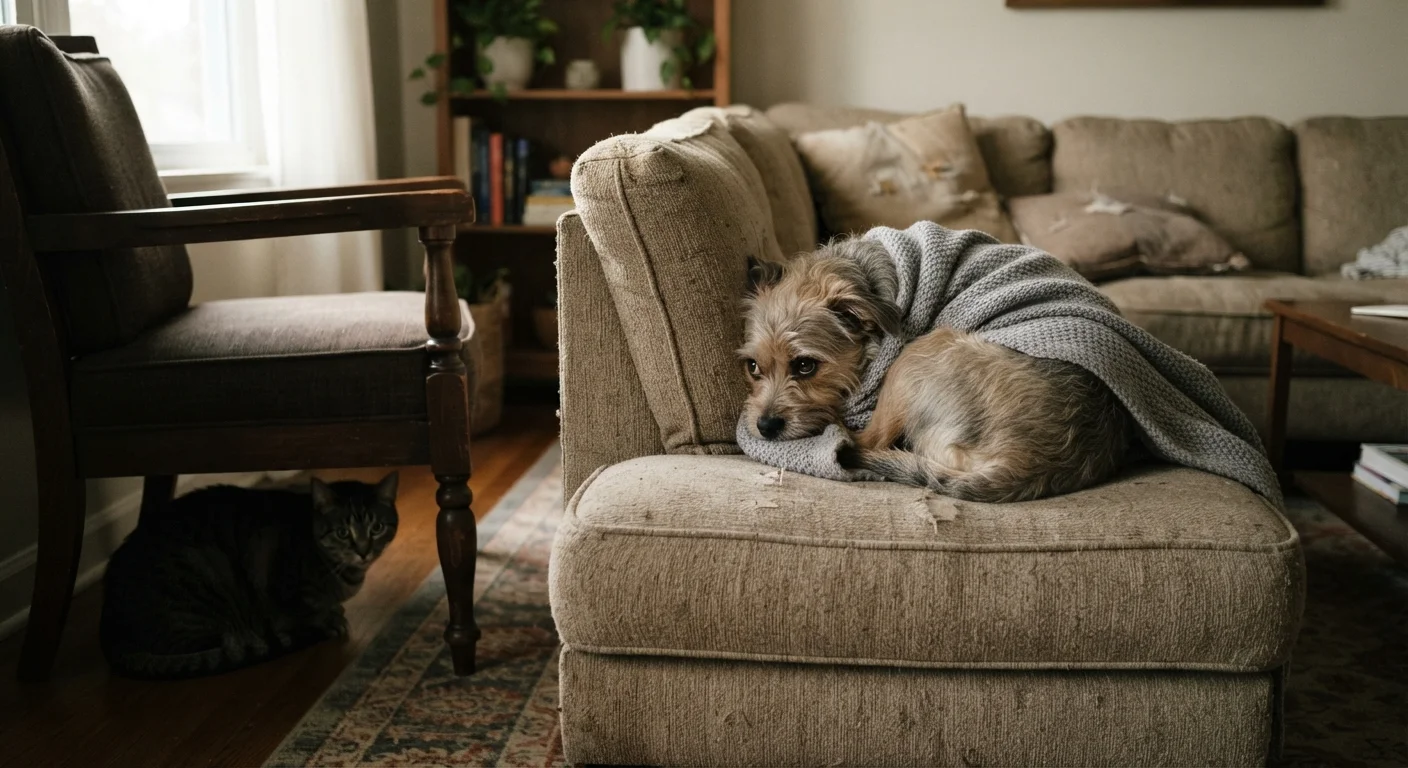
Photo: NemoFinds.com | Search, Explore, Read. editorial
Key Takeaways
- Anxiety in pets frequently masquerades as destructive behavior, excessive vocalization, or withdrawal.
- Environmental factors — noise levels, household routine, and space — are among the most common anxiety drivers.
- Early recognition of stress signals allows for faster, more effective intervention.
- Dogs and cats express anxiety differently; knowing species-specific signals matters.
- A veterinarian or certified veterinary behaviorist should be consulted when anxiety is persistent or severe.
Why Anxiety Looks Like Bad Behavior
A dog who chews through furniture while alone is rarely acting out of spite. A cat who stops using the litter box after a new baby arrives isn't being rebellious. In both cases, the animal is likely communicating distress in the only way available to them. Understanding this distinction is the first step toward helping.
Anxious pets are responding to perceived threats or unresolvable uncertainty. Their nervous systems are primed for action — fight, flee, or freeze — and when those options aren't available, the stress energy gets redirected into behaviors owners find puzzling or frustrating. Recognizing anxiety as a root cause shifts the response from correction to support.
For a broader picture of how behavioral signals map to your pet's emotional state, see what your pet's body language is actually telling you.
Start with Context, Not Correction
Common Stress Signals in Dogs and Cats
Dogs and cats share some anxiety signals, but species differences matter.
In Dogs
- Destructive chewing or scratching, particularly near exits
- Excessive barking or whining, especially when alone
- Pacing, restlessness, or inability to settle
- Trembling, panting outside of heat or exercise
- Loss of appetite or gastrointestinal upset
- Yawning, lip-licking, or whale eye (whites of eyes visible) in tense situations
In Cats
- Hiding for extended periods, beyond normal sleep
- Inappropriate elimination outside the litter box
- Over-grooming to the point of hair loss
- Decreased appetite or sudden food pickiness
- Increased vocalization, especially at night
- Aggression that appears sudden or out of character
It's worth noting that some of these behaviors can also signal pain or illness. The article reading the signs: how pets show pain without words offers useful guidance on distinguishing discomfort from anxiety.
~70%
Dogs showing at least one anxiety-related behavior
A large-scale study published in Scientific Reports (2020) found that approximately 72.5% of dogs exhibited anxiety-related behaviors across various categories.
~40%
Cats affected by stress-related illness
Veterinary research consistently identifies psychosocial stress as a major factor in feline idiopathic cystitis, a common and recurrent condition in cats.
How Environments Shape Pet Anxiety
The home environment is one of the most powerful factors in a pet's anxiety level — and one of the most modifiable. Several conditions are consistently linked to elevated stress in companion animals:
- Noise and unpredictability
- Loud, sudden, or irregular sounds — construction, thunderstorms, fireworks, or even a loud television — activate the stress response. Animals can't rationalize the source; they simply register threat.
- Disrupted routines
- Pets are deeply attuned to schedule. Changes in feeding times, owner work hours, or household activity patterns can destabilize their sense of safety. Consistent daily routines are among the most evidence-supported tools for reducing baseline anxiety. See the daily rhythm of responsible pet ownership for practical guidance.
- Lack of retreat space
- Animals need access to a quiet, safe space where they can decompress without being approached. Cats particularly rely on vertical space and enclosed hiding spots. Dogs benefit from a consistent, calm resting area.
- Social stressors
- New pets, unfamiliar visitors, children, or the loss of a companion animal can all trigger anxiety. Even positive changes, like a family member moving in, can be temporarily destabilizing.
Anxiety and Pain Can Look the Same
What You Can Do — and When to Get Help
Many environmental anxiety triggers can be meaningfully reduced through thoughtful home management. Creating predictable routines, providing dedicated retreat spaces, using white noise to buffer sudden sounds, and ensuring adequate physical and mental enrichment are all practical starting points.
If anxiety appears suddenly or intensifies without a clear environmental cause, a medical evaluation is the right first step. Sudden behavioral changes can signal underlying health conditions. The article what sudden behavior changes in pets often signal explains this connection in detail.
When anxiety is persistent, severe, or affecting quality of life — for the pet or the household — a veterinarian should be consulted. They may recommend referral to a certified veterinary behaviorist, who can design a structured behavior modification plan and, where appropriate, discuss medical support options. Self-treating with supplements or calming products without professional input is not recommended.
This article is for general informational purposes only and does not constitute veterinary advice. Always consult a licensed veterinarian for guidance specific to your pet's health and behavior.
Frequently Asked Questions
The content on this site is for informational purposes only and is not a substitute for professional advice. Always consult a qualified professional for guidance specific to your situation.