
The Nutrition Labels on Pet Food: What the Terms Actually Mean

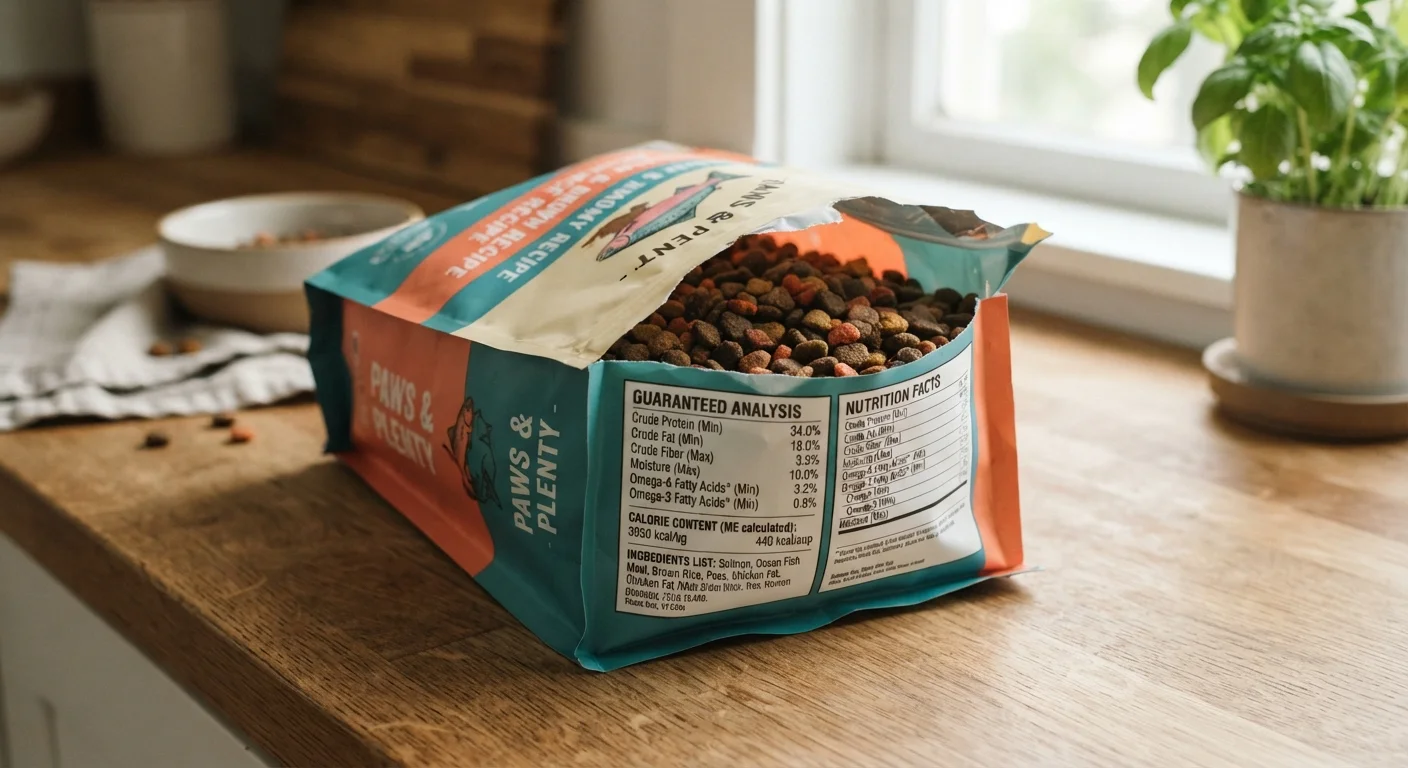
Photo: NemoFinds.com | Search, Explore, Read. editorial
Key Takeaways
- "Complete and balanced" is a regulated AAFCO claim; "natural" is not held to the same standard.
- Grain-free does not automatically mean low-carbohydrate or healthier for most pets.
- Ingredient list order reflects weight before cooking, not nutrient contribution after processing.
- "Human-grade" has a specific legal meaning that most pet foods do not actually meet.
- Always consult your veterinarian before making significant changes to your pet's diet.
Why Label Language Matters
Walk down any pet food aisle and you'll encounter a wall of claims: "complete and balanced," "natural," "holistic," "human-grade." Some of these terms carry real regulatory weight. Others are essentially marketing vocabulary with no binding definition. Understanding the difference helps you spend your money wisely and, more importantly, keep your pet genuinely well-nourished.
Pet food sold in the United States is overseen primarily by the AAFCO — a voluntary membership organization of state and federal regulators whose model regulations most states adopt into law. The FDA also has jurisdiction over safety. Together they set the floor for what must be true before a claim can appear on a label — but not every term you see is covered by that floor. For a broader look at how to navigate the full label, see our guide to reading a pet food label.
Myth
"Complete and balanced" is just marketing language used to make any food sound nutritious.
Fact
"Complete and balanced" is a regulated AAFCO term requiring a food to meet defined nutrient profiles or pass feeding trials for a stated life stage.
AAFCO publishes detailed nutrient profiles for dogs and cats at different life stages (growth, adult maintenance, all life stages). A manufacturer must either formulate to those profiles or conduct feeding trials before printing this phrase. It is one of the most meaningful claims on a pet food label, and its absence — or a statement like "intended for intermittent or supplemental feeding" — signals the food is not designed to be a sole diet.
Myth
"Natural" on a pet food label means the food is minimally processed and free of synthetic additives.
Fact
AAFCO defines "natural" for pet food, but the definition permits significant processing and allows added synthetic nutrients as long as they are disclosed.
Under AAFCO's definition, "natural" means ingredients derived solely from plant, animal, or mined sources without chemical synthetic processes — but a food labeled natural may still be extruded, rendered, or heavily heat-processed. Critically, synthetic vitamins and minerals added to meet nutrient profiles are allowed alongside natural ingredients, provided the label says "with added vitamins and minerals." The word does not indicate superior nutrition or minimal processing.
Myth
Grain-free pet foods are automatically healthier and lower in carbohydrates.
Fact
Grain-free foods simply replace grains with other carbohydrate sources such as potatoes, peas, lentils, or tapioca — total carbohydrate content may be similar or higher.
Grains are not nutritionally harmful to most dogs or cats, and many pets digest them well. Grain-free formulas substituting legumes and root vegetables can carry comparable starch loads. The FDA has also been investigating a potential link between certain grain-free, legume-heavy diets and dilated cardiomyopathy (DCM) in dogs, though research is ongoing and no causal relationship has been firmly established. Unless your veterinarian has diagnosed a specific grain sensitivity, grain-free is not a default upgrade.
Myth
The first ingredient on the list is the most nutritious part of the food.
Fact
Ingredients are listed by pre-cooking weight. A single ingredient listed first may rank much lower in actual dry-matter contribution after moisture is removed during processing.
Fresh chicken, for example, is roughly 70% water by weight. Once moisture is cooked off, its contribution to the final kibble may be smaller than a dry ingredient listed third or fourth — such as chicken meal, which is already concentrated. "Ingredient splitting" — listing several forms of the same ingredient separately (e.g., pea flour, pea protein, pea fiber) — can also push each form lower on the list individually while collectively making peas the dominant ingredient. Reading the guaranteed analysis panel alongside the ingredient list gives a more complete picture.
Myth
"Human-grade" pet food meets the same standards as food sold for human consumption.
Fact
AAFCO's definition of "human-grade" requires every ingredient and the entire manufacturing process to meet federal standards for human food — a bar very few pet foods actually meet.
Most products using this phrase cannot legally substantiate it under AAFCO's policy. Ingredients that begin as human-edible can lose that status through handling, storage, or processing in facilities not approved for human food production. Unless a manufacturer can document that every step — from sourcing through packaging — meets human food regulations, the claim is not considered truthful on a pet food label. Treat it with healthy skepticism unless the company provides verifiable documentation.
Myth
"Holistic" on a pet food bag indicates a specific quality standard endorsed by regulators.
Fact
"Holistic" has no regulatory definition in pet food labeling and carries no required standard whatsoever.
Neither AAFCO nor the FDA has defined "holistic" for pet food purposes, which means any manufacturer can use it freely regardless of ingredient quality, sourcing, or formulation approach. The same applies to terms like "premium" and "super-premium." When evaluating a food's quality, look instead to the AAFCO nutritional adequacy statement, the guaranteed analysis, and your veterinarian's guidance — not unregulated descriptor words on the front of the bag.
What the Data Actually Shows
Regulatory definitions and marketing language are only part of the picture. The nutrients your pet receives depend heavily on ingredient quality, processing methods, and your individual animal's life stage and health status. No label term substitutes for a conversation with your veterinarian, particularly if your pet has a chronic condition, food sensitivity, or unusual dietary need.
~4,000
Pet food products reviewed under AAFCO guidelines annually
AAFCO estimates that thousands of pet food and treat products are evaluated each year across participating state regulatory programs in the US.
70%
Water content in fresh meat before processing
Fresh chicken or beef listed first on an ingredient label may be roughly 70% water by weight, significantly reducing its dry-matter contribution after cooking.
2
Primary AAFCO methods for nutritional adequacy claims
A food can meet AAFCO standards either by formulating to published nutrient profiles or by completing actual animal feeding trials — both methods are recognized pathways.
Separating regulated claims from unregulated ones is the first step toward confident label reading. For more on widespread misconceptions that go beyond label terms, our companion piece on pet nutrition myths covers the broader landscape.
Dietary Changes Need Veterinary Guidance
This article is for general informational purposes only and is not a substitute for professional veterinary advice. Consult a licensed veterinarian before making significant changes to your pet's diet.
The content on this site is for informational purposes only and is not a substitute for professional advice. Always consult a qualified professional for guidance specific to your situation.