
Financing Through a Dealership vs. a Bank or Credit Union

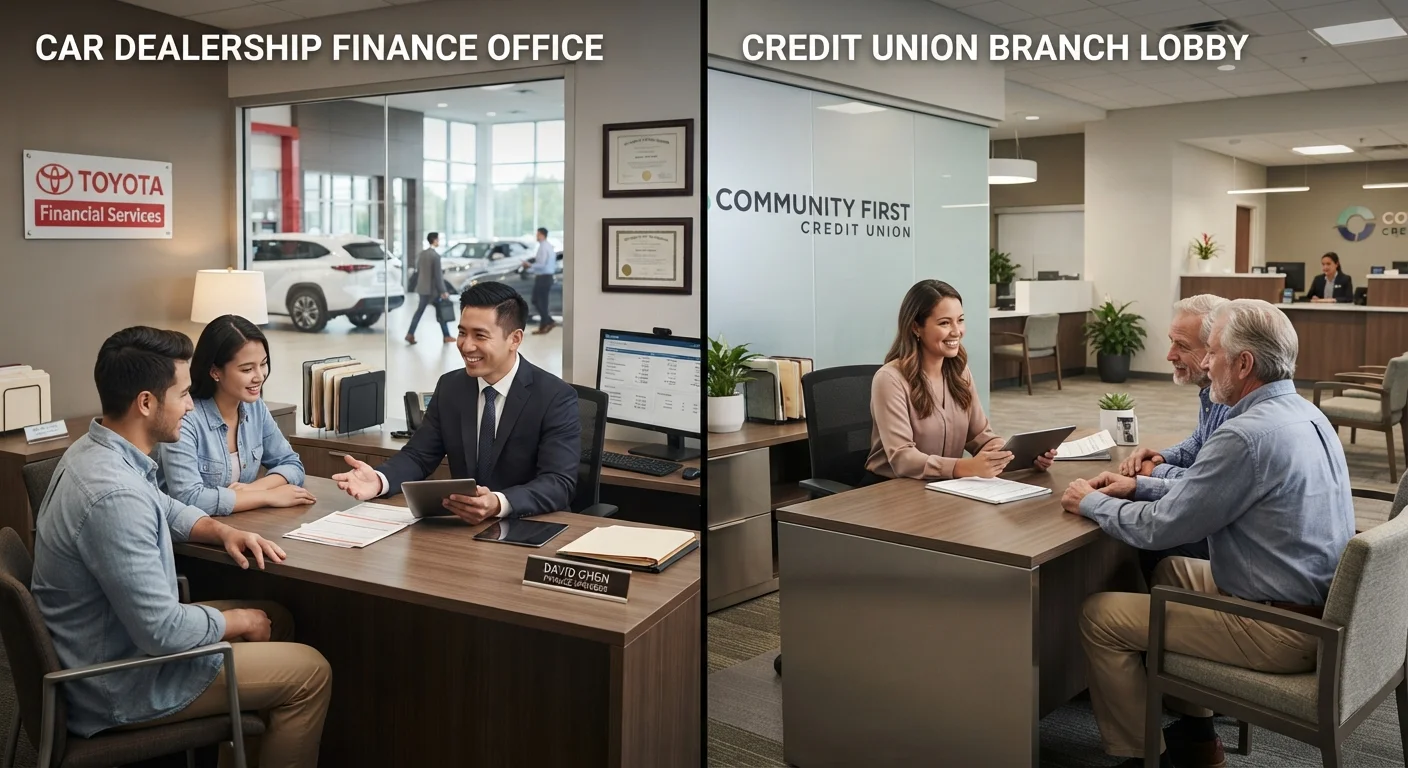
Photo: NemoFinds.com | Search, Explore, Read. editorial
Key Takeaways
- Dealership financing routes your loan through third-party lenders, and dealers may mark up the interest rate.
- Bank and credit union preapproval lets you know your rate before stepping onto the lot.
- Credit unions are member-owned and often offer more competitive rates than commercial banks.
- Manufacturer-backed promotional rates from dealerships can be compelling, but typically require strong credit.
- Comparing offers from multiple sources before signing is the most effective way to understand your options.
- The financing channel affects total cost, not just monthly payment - always evaluate the full loan term.
How Each Financing Path Is Structured
When you finance through a dealership, you're typically not borrowing directly from the dealer. Instead, the dealership acts as an intermediary - submitting your credit application to a network of lenders and presenting you with one offer. The dealer may receive a fee or be permitted to mark up the interest rate above what the lender actually quoted, a practice known as a dealer reserve. This markup is legal in most states but isn't always disclosed transparently.
Direct lending - through a bank or credit union - works differently. You apply for a loan before you shop, receive a preapproval letter specifying a maximum loan amount and an interest rate, and bring that offer to the dealership like cash. If the dealer's financing turns out to be better, you can use it instead. If not, you already have terms locked in. For a deeper look at how loan structure affects what you pay, see our Auto Loans Explained guide.
| Criterion | Dealership Financing | Bank or Credit Union Financing |
|---|---|---|
| Where you apply | At the dealership, day of purchase | Online, by phone, or in branch before shopping |
| Rate transparency | Rate may be marked up from lender's offer | Rate stated clearly at preapproval |
| Promotional rates | Sometimes available via manufacturer lenders | Generally not available |
| Negotiating position | Financing bundled with purchase negotiation | Preapproval separates price and financing |
| Typical rate competitiveness | Varies; can be high or low depending on markup | Credit unions often below-market; banks vary |
| Convenience | High - handled on-site in one visit | Requires advance planning and application |
| Add-on product pressure | Common - F&I office may bundle extras | Generally none at point of loan approval |
The Rate Question: Who Typically Offers Better Terms?
There's no universal answer - it depends heavily on your credit profile, the lender, and whether any promotional rates are available. That said, a few patterns are worth understanding.
Credit unions, because they're not-for-profit and member-owned, often carry lower average APRs on auto loans than commercial banks or dealer-arranged financing. According to the National Credit Union Administration, credit union auto loan rates have historically averaged below those of commercial banks, though individual results vary by institution and borrower.
Dealership financing becomes most competitive when automakers' captive lenders - financing arms owned by the manufacturer - offer below-market promotional rates to move inventory. These deals are real, but they usually require excellent credit and apply only to specific models or trim levels.
~1-2%
Typical dealer interest rate markup range
Industry estimates suggest dealers commonly mark up lender-approved rates by one to two percentage points, though this varies by dealership and is not universally disclosed.
Lower avg. APR
Credit union auto loans vs. commercial banks
The National Credit Union Administration has documented that credit union auto loan rates have historically averaged lower than those at commercial banks, reflecting member-focused pricing.
The practical advice: get preapproved by at least one outside lender before visiting a dealership. That gives you a rate to benchmark against whatever the dealer presents. This also separates the price negotiation from the financing negotiation - a distinction that matters because monthly payment bundling can obscure the true cost of a loan. This principle connects to broader financial decisions too; if you're managing multiple debts, our overview of debt consolidation explores how loan structure affects long-term costs.
What to Watch For With Each Option
With dealership financing, the key things to scrutinize are the interest rate markup, add-on products (extended warranties, GAP insurance, paint protection), and whether those products are rolled into the loan - extending both cost and term. Always ask for the lender's buy rate (the rate the lender actually approved) versus the rate the dealer is quoting you. You are not obligated to purchase add-ons to secure financing.
With bank or credit union financing, the main considerations are your preapproval terms and whether they're competitive. Banks may have stricter eligibility criteria for their lowest advertised rates. Credit unions may require membership, though many have open or community-based eligibility. Always read the full loan agreement regardless of source - prepayment penalties, late fees, and payment schedules matter.
GAP Insurance: Don't Assume You Need It From the Dealer
If you're also weighing whether to buy or lease, your financing approach will change significantly depending on that decision. Our article on leasing vs. buying a car lays out the structural differences clearly.
This article provides general information about auto financing options and is not personalised financial or legal advice. Loan terms vary by lender, credit profile, and region. Consult a licensed financial professional before making decisions about your specific situation.
The content on this site is for informational purposes only and is not a substitute for professional advice. Always consult a qualified professional for guidance specific to your situation.