
Highway Driving vs. City Driving: Adapting Your Habits for Each

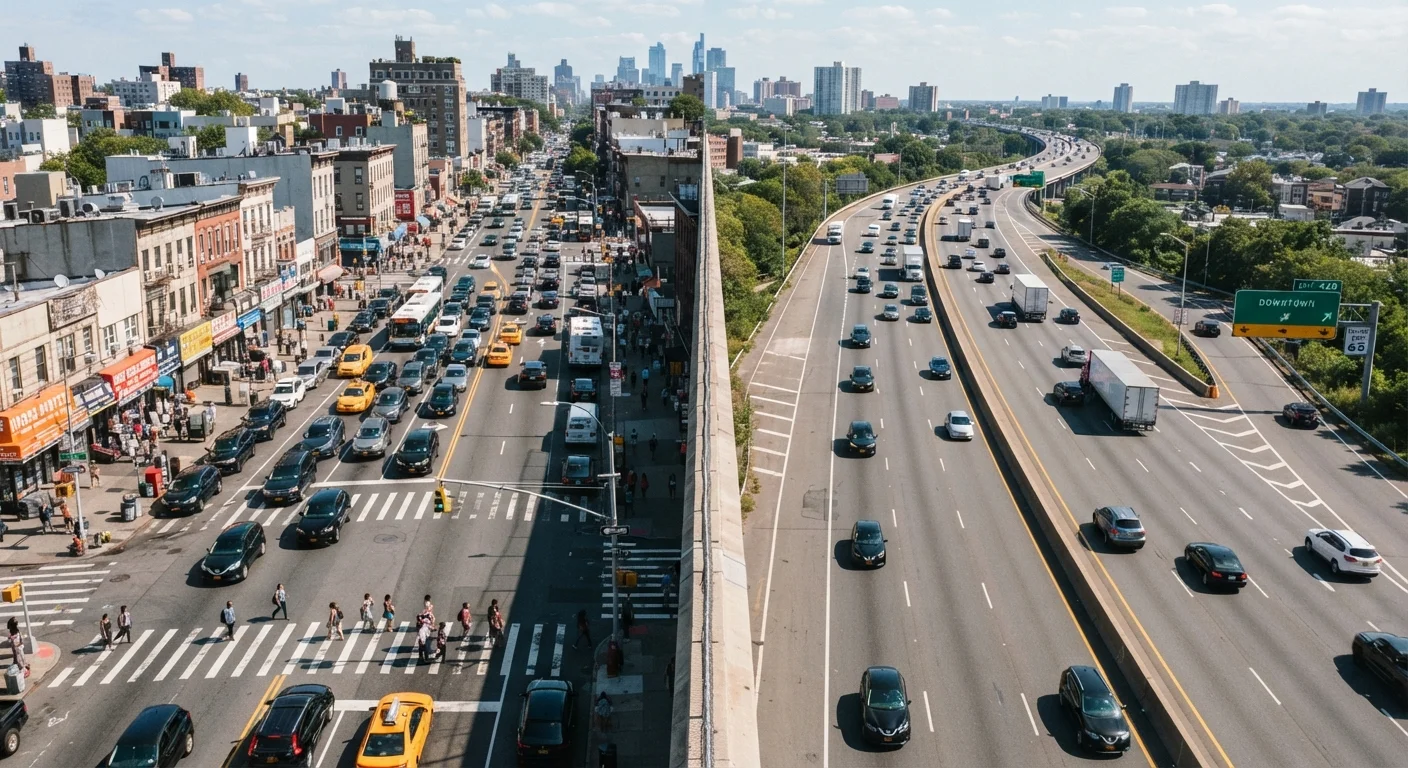
Photo: NemoFinds.com | Search, Explore, Read. editorial
Key Takeaways
- Highway driving demands longer following distances and earlier lane-change planning than city roads.
- City driving requires frequent scanning for pedestrians, cyclists, and sudden stops at intersections.
- Fatigue is a greater risk on highways; distraction is a greater risk in cities.
- Merging and maintaining consistent speed are the key skills for highway safety.
- Situational awareness — checking mirrors, signals, and surroundings — is critical in both environments.
How the Two Environments Actually Differ
At first glance, driving is driving — but highway and city roads place fundamentally different demands on your attention, reaction time, and vehicle control. Understanding those differences is the first step toward adapting your habits deliberately rather than by instinct alone.
On the highway, speeds typically range from 55 to 75 mph. At those speeds, your stopping distance increases dramatically — a vehicle traveling at 65 mph needs roughly 300 feet to come to a full stop under normal conditions. Hazards appear and close faster, which means errors carry higher consequences. The challenge isn't complexity; it's sustained vigilance over long distances.
City driving, by contrast, is defined by unpredictability. Speeds are lower — usually 25 to 45 mph — but the sheer volume of variables is higher: traffic signals, crosswalks, cyclists, delivery vehicles, double-parked cars, and pedestrians stepping off curbs. You may make dozens of turns, stops, and yielding decisions in a single mile. For a deeper grounding in right-of-way rules that come up constantly in urban driving, see our intersection guide.
| Criterion | Highway Driving | City Driving |
|---|---|---|
| Typical speed range | 55–75 mph | 25–45 mph |
| Primary hazard | High-speed collisions, fatigue | Pedestrians, intersections, distraction |
| Following distance needed | 3–4 seconds minimum | 2–3 seconds standard |
| Key skill | Merging, sustained vigilance | Scanning, anticipation |
| Lane changes | Planned well in advance | Frequent, at lower speed |
| Stop frequency | Rare — mostly open travel | Constant — signals, pedestrians |
| Driver fatigue risk | High on long trips | Lower but mentally demanding |
Highway Habits That Keep You Safe
The most common highway mistake is following too closely. At highway speeds, the two-second rule — maintaining at least two seconds of following distance from the vehicle ahead — is a minimum, not a target. Many safety organizations recommend three to four seconds in normal conditions, and more in rain, fog, or heavy traffic. Adverse weather shrinks your margin for error significantly at speed.
Merging is another skill that separates confident highway drivers from hesitant ones. Match the speed of traffic on the highway before merging — not after entering the lane. Signal early, find a gap, and commit smoothly. Slowing on an on-ramp forces vehicles behind you to brake and disrupts traffic flow.
Highway fatigue is a real and underappreciated hazard. The monotony of long straight roads can cause highway hypnosis — a state of reduced alertness that develops without the driver noticing. Take breaks at least every two hours on long trips, keep the cabin cool, and avoid heavy meals before driving. If you feel drowsy, the only safe response is to pull off and rest.
~300 ft
Stopping distance at 65 mph
The Federal Highway Administration notes that total stopping distance includes both perception-reaction time and braking distance at highway speeds.
~40%
Of fatal crashes occur on rural highways
According to NHTSA data, a disproportionate share of traffic fatalities occur on rural roads and highways despite lower traffic volumes.
2 hrs
Recommended driving break interval
Safety organizations including the National Safety Council advise taking a break at least every two hours on long highway trips to counter fatigue.
City Driving Habits That Reduce Risk
In city environments, your eyes need to be constantly moving. Effective urban drivers scan ahead to the next intersection, check mirrors every five to eight seconds, and glance toward sidewalks and driveways where pedestrians or vehicles may enter the roadway. Looking only at the vehicle directly in front of you — a common habit — leaves almost no time to react to what's happening further up the road.
Speed management matters differently here. Following the posted limit isn't just a legal obligation — it's a practical safety buffer. At 25 mph, a pedestrian struck by a vehicle has a substantially higher chance of surviving than at 40 mph. Slowing down around schools, bus stops, and parked car zones is a defensive instinct worth building.
One underrated city skill is anticipating light changes. Watching the pedestrian countdown timers at intersections gives you a heads-up that a signal is about to change — allowing you to ease off the accelerator earlier rather than braking hard at the last moment. This reduces rear-end risk and saves fuel. For newer drivers still building these instincts, our first-timer's roadmap covers the fundamentals in detail.
Translating Habits Between Environments
One of the trickiest transitions for drivers is shifting mindset when moving from one road type to another — particularly going from highway to city. After extended highway driving, your brain normalizes higher speeds, and 35 mph can feel deceptively slow. This speed-adaptation lag is a known contributor to crashes near highway exits. Consciously recalibrate: check your speedometer, not just your perceived pace.
The reverse is also true. Drivers accustomed to city stop-and-go sometimes carry cautious, braking-heavy habits onto the highway, where abrupt slowdowns are more dangerous than in slow urban traffic.
The underlying skills — mirror checks, signaling ahead of time, smooth braking, and reading traffic flow — transfer across both environments. What changes is the timing and priority. Experienced drivers adapt those core habits to fit the context. Complacency is the common thread in most driving errors, regardless of road type. Staying intentional about your habits — even on familiar routes — is what keeps both city and highway driving predictably safe.
This article is for general informational purposes only. Always follow local traffic laws and posted signage, and consult a licensed driving instructor for personalized guidance.
The content on this site is for informational purposes only and is not a substitute for professional advice. Always consult a qualified professional for guidance specific to your situation.