
Hydration Beyond Water: What Counts and What Doesn't

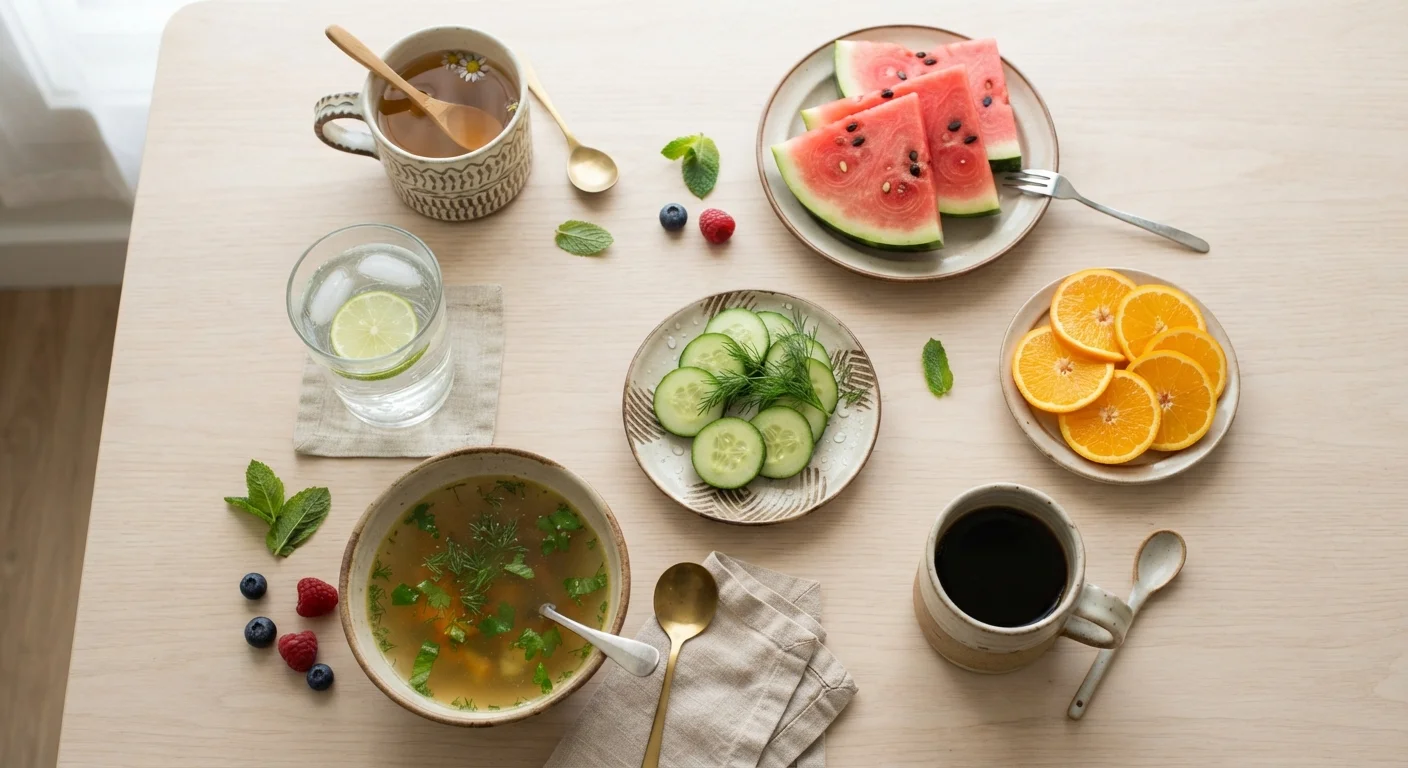
Photo: NemoFinds.com | Search, Explore, Read. editorial
Key Takeaways
- Coffee, tea, juice, and soup all contribute meaningfully to your daily fluid intake.
- The widely repeated "eight glasses a day" rule has no firm scientific basis for all people.
- Roughly 20% of daily fluid intake typically comes from water-rich foods, not beverages.
- Mild dehydration can impair focus and energy before thirst even registers.
- Individual hydration needs vary based on body size, activity, climate, and health status.
Where the Confusion About Hydration Starts
Most people learn early that staying hydrated means drinking water — ideally eight glasses a day. That simple rule has stuck around for decades, even though nutrition scientists have largely moved past it. The reality of how the body gets and uses fluids is more nuanced, and more forgiving, than the popular version suggests.
Hydration refers to maintaining adequate fluid balance in the body's cells and tissues. Water is the core ingredient, but the body doesn't distinguish whether that water arrived in a glass, a bowl of soup, or a slice of watermelon. What matters is the total fluid your body absorbs over the course of a day — and that comes from a wider range of sources than most people realize.
Understanding what actually counts can take the stress out of hydration and help you make genuinely informed choices. For a broader look at health habits that don't always hold up to scrutiny, see our fact-check of popular wellness habits.
Myth
Coffee and tea dehydrate you because caffeine is a diuretic.
Fact
Caffeinated beverages contribute to fluid intake and do not cause net dehydration in most people who consume them regularly.
Caffeine does have a mild diuretic effect — meaning it can prompt the kidneys to excrete slightly more water. However, research consistently shows that the fluid in coffee or tea more than offsets this effect. A 2014 study published in PLOS ONE found that moderate coffee consumption produced hydration outcomes essentially equivalent to water in regular coffee drinkers. The mild diuretic effect becomes more pronounced with very high caffeine doses or in people who rarely consume caffeine, but for typical daily intake, coffee and tea count as fluid sources.
Myth
You need to drink exactly eight 8-ounce glasses of water every day.
Fact
The "8x8" rule is a simplified guideline with no strong scientific backing; fluid needs vary considerably by individual.
The origin of the eight-glasses rule is murky — often traced to a 1945 U.S. Food and Nutrition Board recommendation that was widely misread, since the original text noted most of that fluid comes from food. Current guidance from major health organizations focuses on total fluid intake from all sources and acknowledges wide individual variation. Factors like body weight, physical activity, climate, pregnancy, and health conditions all shift how much fluid a person actually needs. There is no universal number that applies to everyone.
Myth
If you're not thirsty, you're well hydrated.
Fact
Thirst is a useful but imperfect signal; mild dehydration can occur before thirst kicks in, particularly in older adults.
The body's thirst mechanism is generally reliable in healthy adults under normal conditions, but it can lag behind actual fluid needs. Research suggests that a fluid loss of around 1–2% of body weight can begin to impair cognitive performance and physical endurance before a strong sense of thirst develops. In older adults, the thirst signal becomes less sensitive with age, making dehydration a more common and less-noticed problem. Monitoring urine color and maintaining regular fluid intake throughout the day — rather than waiting for thirst — is a more consistent approach.
Myth
Sugary drinks like juice and sports drinks hydrate just as well as water.
Fact
Most juices and sports drinks do provide fluid, but their sugar content means they should not be the primary hydration source.
From a pure fluid-delivery standpoint, juice and sports drinks do add to daily intake. However, beverages with high sugar content come with added calories and can affect blood sugar levels, which matters for people managing weight or metabolic health. Sports drinks are formulated to replace electrolytes lost during prolonged or intense physical activity, and in that context they serve a real purpose. For everyday hydration in sedentary or lightly active adults, plain water, milk, and unsweetened beverages are generally more appropriate choices. Fruit eaten whole also delivers water along with fiber, which juice removes.
Myth
Drinking large amounts of water is always better for your health.
Fact
Overhydration, while uncommon, is a real risk — the body needs balanced fluid and electrolyte levels, not simply maximum water volume.
Hyponatremia — a condition where sodium levels in the blood drop too low due to excess water intake — can occur when someone drinks far more fluid than the kidneys can process, diluting electrolytes. It is rare in everyday life but has occurred in endurance athletes who aggressively over-drink plain water during events. The takeaway for most people is not to fear water, but to understand that more is not infinitely better. Hydration is about balance: adequate fluid intake alongside normal electrolyte levels from a varied diet.
What Adequate Hydration Actually Looks Like
The National Academies of Sciences, Engineering, and Medicine suggest a general daily fluid intake of about 3.7 liters (roughly 125 oz) for men and 2.7 liters (about 91 oz) for women — but this includes all fluids and water-rich foods combined, not plain water alone. These figures are population-level references, not personal prescriptions. Body size, physical activity, heat exposure, and certain health conditions all shift individual needs significantly.
~20%
Daily fluid from food, not beverages
According to the U.S. National Academies of Sciences, Engineering, and Medicine, roughly one-fifth of typical daily fluid intake comes from water-containing foods.
1–2%
Body weight loss that can impair cognition
Research indicates that a fluid deficit equal to just 1–2% of body weight may begin to reduce concentration, alertness, and physical performance.
3.7 L
Suggested total daily fluid for adult men
The National Academies' general reference intake for men is approximately 3.7 liters of total water per day from all food and beverage sources combined.
Urine color remains one of the simplest practical indicators of hydration status. Pale yellow generally suggests adequate fluid intake; dark yellow or amber is a common sign the body needs more fluid. Thirst is also a reliable signal for healthy adults, though it tends to lag slightly behind actual need — which is why relying on thirst alone during intense exercise or hot weather may not be sufficient.
Food contributes more to hydration than most people account for. Cucumbers, celery, strawberries, and watermelon are over 90% water by weight. Soups, stews, yogurt, and even cooked oatmeal add meaningful fluid. A diet rich in fruits and vegetables can contribute several cups' worth of fluid daily without a single extra glass of water.
Special Populations Need Individual Guidance
To understand how staying well-hydrated supports your energy levels and mental clarity day-to-day, see our evidence-based guide to hydration and daily function. Good hydration habits also complement other nutritional priorities — including getting enough dietary fiber, which works best when fluid intake is adequate. For more foundational health practices, explore our Healthy Habits hub.
The content on this site is for informational purposes only and is not a substitute for professional advice. Always consult a qualified professional for guidance specific to your situation.