
Whole Foods vs. Processed Foods: Understanding the Real Difference

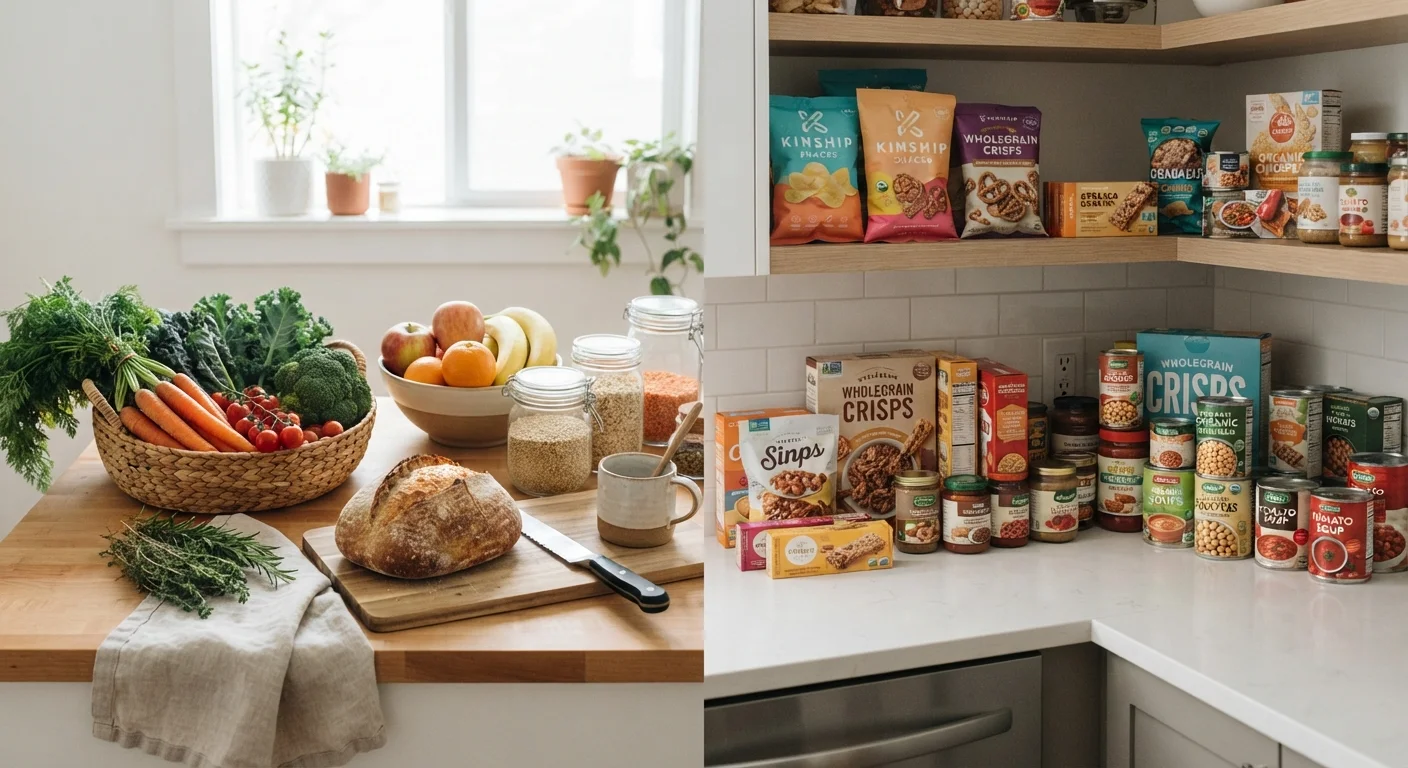
Photo: NemoFinds.com | Search, Explore, Read. editorial
Key Takeaways
- Processing exists on a spectrum — frozen vegetables and canned beans are processed but still highly nutritious.
- Ultra-processed foods, not all processed foods, are most consistently linked to health concerns in research.
- Whole foods retain more fiber, vitamins, and minerals because fewer steps separate them from their source.
- Reading ingredient lists helps you locate where a food actually falls on the processing spectrum.
- A balanced diet can include both whole and minimally processed foods without rigid all-or-nothing rules.
What 'Whole Food' Actually Means
The term whole food refers to any food eaten in — or very close to — its natural form, with little or no alteration. A fresh apple, a handful of walnuts, a bowl of oats, a raw chicken breast: these are whole foods. They haven't had nutrients removed or significant additives introduced.
What makes whole foods nutritionally valuable is largely what they still contain. Fiber, naturally occurring vitamins and minerals, phytonutrients (plant compounds with potential health benefits), and healthy fats tend to be present in the proportions nature packaged them. Research consistently associates diets high in whole foods with reduced risk of chronic conditions, though individual health outcomes depend on many personal and lifestyle factors. Always consult a qualified healthcare professional for guidance specific to your situation.
To go deeper on how these foods interact with your body's macronutrient needs, see what macronutrients actually do in your body.
What 'Processed Food' Actually Covers
Here's where most people's understanding goes sideways: processed food is not a single category. It's a spectrum. Any food that has been washed, cut, cooked, canned, frozen, fermented, or otherwise altered from its raw state is technically processed.
That means frozen spinach is processed. So is canned tuna, Greek yogurt, and whole-grain bread. Clearly, these are not the same as a bag of neon-colored chips engineered for maximum palatability.
Nutrition researchers increasingly use the NOVA classification, a framework developed by researchers at the University of São Paulo, to separate foods by degree of processing:
- Group 1 – Unprocessed or minimally processed: Fresh produce, plain meats, eggs, plain nuts.
- Group 2 – Processed culinary ingredients: Olive oil, flour, salt, sugar — used to prepare food.
- Group 3 – Processed foods: Canned vegetables, cheese, cured meats, simple breads.
- Group 4 – Ultra-processed foods: Products with long ingredient lists featuring additives, colorings, flavor enhancers, and emulsifiers not typically found in home kitchens.
The health research conversation is primarily about Group 4 — ultra-processed foods — not processing as a whole. Understanding this distinction prevents unnecessary anxiety about nutritious convenience foods.
| Criterion | Whole Foods | Processed Foods |
|---|---|---|
| Definition | Near-natural state, minimal alteration | Any food altered from its raw form |
| Spectrum | Single category | Ranges from minimal to ultra-processed |
| Nutrient retention | Generally high in fiber, vitamins, minerals | Varies widely by processing degree |
| Additives | None or very few | Ranges from none to many synthetic additives |
| Research association | Linked to lower chronic disease risk | Ultra-processed linked to health concerns; minimal processing is largely neutral |
| Convenience | Often requires more prep | Typically faster and longer shelf life |
| Cost | Varies; some items seasonal or pricier | Often lower cost, especially shelf-stable items |
Where the Research Points
Large observational studies — including research published in journals like The BMJ and JAMA Internal Medicine — have found associations between high ultra-processed food consumption and increased risk of cardiovascular disease, obesity, type 2 diabetes, and certain cancers. These are associations, not proven direct causes, and researchers continue to study the mechanisms involved.
57%
Share of US calories from ultra-processed foods
A study published in BMJ Open estimated that ultra-processed foods accounted for approximately 57% of energy intake in the US diet based on national dietary survey data.
~10%
Increased cardiovascular risk linked to ultra-processed intake
A large cohort study in The BMJ found each 10% increase in ultra-processed food consumption was associated with a roughly 12% higher risk of cardiovascular disease.
33%
Higher all-cause mortality association
Research in JAMA Internal Medicine found participants in the highest quartile of ultra-processed food consumption had a 14% higher all-cause mortality risk compared to those in the lowest quartile.
One leading hypothesis is that ultra-processed foods tend to be calorie-dense, low in fiber, and high in added sugar and sodium — factors independently linked to poor health outcomes. They also tend to displace whole foods in the diet, reducing overall nutrient diversity.
Importantly, not all processing degrades nutrition. Freezing vegetables at peak ripeness can preserve nutrients that degrade in fresh produce during transport and storage. Fermentation (as in yogurt or kimchi) can add beneficial bacteria. Fortification adds nutrients like folate to grains — a public health measure with demonstrated benefits.
For a fuller picture of how dietary patterns incorporate these foods, see how well-studied dietary patterns compare.
How to Use This Knowledge Practically
The goal isn't to fear all processed food or to achieve a perfectly "pure" diet. The goal is informed choices. Here are practical ways to apply this framework:
- Use the ingredient list as your guide. A short list of recognizable ingredients generally signals less processing. A lengthy list with unfamiliar additives signals ultra-processing. Reading a nutrition label without getting lost walks through how to interpret what you find.
- Build meals around whole or minimally processed anchors. Start with a whole grain, legume, vegetable, or plain protein, then add other components. This naturally shifts your intake without strict rules.
- Don't discard convenient minimally processed foods. Canned beans, frozen vegetables, and plain oats are affordable, time-saving, and nutritionally solid. Treating them as inferior to fresh options isn't supported by evidence.
- Consider protein sources as part of the picture. Whether plant or animal, the degree of processing matters. Plant protein vs. animal protein covers the nutritional trade-offs in detail.
Building healthy habits around food doesn't require perfection — it requires a consistent, realistic pattern you can sustain.
A Note on Food Labeling Language
This article is for general informational and educational purposes only and is not a substitute for professional medical or nutritional advice. Consult a qualified healthcare provider for guidance tailored to your individual health needs.
The content on this site is for informational purposes only and is not a substitute for professional advice. Always consult a qualified professional for guidance specific to your situation.