
Auto Insurance Coverage Types: What Each One Actually Does

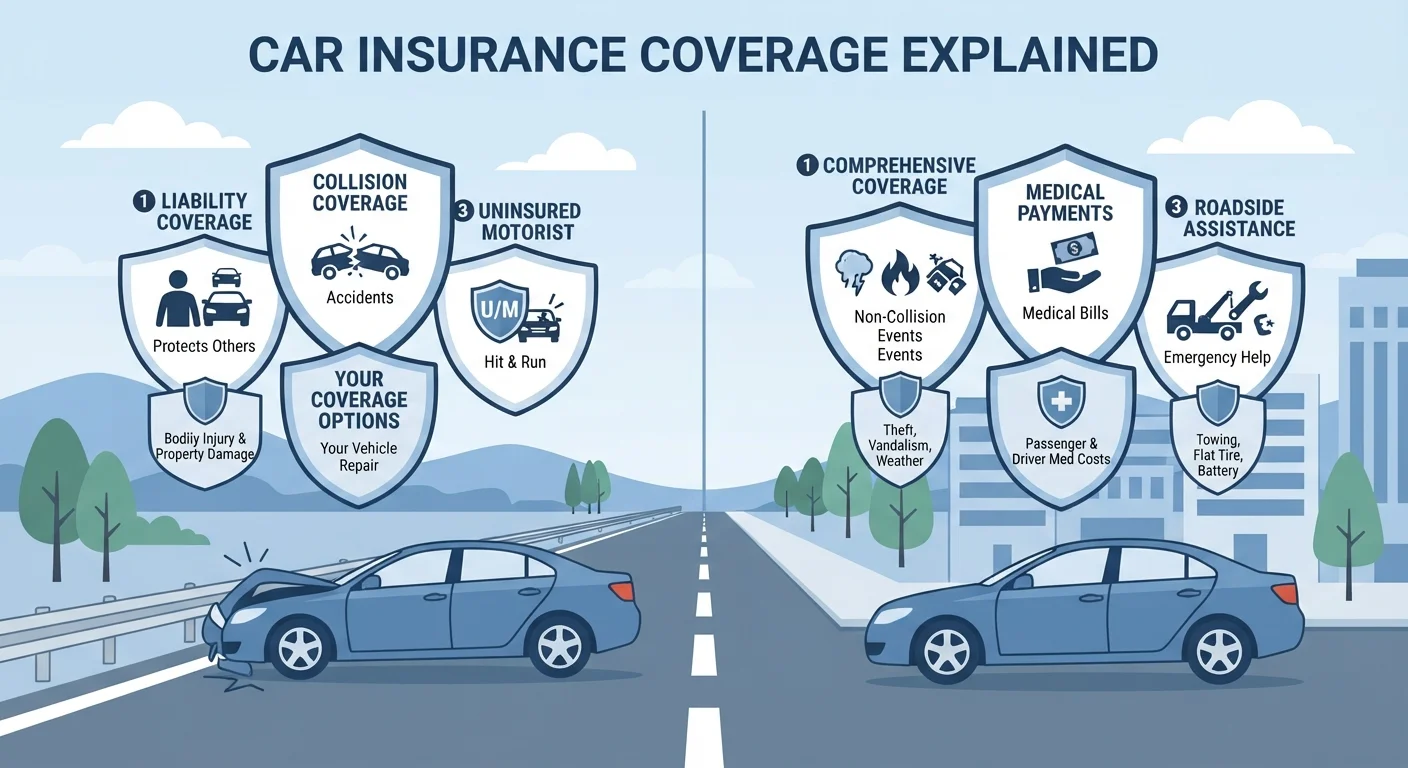
Photo: NemoFinds.com | Search, Explore, Read. editorial
Why Auto Insurance Is Actually a Bundle of Coverages
When you buy auto insurance, you're not purchasing a single blanket of protection — you're selecting a combination of separate coverage types, each designed to handle a specific kind of loss. Understanding what each piece does helps you avoid paying for coverage you don't need and, more importantly, avoids discovering a gap after an accident.
Most states require at least some coverage by law, but the minimums often aren't enough to fully protect you. Here's a plain-language walkthrough of every major coverage type you're likely to encounter.
| Legally required in most states | Liability coverage (State requirements vary; check your state's DMV or insurance commissioner) |
| Covers your own vehicle in a crash | Collision coverage |
| Covers non-collision damage (theft, weather, fire) | Comprehensive coverage |
| Required by lenders/lessors | Both collision and comprehensive (Verify requirements with your lender or lease agreement) |
| Pays when at-fault driver lacks insurance | Uninsured/Underinsured Motorist |
| Covers medical costs regardless of fault | MedPay or PIP (PIP required in no-fault states) |
The Core Coverage Types Explained
Liability Coverage
Liability is the foundation of nearly every auto policy and is legally required in almost every U.S. state. It pays for injuries and property damage you cause to other people in an accident — it does not cover your own vehicle or your own medical bills. Liability is typically expressed as three numbers (e.g., 25/50/25), representing per-person injury limits, per-accident injury limits, and property damage limits in thousands of dollars. For a deeper look at how liability works across policy types, see how liability coverage works in home and auto policies.
Collision Coverage
Collision pays to repair or replace your vehicle after it's damaged in a crash — whether you hit another car, a guardrail, or a pothole. It applies regardless of who is at fault. You'll pay a deductible first; your insurer covers the rest up to your car's actual cash value. If you have a loan or lease, your lender will typically require this coverage.
Comprehensive Coverage
Despite the name, comprehensive doesn't cover everything — it specifically covers damage to your car from events other than collisions. Think theft, fire, flooding, hail, falling objects, and animal strikes. Like collision, it comes with a deductible and pays up to actual cash value. Lenders and lessors usually require this too.
Uninsured and Underinsured Motorist Coverage
If someone hits you and they have no insurance — or not enough — this coverage fills the gap. Uninsured motorist (UM) coverage handles situations where the at-fault driver has no policy at all. Underinsured motorist (UIM) kicks in when their policy limits aren't enough to cover your losses. Some states require this coverage; others make it optional but strongly recommend it.
Medical Payments (MedPay) and Personal Injury Protection (PIP)
These coverages pay for medical expenses resulting from an accident, regardless of fault. MedPay is simpler and narrower — it covers medical and funeral costs for you and your passengers. PIP is broader, covering lost wages, rehabilitation, and sometimes household services if you're injured. PIP is required in no-fault states and optional in others. Neither replaces health insurance, but they can cover costs before your health plan kicks in.
Deductible
The amount you pay out of pocket before your insurance coverage kicks in on a claim. A higher deductible typically means a lower premium, and vice versa.
Actual Cash Value (ACV)
What your vehicle is worth at the time of a loss, accounting for depreciation. This is typically what collision and comprehensive pay out — not the original purchase price.
Premium
The amount you pay — monthly, semi-annually, or annually — to keep your insurance policy active. Missing payments can cause your coverage to lapse.
No-Fault State
A state where each driver's own insurance pays for their medical expenses after an accident, regardless of who caused it. PIP coverage is usually required in these states.
Endorsement
An optional add-on or modification to a standard insurance policy that expands or adjusts coverage, such as gap coverage or rental reimbursement.
Coverage Limit
The maximum dollar amount your insurer will pay for a covered claim. Losses beyond this limit are your responsibility unless you have additional coverage in place.
Optional Add-Ons Worth Knowing About
Beyond the core coverages, insurers typically offer several optional endorsements:
- Gap coverage: If your car is totaled and you owe more on your loan than the car is worth, gap coverage pays the difference. Particularly relevant for new vehicles that depreciate quickly. See how auto loans work to understand why this gap exists.
- Rental reimbursement: Pays for a rental car while your vehicle is being repaired after a covered claim.
- Roadside assistance: Covers towing, flat tire changes, jump-starts, and lockout services.
- Custom equipment coverage: Protects aftermarket parts or modifications not covered under standard comprehensive or collision.
Your premium — what you pay for all this coverage — is shaped by factors including your driving record, vehicle type, and where you live. See how insurers weigh those factors to understand what's driving your rate.
If you want liability protection that extends beyond your auto policy's limits, umbrella insurance is worth understanding as a complement to your existing coverage.
This article provides general information about auto insurance coverage types and is not personalized insurance or legal advice. Coverage terms, exclusions, and requirements vary by state and insurer. Always read your policy documents carefully and consult a licensed insurance agent for guidance specific to your situation.
The content on this site is for informational purposes only and is not a substitute for professional advice. Always consult a qualified professional for guidance specific to your situation.