
Liability Coverage in Home and Auto Policies: A Closer Look

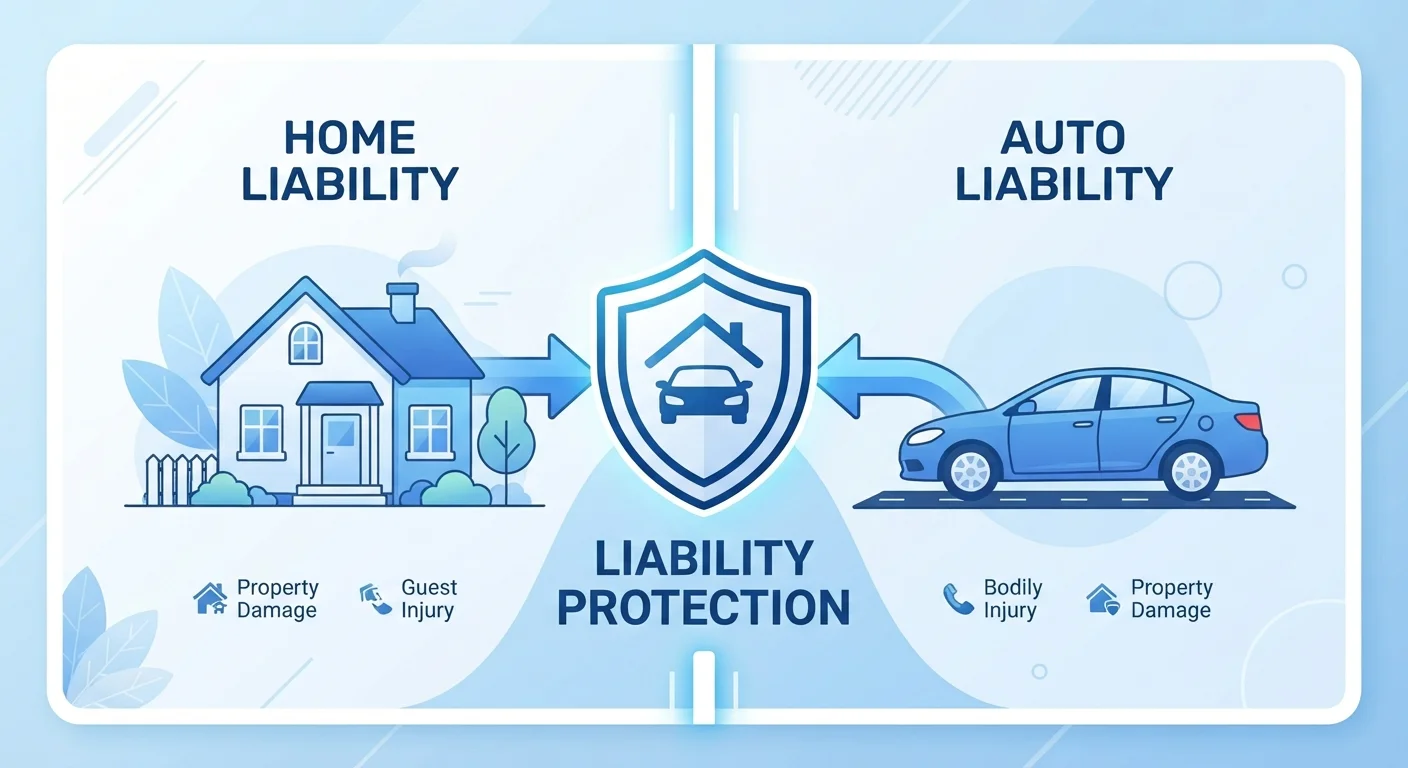
Photo: NemoFinds.com | Search, Explore, Read. editorial
Key Takeaways
- Liability coverage pays for harm you cause to others — not damage to your own property or vehicle.
- Auto liability is legally required in nearly every U.S. state; homeowners liability is not mandated by law.
- Homeowners liability can extend beyond your property to certain off-premises incidents.
- Every policy has a coverage limit; costs beyond that limit become your personal responsibility.
- An umbrella policy can extend liability limits across both home and auto if standard limits feel insufficient.
What Liability Coverage Actually Does
Strip away the insurance jargon and liability coverage has a simple job: it pays when you're responsible for hurting someone or damaging their property. Without it, those costs would come directly out of your pocket — potentially including legal defense fees if the injured party sues you.
Both homeowners and auto policies bundle liability coverage into their standard structure, which is part of why so many people don't think about it separately. But understanding how it functions in each policy type helps you recognize where your protection actually sits — and where the gaps might be.
It's worth stating upfront: this article is general educational information, not personalized insurance or legal advice. Coverage details vary significantly by insurer, state, and specific policy terms. Always read your actual policy documents and consult a licensed insurance agent for guidance on your situation.
Auto Liability: The Coverage You're Required to Carry
When you cause a car accident, auto liability coverage steps in to pay for the other party's losses. It has two distinct parts:
- Bodily injury liability — covers medical bills, lost wages, and pain-and-suffering claims from people you injure.
- Property damage liability — pays to repair or replace another person's vehicle or other property you damage.
State law sets minimum required limits for both components. You'll often see these written as three numbers — for example, 25/50/25 — representing the per-person bodily injury limit, the per-accident bodily injury limit, and the property damage limit, all in thousands of dollars. State minimums vary widely, and many insurance professionals note that minimums may not be enough to cover a serious accident.
Auto liability does not cover your own vehicle damage or your own medical expenses. For a full picture of how liability fits alongside other coverage types, see our plain-language auto coverage reference.
49 of 50
U.S. states requiring auto liability insurance
New Hampshire is the only state that does not mandate auto liability insurance, though drivers there must still demonstrate financial responsibility.
$100,000+
Typical homeowners liability limit
Standard homeowners policies commonly include $100,000 in personal liability coverage, though higher limits are available and often recommended.
$1 million
Common starting limit for umbrella policies
Personal umbrella policies typically begin at $1 million in additional liability coverage layered over existing home and auto policies.
Homeowners Liability: Broader Than Many People Expect
The liability section of a homeowners policy covers you when someone is injured on your property or when you — or in many cases, a family member in your household — accidentally cause harm or property damage to others. Common scenarios include a guest slipping on an icy walkway, a child breaking a neighbor's window, or your dog biting a visitor.
A feature that surprises many policyholders: homeowners liability often extends beyond your physical property. If you accidentally injure someone at a park or damage a neighbor's fence while doing yard work off-site, your policy may respond — though the specifics depend on your insurer and policy language.
Homeowners liability also typically includes coverage for legal defense costs, which can add up quickly even when a claim is ultimately resolved in your favor.
For more on how a standard homeowners policy is structured overall, our homeowners insurance explainer walks through each coverage component.
Review Your Liability Limits Annually
Limits, Gaps, and When to Consider More Coverage
Every liability policy has a ceiling — a maximum dollar amount the insurer will pay per claim or per year. Anything above that limit is your responsibility. Given that serious injuries or major lawsuits can reach into the hundreds of thousands of dollars, standard policy limits don't always provide a complete safety net.
Two options people commonly explore when they want more protection:
- Increasing existing limits — Most insurers allow you to raise your liability limits within the policy for an additional premium. This is often the simplest first step.
- Adding an umbrella policy — An umbrella policy sits on top of both your home and auto liability coverage and kicks in after those underlying limits are exhausted. It extends your total protection significantly, often in increments of $1 million. Our article on umbrella vs. standalone liability policies explains how these policies compare.
If you're weighing how auto liability fits into a broader coverage decision, liability-only vs. full coverage auto insurance is a useful companion read.
Liability Doesn't Cover Everything
This article is for informational purposes only and does not constitute personalized insurance, legal, or financial advice. Coverage terms, limits, and exclusions vary by insurer and state. Consult a licensed insurance professional to evaluate your specific coverage needs.
Frequently Asked Questions
The content on this site is for informational purposes only and is not a substitute for professional advice. Always consult a qualified professional for guidance specific to your situation.