
Reading a Home Insurance Declarations Page Without Getting Lost

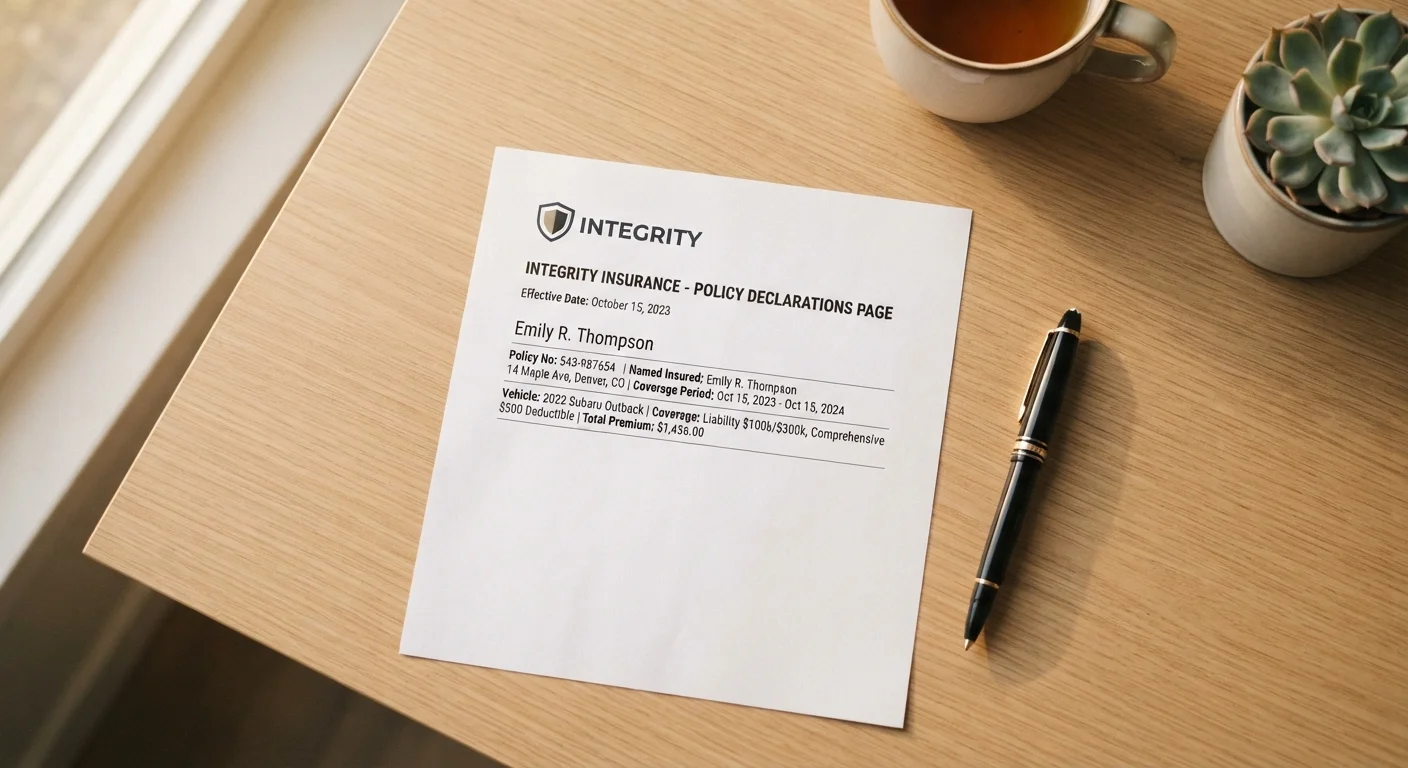
Photo: NemoFinds.com | Search, Explore, Read. editorial
Key Takeaways
- The declarations page summarizes your entire homeowners policy on a single sheet.
- It lists your coverage limits, deductibles, premium, and named insured — all in one place.
- Errors on the dec page can affect claims, so verifying accuracy when it arrives is essential.
- Coverage limits and deductibles are not the same thing; understanding both prevents surprises.
- Endorsements (add-ons) listed on your dec page can expand or restrict your standard coverage.
What the Declarations Page Actually Is
When your home insurance policy arrives — whether by mail or email — it typically includes a thick packet of legal language. The declarations page (commonly called the "dec page") sits at the very front. Think of it as the summary card for your entire policy: one or two pages that compress everything meaningful into an at-a-glance format.
It is not the full policy. The rest of the packet contains the fine print — definitions, exclusions, and conditions — that the dec page simply references. But the dec page is where the numbers live, and numbers are what matter most when a claim arises.
Before diving into individual sections, it helps to have a basic understanding of how homeowners policies are structured. If you haven't read one before, the Homeowners Insurance, Explained from the Ground Up guide is a useful starting point.
What you will need
How to Read Each Section of Your Dec Page
Most dec pages follow a standard layout regardless of the insurer. Work through them in order.
Confirm the Named Insured and Property Address
The top section lists the named insured — the person(s) legally covered under the policy — along with the insured property address. Verify that your full legal name is spelled correctly and that the property address matches exactly. If a co-owner or spouse should be listed, confirm they appear here too.
Note the Policy Period
The policy period shows the exact start and end dates of your coverage — typically a 12-month span. Coverage begins at 12:01 a.m. on the start date and ends at 12:01 a.m. on the expiration date. Note these dates so you can renew before the gap hits.
Review Coverage Amounts (Sections A Through D)
Most standard homeowners policies break coverage into four sections:
- Coverage A – Dwelling: Covers the structure of your home. This figure should reflect the estimated cost to rebuild, not the purchase price.
- Coverage B – Other Structures: Covers detached garages, fences, or sheds — usually set at 10% of Coverage A by default.
- Coverage C – Personal Property: Covers your belongings. Check whether the policy pays actual cash value (depreciated) or replacement cost value (what it costs to buy new).
- Coverage D – Loss of Use: Pays for temporary housing if your home becomes uninhabitable due to a covered event.
Identify Your Deductible(s)
The deductible is the amount you pay out of pocket before insurance covers the rest. Some policies have a single flat deductible; others carry separate deductibles for specific perils — most commonly wind, hail, or hurricane. A hurricane deductible is often expressed as a percentage of your dwelling coverage rather than a flat dollar amount, which can mean a much larger out-of-pocket cost.
Check Your Liability and Medical Payments Coverage
The dec page also shows Section E – Personal Liability, which covers you if someone is injured on your property and sues, and Section F – Medical Payments to Others, a smaller limit that pays a guest's minor medical bills without requiring a lawsuit. These limits are often overlooked but can matter enormously.
Spot Any Endorsements or Exclusions Listed
Endorsements are add-ons that modify the standard policy — they can broaden coverage (like adding sewer backup coverage) or restrict it. They appear by name or code on the dec page. Look up any unfamiliar codes in your policy packet's endorsement section to understand exactly what they mean for your coverage.
Comparing Across Policy Types
This article provides general insurance education and is not a substitute for advice from a licensed insurance professional. Coverage terms, limits, and exclusions vary by insurer and state. Always read your actual policy documents and consult a licensed agent for guidance specific to your situation.
Common Errors to Catch Right Away
Insurance companies process a high volume of policies, and clerical mistakes happen. When your dec page arrives, scan for these common errors before filing it away:
- Misspelled name or wrong address — The named insured must match legal records; a mismatch can complicate a claim.
- Wrong dwelling coverage amount — This should reflect the cost to rebuild your home, not its market value. These figures can differ significantly.
- Missing endorsements — If you added riders for jewelry, a home office, or water backup coverage, confirm they appear.
- Incorrect effective date — A one-day gap between policies can leave you exposed.
If anything looks wrong, contact your insurer or agent promptly. Most corrections are straightforward, but they need to be documented in writing. An annual review is equally valuable — the Annual Home Insurance Policy Review guide walks through what to reassess each year.
Don't Wait Until a Claim to Read This
The content on this site is for informational purposes only and is not a substitute for professional advice. Always consult a qualified professional for guidance specific to your situation.