
Keeping Pet Care Consistent When Life Gets Busy

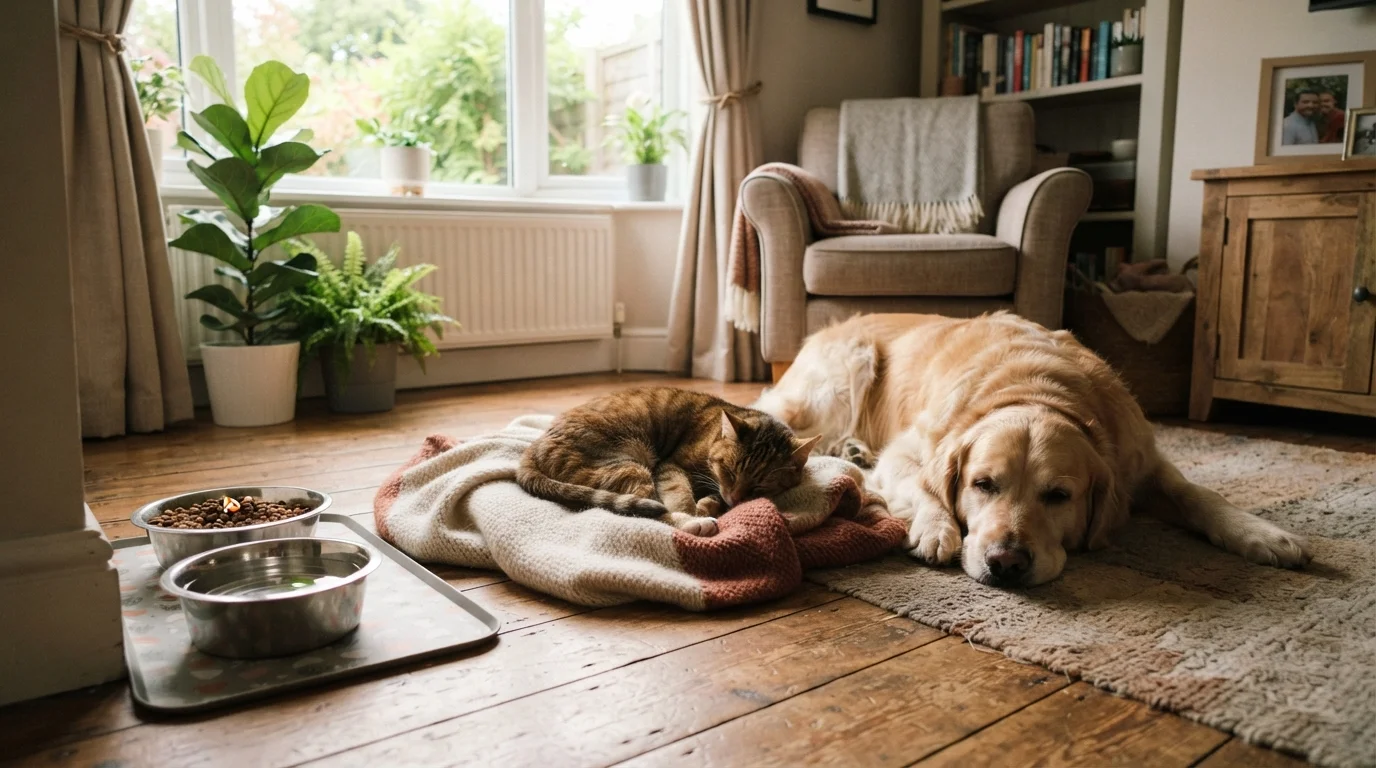
Photo: NemoFinds.com | Search, Explore, Read. editorial
Key Takeaways
- Pets rely on predictable timing for feeding, exercise, and rest to maintain physical and behavioral health.
- Simple systems — backup caregivers, written schedules, and auto-feeders — can bridge gaps during busy periods.
- Disruptions are inevitable; the goal is a quick, calm return to routine, not perfection.
- Mental enrichment can partially compensate when physical activity is temporarily reduced.
- Communicating your pet's specific needs to any caregiver is as important as having one available.
Why Consistency Matters More Than You Might Think
Most pet owners know that animals do better with routine — but it's easy to underestimate just how much daily predictability shapes a pet's physical health and emotional stability. Dogs and cats regulate stress hormones partly through environmental cues: the timing of meals, the sound of a leash, the moment their owner typically returns home. When those cues become erratic, behavioral changes — anxiety, house-soiling, destructive chewing — often follow.
The good news is that maintaining consistency doesn't require a rigid, unchangeable schedule. It requires intentional systems that hold the essential elements of care in place even when the rest of life shifts. The strategies below are drawn from established veterinary and animal behavior guidance, and they apply whether you're navigating a demanding work stretch, a family obligation, or recurring travel.
For a closer look at what a well-structured daily routine looks like, see The Daily Rhythm of Responsible Pet Ownership.
Start With the Non-Negotiables
Strategies for Keeping Pet Care on Track
Each of the following approaches addresses a specific pressure point — from coverage gaps to mental health needs — so you can build a plan that holds up across different kinds of disruption.
Anchor your day around fixed feeding times
Of all daily care tasks, feeding is the one most worth protecting. Meals given at consistent times support digestive health and help pets anticipate — and therefore tolerate — other variations in the day. If your schedule shifts unpredictably, an automatic feeder can maintain timing even when you can't. Set it to mirror your established routine as closely as possible rather than introducing new timing.
Keep in mind that hydration is equally important and often overlooked. A consistently filled, clean water source is non-negotiable — especially for cats, who are naturally low-thirst drinkers. For more on this topic, see why water intake matters more than most owners track.
Fixed feeding times are the single highest-impact element of a pet's daily routine.
Build a reliable backup care network before you need it
The most common mistake owners make is waiting until a crisis to identify a backup caregiver. Whether it's a trusted neighbor, a professional pet sitter, or a family member, that person should know your pet before they're responsible for it. Arrange at least one introduction visit so your pet associates them with a calm, positive experience rather than sudden change.
Prepare a written care sheet that covers feeding amounts and times, any medications and how to administer them, behavioral quirks, and emergency contacts — including your veterinarian's number. A person who genuinely wants to help but lacks specifics will inevitably improvise, and improvisation under stress often means inconsistency.
Identify and prepare a backup caregiver before you ever need one — not during the emergency.
Use mental enrichment to offset reduced physical activity
On days when long walks or extended play sessions aren't possible, mental stimulation can partially compensate for reduced physical exercise. Puzzle feeders, training sessions of even five to ten minutes, scent-based games, and rotating toys all engage a pet cognitively in ways that reduce restlessness and anxiety.
This is especially relevant for high-energy breeds or working dogs who require more stimulation than a typical household schedule consistently provides. Enrichment activities are not a permanent substitute for exercise, but they are a practical bridge during genuinely busy stretches. For a deeper look at this, see why pets need enrichment, not just exercise.
Even a five-minute training session provides meaningful mental stimulation when a full walk isn't possible.
Communicate your pet's needs precisely to any caregiver
A caregiver who knows your pet is reliable eats at 7 a.m. and 5 p.m., needs medication hidden in a soft treat, and becomes anxious near loud noises will perform very differently than one given only a vague briefing. The level of detail you provide directly affects the quality of care your pet receives in your absence.
Include behavioral context too: how your pet signals discomfort, what its normal elimination pattern looks like, and any known sensitivities. If your pet has a history of common at-home care errors, note those explicitly so your caregiver avoids them. Also flag which symptoms would warrant an urgent veterinary call — something covered in depth in signals that a routine vet visit has become urgent.
Specific, written instructions consistently outperform verbal briefings when caregivers are managing unfamiliar pets.
Re-establish routine deliberately after any disruption
After travel, illness, or any extended schedule disruption, pets often need an intentional re-settling period. Resist the urge to immediately compensate with extra treats or uncharacteristic leniency, as this can reinforce anxious or attention-seeking behavior rather than resolving it. Instead, return to the normal schedule as directly as possible — same feeding times, same walk routes, same bedtime patterns.
If your pet shows persistent behavioral changes — excessive vocalization, changes in appetite, or altered elimination habits — after a disruption lasting more than a few days, consult your veterinarian. These can be signs of stress-related health changes that benefit from professional evaluation rather than watchful waiting alone. See the Pet Health & Wellness hub for broader guidance on keeping your pet healthy across life's inevitable changes.
Returning to your normal schedule promptly after disruption is more effective than extended compensation.
Senior and Special-Needs Pets Need Extra Planning
Building a Resilient Routine for the Long Term
No routine survives every disruption perfectly. The measure of a good pet care system is not whether it ever breaks down, but how quickly and calmly it can be restored. Just as sustaining healthy habits through life disruptions for yourself requires rebuilding after a reset, the same patient approach applies to your pet's care. Start with the most critical elements — feeding and medication — and layer the rest back in as your schedule stabilizes.
If you're unsure whether a lapse in routine has affected your pet's health, a wellness check is always a reasonable next step. Learn more about what your pet's annual wellness exam covers to know what veterinarians look for during routine visits.
This article provides general pet care information and is not a substitute for professional veterinary advice. Consult a licensed veterinarian for guidance specific to your pet's health, age, and individual needs.
The content on this site is for informational purposes only and is not a substitute for professional advice. Always consult a qualified professional for guidance specific to your situation.