
Clean Beauty: Separating the Useful Ideas From the Marketing Noise

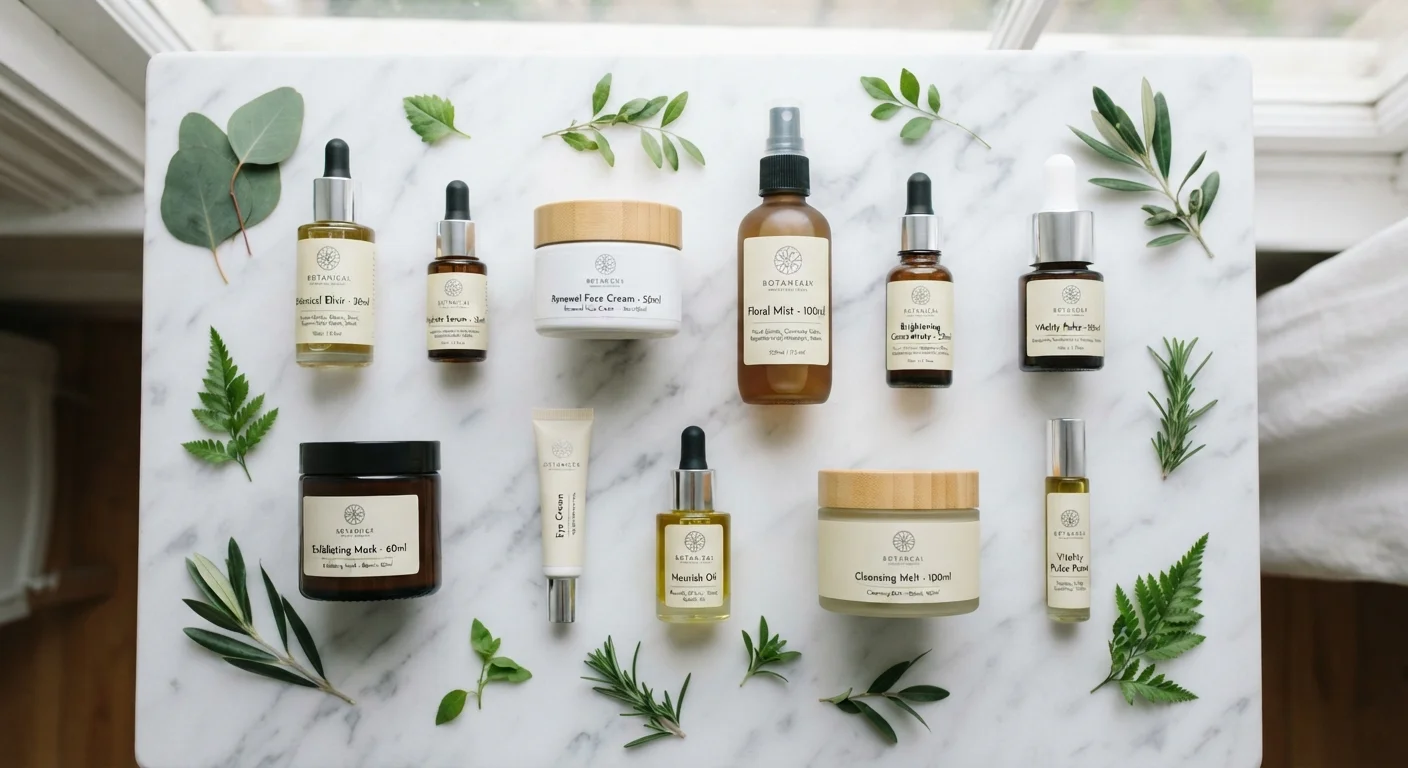
Photo: NemoFinds.com | Search, Explore, Read. editorial
Key Takeaways
- 'Clean beauty' is not a regulated term — any brand can use it without meeting a defined standard.
- Natural ingredients are not automatically safe, and synthetic ingredients are not automatically harmful.
- Ingredient safety depends on concentration, formulation, and individual skin sensitivity.
- Reading an INCI ingredient list is more reliable than trusting a product's marketing label.
- Certified third-party standards (like COSMOS or EWG Verified) offer more accountability than self-applied labels.
Why 'Clean Beauty' Doesn't Mean What You Think
Walk into any beauty aisle — or scroll through a brand's website — and 'clean' is everywhere. It appears on serums, shampoos, foundations, and lip balms, conjuring images of purity and safety. But here's the thing: in the United States, no regulatory body defines what 'clean beauty' actually means. The FDA regulates cosmetic safety, but it does not endorse or define the 'clean' label. That means every brand gets to write its own definition.
Some brands use 'clean' to mean free of a short list of controversial ingredients. Others mean fragrance-free, vegan, or simply packaged in recycled materials. A few use it as pure aesthetic branding. Because the term carries no legal weight, products labeled 'clean' can contain virtually anything — and products without the label may be formulated with exceptional care.
Understanding this gap between marketing language and meaningful information is the first step toward building a smarter, more confident beauty routine. For a practical look at keeping your whole routine evidence-based, see our Weekly Skincare Reset Checklist.
Myth
If an ingredient is natural, it must be safe for your skin.
Fact
Natural origin does not determine safety. Many natural substances — including essential oils, certain plant extracts, and poison ivy — can cause allergic reactions or irritation.
The word 'natural' describes where an ingredient comes from, not what it does on contact with your skin. Poison ivy is natural. So is formaldehyde, which occurs naturally in many foods and in the human body. Meanwhile, many synthetic ingredients are engineered precisely to be stable, non-irritating, and effective at low concentrations. Dermatologists consistently note that allergic contact dermatitis is just as likely to be triggered by botanical extracts as by lab-made compounds. What matters is the specific ingredient, its concentration, and your individual skin biology — not whether it came from a lab or a plant.
Myth
Synthetic ingredients are chemicals, and chemicals are harmful.
Fact
Everything — including water, oxygen, and your own skin cells — is made of chemicals. 'Chemical' is a neutral scientific term, not a synonym for harmful.
The rhetorical move of calling synthetic ingredients 'chemicals' while implying natural ones are chemical-free is scientifically incoherent. Both are chemicals. What actually determines safety is a substance's toxicity at a given dose, how it's formulated, how much skin absorbs it, and how frequently it's used. Regulatory agencies like the FDA and the EU's Scientific Committee on Consumer Safety evaluate cosmetic ingredients on these evidence-based criteria. Avoiding a product simply because an ingredient sounds unfamiliar or hard to pronounce isn't a safety strategy — it's anxiety rebranded as wellness.
Myth
'Clean' beauty products are always safer for sensitive skin.
Fact
Clean-labeled products frequently contain highly fragrant botanical oils and plant extracts — among the most common triggers for sensitive skin reactions.
People with sensitive or reactive skin are sometimes drawn to 'clean' products under the assumption they'll be gentler. In practice, many 'clean' formulations substitute synthetic preservatives with high concentrations of essential oils — lavender, tea tree, citrus — which are documented skin sensitizers for some people. A fragrance-free, dermatologist-tested product without a 'clean' label may actually be far less irritating. If you're navigating this for your skin type, our article on what 'non-comedogenic' really means is a useful companion read on decoding label claims.
Myth
Parabens are proven to be dangerous and should always be avoided.
Fact
Current scientific consensus from regulatory bodies, including the FDA and the European Commission's Scientific Committee, does not support a ban on parabens at concentrations used in cosmetics.
Parabens became widely feared after a 2004 study detected them in breast tissue samples. However, subsequent scientific reviews — including assessments by the EU's Scientific Committee on Consumer Safety — concluded that parabens commonly used in cosmetics (such as methylparaben and ethylparaben) are safe at the concentrations permitted in products. The concern stemmed from parabens' weak estrogenic activity, but their potency is orders of magnitude lower than naturally occurring estrogens in food and the body. That said, individual sensitivities vary, and if you've had a confirmed reaction to a paraben, avoiding it makes sense. General avoidance based on fear alone isn't supported by the current body of evidence.
Myth
A higher price tag signals a cleaner, safer, or more effective formulation.
Fact
Price reflects marketing, packaging, brand positioning, and distribution costs — not necessarily ingredient quality, safety, or efficacy.
Prestige positioning is built into the economics of beauty: a premium-priced product may contain the same active ingredient at the same concentration as a drugstore alternative. 'Clean' marketing adds another layer of perceived value that can inflate price further without corresponding improvement in the formula. Reading the INCI list of two products side-by-side — regardless of price — is far more informative than assuming a higher cost reflects superior safety or effectiveness. For a broader look at when price signals quality and when it doesn't, see our piece on store brands vs. name brands.
How to Actually Evaluate What's in Your Products
Once you set marketing language aside, the real information lives in the INCI list — that's the INCI ingredient list required on every cosmetic product sold in the US. Ingredients are listed in descending order by concentration, so the first five to ten entries make up the bulk of what you're applying to your skin.
0
Federal regulatory definitions of 'clean beauty' in the US
The FDA regulates cosmetic safety but does not define or endorse the 'clean,' 'natural,' or 'green' labels used on beauty packaging.
~11
Personal care products used by the average American daily
According to the Environmental Working Group, the average American uses approximately 11 personal care products per day, containing dozens of unique ingredients.
Top 5
Ingredients make up the bulk of most formulas
Cosmetic chemists commonly note that the first five ingredients on an INCI list typically account for the majority of a product's composition by weight.
A few practical habits help enormously here. Cross-referencing unfamiliar ingredients with databases like the FDA's Voluntary Cosmetic Registration Program data or peer-reviewed dermatology literature gives you grounded information rather than fear-based headlines. If you're sensitive to fragrance — one of the most common causes of contact dermatitis — our article on why fragrance in skincare divides dermatologists walks through the evidence clearly.
For hair products specifically, the same skepticism applies. Ingredients like sulfates, parabens, and silicones are routinely flagged by 'clean' marketing, but their actual impact depends heavily on your hair type and scalp condition. Our plain-language breakdown of sulfates, parabens, and silicones separates the legitimate concerns from the hype.
Don't Confuse 'Free-From' With 'Better For You'
Third-party certification programs — such as COSMOS Organic, COSMOS Natural, or EWG Verified — require brands to meet published, independently audited criteria. These aren't perfect systems, but they're far more accountable than a self-applied 'clean' sticker. If a brand genuinely meets a rigorous standard, they'll typically display a verifiable certification logo rather than just a buzzword.
This article is for general informational purposes only and does not constitute medical or dermatological advice. If you have a skin condition, allergies, or sensitivities, consult a qualified dermatologist before changing your skincare routine.
The content on this site is for informational purposes only and is not a substitute for professional advice. Always consult a qualified professional for guidance specific to your situation.