
Fabric Care Labels: What Every Symbol Actually Means

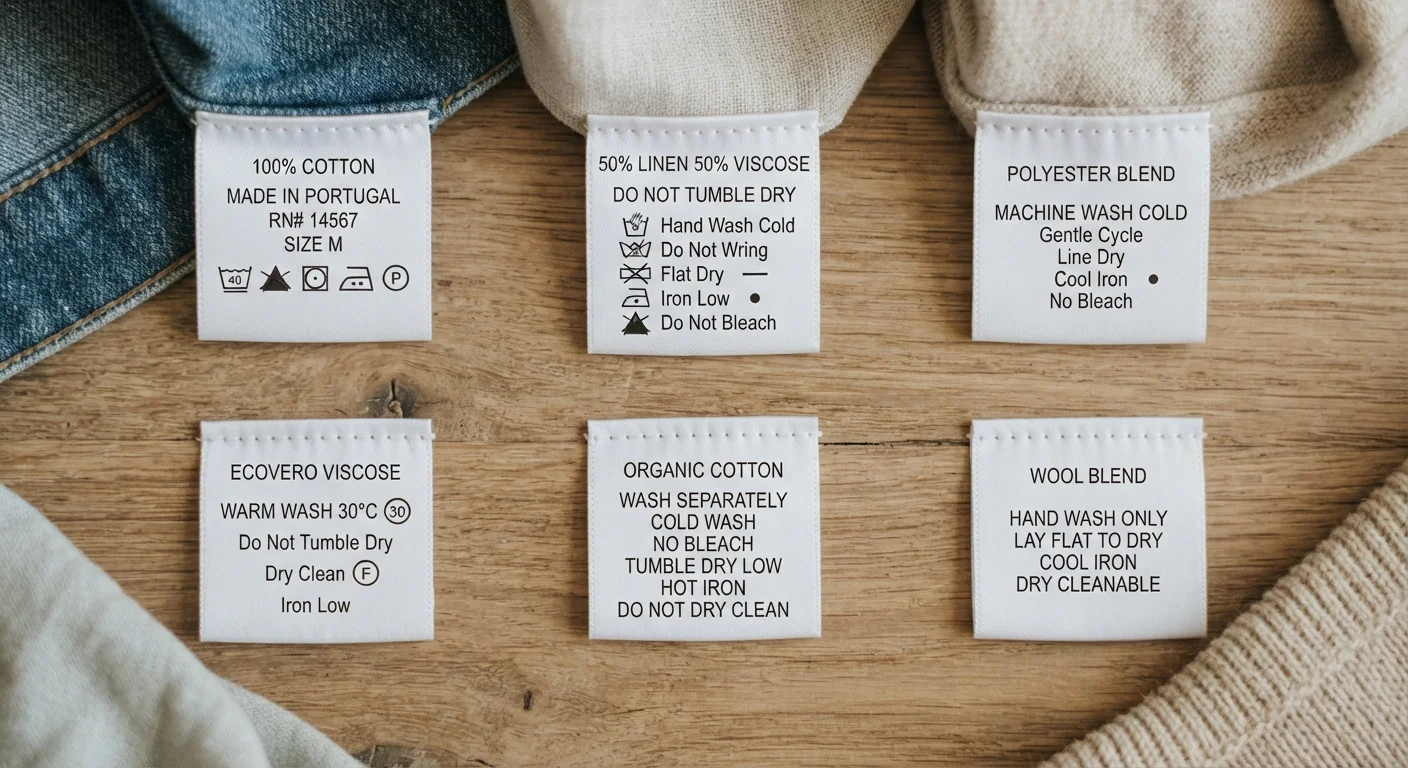
Photo: NemoFinds.com | Search, Explore, Read. editorial
Why Care Labels Exist — and Why They Matter
That strip of fabric stitched inside your collar isn't just scratchy filler. In the United States, the Federal Trade Commission's Care Labeling Rule has required clothing manufacturers to attach permanent care instructions to most garments since 1972. Those instructions protect both the garment and you — follow them and your clothes last longer; ignore them and you risk shrinkage, fading, or fabric damage that can't be undone.
Today, most labels use internationally standardized pictograms rather than (or alongside) written instructions. Once you understand the five symbol categories, you'll be able to decode virtually any tag — whether the garment was made in the US, Europe, or Asia.
Think of care symbols the same way you'd approach a nutrition label or an ingredient list. They're concise shorthand designed to protect something you've already invested in. If you enjoy decoding labels in other areas of life, our guide to reading hair product labels uses the same mindset applied to your haircare shelf.
| Standard symbol system | ASTM D5489 (US) / ISO 3758 (international) (ASTM International) |
| Core symbol categories | 5: washing, bleaching, drying, ironing, dry cleaning |
| Care label requirement | Mandatory on most clothing sold in the US since 1972 (US Federal Trade Commission (FTC)) |
| X over a symbol means | Do not perform that care method |
| Number of wash temperature symbols | 5 water temperature levels (cold through very hot) |
| Hand wash temperature guideline | Generally 30°C / 86°F or cooler |
The Five Symbol Categories, Decoded
Washing (Tub of Water)
A simple tub shape represents machine washing. Dots inside the tub indicate water temperature: one dot = cold (up to 30°C/86°F), two dots = warm (up to 40°C/104°F), and so on up to very hot. A hand dipping into the tub means hand wash only. A tub with an X through it means do not wash with water at all.
Underlines below the tub matter too: no underline = normal cycle, one underline = permanent press, two underlines = gentle or delicate cycle.
Bleaching (Triangle)
An empty triangle means any bleach is acceptable. A triangle with two diagonal lines means only non-chlorine (oxygen) bleach. A filled or crossed-out triangle means no bleach of any kind.
Drying (Square)
A square with a circle inside = tumble dry. Dots inside the circle indicate heat level (one dot = low, two = medium, three = high). A plain square with lines represents line drying, a square with a horizontal line inside means dry flat, and a square with a curved line at the top means drip dry. An X over any of these means avoid that method.
Ironing (Iron Shape)
Dots inside the iron indicate temperature: one dot = low (great for synthetics), two dots = medium (wool, polyester blends), three dots = high (cotton and linen). An X over the iron means do not iron. An X over the steam vents at the bottom of the iron symbol means no steam.
Professional Cleaning (Circle)
A plain circle means dry clean. Letters inside the circle (like F or P) tell the dry cleaner which solvents to use — useful for the professional but not something you need to act on yourself. An X through the circle means do not dry clean.
Tumble dry
Machine drying where clothes rotate in a heated drum. Symbol variations indicate heat level — from no heat to high heat.
Dry clean
A professional cleaning process using chemical solvents instead of water. The circle symbol on a label indicates this method is required or recommended.
Gentle/Delicate cycle
A washing machine setting that uses slower agitation and shorter spin cycles to reduce mechanical stress on fragile fabrics.
Lay flat to dry
A drying method where garments are reshaped and placed horizontally on a clean surface, preventing stretching caused by hanging or machine drying.
Bleach
A chemical agent used to whiten or disinfect fabric. Care labels specify whether chlorine bleach, non-chlorine bleach, or no bleach at all should be used.
Ironing temperature dots
One, two, or three dots inside an iron symbol indicate low, medium, or high heat settings, helping match the iron temperature to the fabric's heat tolerance.
Common Mistakes — and How to Avoid Them
Misreading care labels is one of the most common reasons clothes get ruined prematurely. Here are the errors that come up most often:
- Ignoring the underlines on the wash symbol. Tossing a delicate-cycle garment in with a normal load stresses the fibers, even if the temperature is right.
- Confusing "dry flat" with "hang to dry." Hanging a wet knit sweater lets gravity stretch it out of shape. Lay flat means exactly that — on a clean, dry towel or rack.
- Using steam when the symbol says not to. Steam can distort structured fabrics, velvet, and certain embellishments even at low temperatures.
- Assuming "dry clean" means "dry clean only." Unless the label says only, some garments can be carefully hand-washed. When in doubt, test a small hidden area or take it to a professional.
Matching the care method to the actual fabric is a foundational style skill — much like knowing how to dress for specific occasions. Our dress code reference guide applies the same kind of practical, rule-based thinking to getting dressed confidently.
When Labels Are Missing or Worn Out
The content on this site is for informational purposes only and is not a substitute for professional advice. Always consult a qualified professional for guidance specific to your situation.