
Air Purifier vs. Dehumidifier: Which One Does Your Home Actually Need?

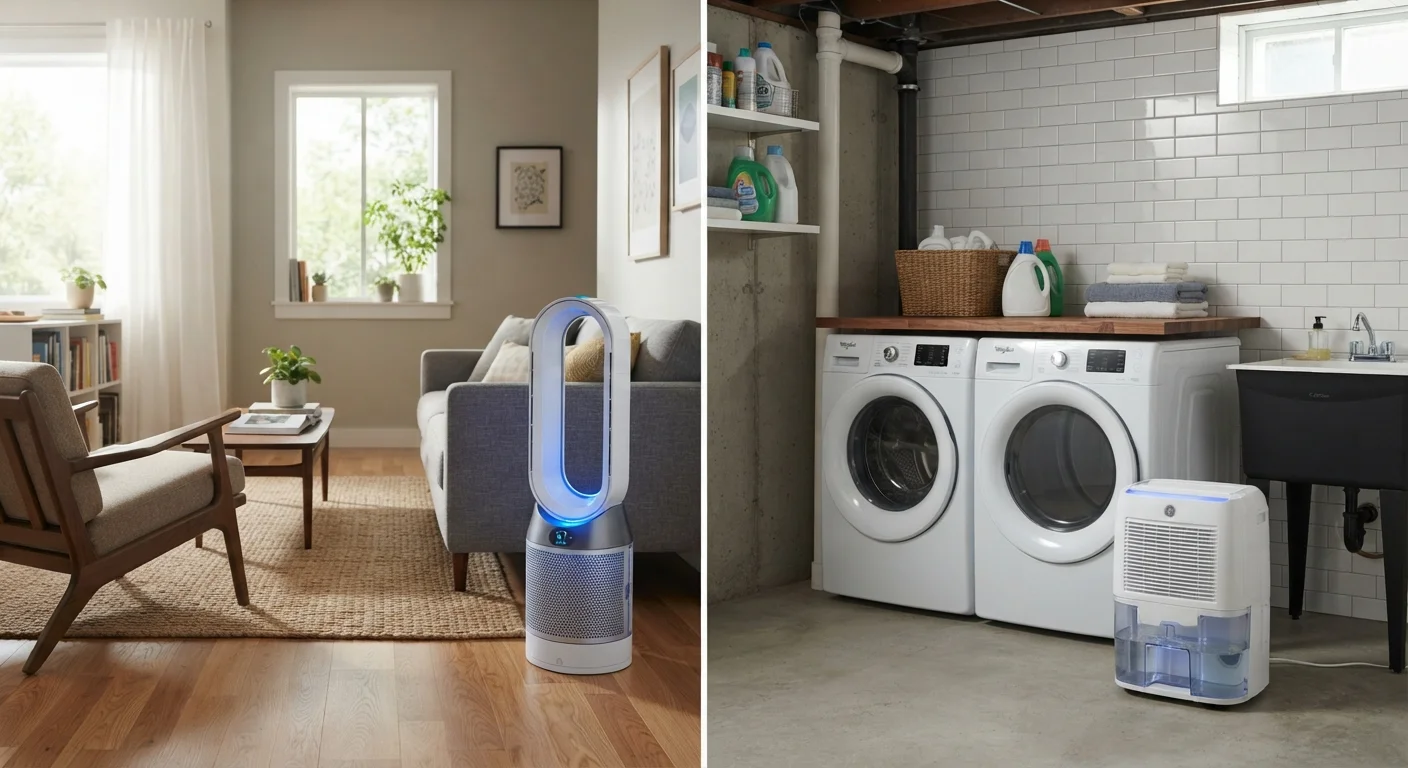
Photo: NemoFinds.com | Search, Explore, Read. editorial
Key Takeaways
- Air purifiers remove airborne particles; dehumidifiers reduce moisture levels in the air.
- The right choice depends on your specific symptoms — respiratory irritation vs. dampness or mold.
- In some homes, both devices serve genuinely different purposes and can be used together.
- Neither device substitutes for addressing the root cause of air quality or moisture problems.
- Filter maintenance is critical for air purifiers to continue working effectively over time.
What Each Device Actually Does
These two appliances are frequently lumped together under the vague label of "air quality," but they work through entirely different mechanisms and solve distinct problems.
An air purifier moves air through one or more filters — most commonly a HEPA (High-Efficiency Particulate Air) filter — to capture microscopic particles: dust, pollen, pet dander, mold spores, smoke, and some bacteria. The cleaned air is then recirculated into the room. An air purifier does nothing to the moisture content of the air; it only removes suspended particles and, with activated carbon filters, certain gases and odors.
A dehumidifier pulls air over a cooled coil, causing water vapor to condense and drip into a collection tank, then returns drier air to the room. It lowers the relative humidity (the percentage of water vapor in the air). It does not filter particles or improve air cleanliness in the particle sense — it specifically targets moisture.
The simplest diagnostic: if your problem is what's floating in your air, you likely need an air purifier. If your problem is how wet your air is, you need a dehumidifier.
| Criterion | Air Purifier | Dehumidifier |
|---|---|---|
| Primary function | Removes airborne particles and pollutants | Reduces moisture/humidity in the air |
| Target problem | Allergens, smoke, dust, pet dander | Condensation, mold risk, musty odors |
| Key technology | HEPA and/or activated carbon filters | Refrigerant coil condensation |
| Ongoing maintenance | Filter replacement (varies by model) | Empty water tank; clean coils periodically |
| Best room placement | Living areas, bedrooms, high-traffic rooms | Basements, bathrooms, laundry rooms |
| Effect on humidity | None | Measurably reduces relative humidity |
| Effect on particle count | Significantly reduces airborne particles | Indirectly (fewer mold spores if mold prevented) |
Matching the Device to Your Symptoms
Rather than guessing by the device, start with what you're actually experiencing indoors.
Signs pointing to an air purifier
- Persistent sneezing, itchy eyes, or nasal congestion that improves when you leave home
- Visible dust accumulation despite regular cleaning
- Pet odors or tobacco smoke lingering in rooms
- Asthma or allergy flare-ups that seem tied to indoor exposure
Signs pointing to a dehumidifier
- Condensation forming on windows or cold surfaces
- Musty or earthy odors, particularly in basements, bathrooms, or closets
- Visible mold or mildew on walls, grout, or fabric
- Warping wood floors, swelling doors, or peeling paint
- A general feeling of clamminess or stickiness indoors during warm months
Relative humidity above 60% consistently encourages mold growth and dust mite reproduction — two allergen sources that can blur the line between moisture and particle problems. If dust mite allergies are confirmed, lowering indoor humidity with a dehumidifier can reduce the mite population even if you also use an air purifier for the particles they shed.
50–60%
Ideal indoor relative humidity range
The EPA recommends keeping indoor humidity between 30–50% to discourage mold and dust mites; many experts cite up to 60% as the practical upper limit before mold risk rises sharply.
2–5x
Higher pollutant levels indoors vs. outdoors
The EPA has noted that indoor air can be two to five times more polluted than outdoor air, driven by inadequate ventilation, dust, and off-gassing materials.
~20 million
US adults with diagnosed hay fever
According to CDC data, roughly 20 million American adults are diagnosed with hay fever annually — a condition where indoor allergen exposure plays a major role.
Maintenance, Limitations, and What Neither Device Can Fix
Both devices require ongoing upkeep to stay effective. Air purifiers rely on filters that capture particles over time — a clogged filter not only loses efficiency but can push trapped contaminants back into the air. Filter replacement schedules matter more than most owners realize, and skipping them undermines the whole purpose of the unit.
Dehumidifiers require emptying their water collection tanks regularly, or connecting a continuous drain line. Internal coils and air intakes should be cleaned periodically to prevent mold growth inside the unit itself — an ironic failure mode if ignored.
Critically, neither device is a substitute for fixing the underlying source of a problem. An air purifier won't eliminate pet dander if the pet sleeps on every surface; it reduces airborne particles but can't keep pace with constant, unchecked shedding. A dehumidifier won't solve a basement moisture problem caused by a foundation crack or poor exterior drainage — it will run constantly, fill up quickly, and the structural issue will remain. Identifying and addressing root causes — ventilation gaps, plumbing leaks, insufficient insulation — should come before or alongside any appliance purchase.
For broader questions about when repairs and fixes are worth pursuing versus when a different approach makes sense, the thinking in repair-or-replace decisions applies here too.
When Indoor Air Quality Affects Health
The content on this site is for informational purposes only and is not a substitute for professional advice. Always consult a qualified professional for guidance specific to your situation.