
Why Household Filters Need Replacing More Often Than You Think

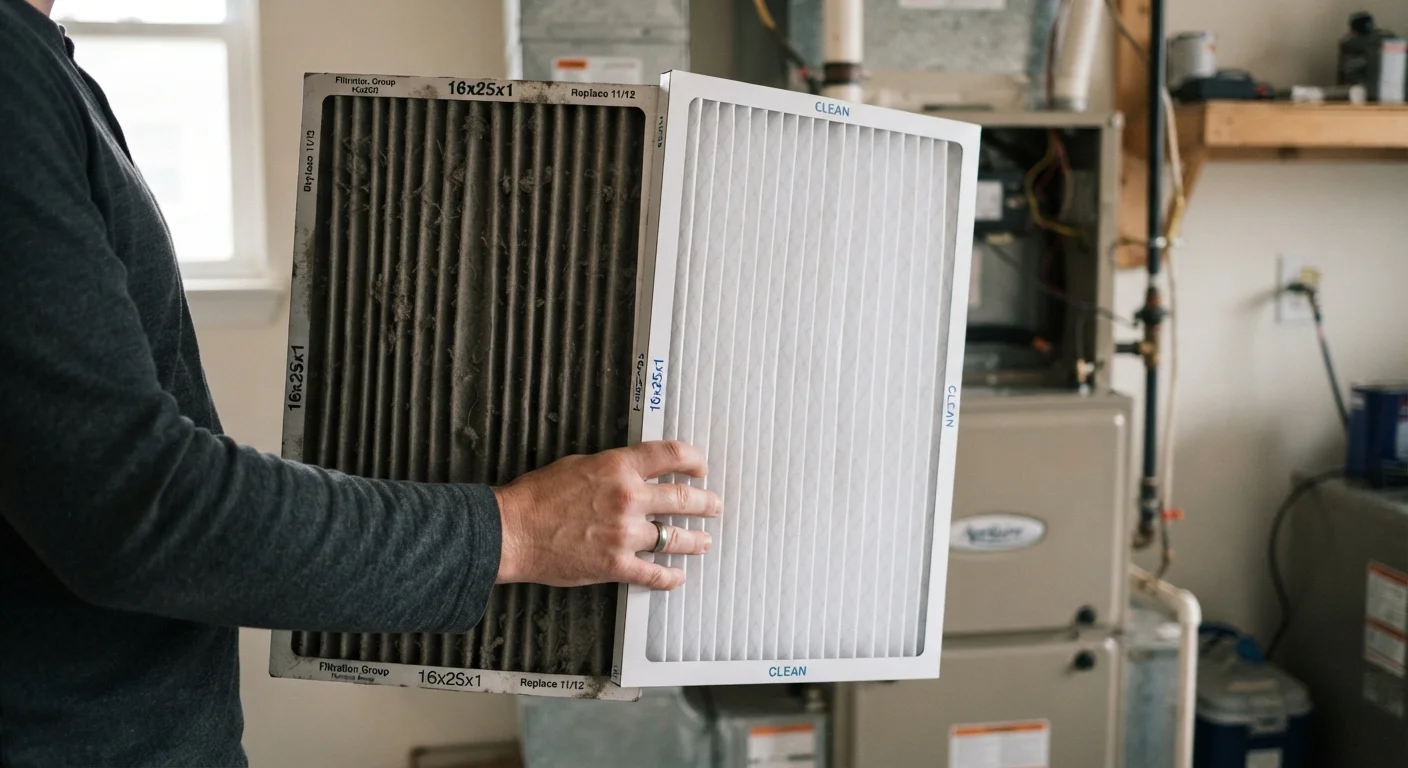
Photo: NemoFinds.com | Search, Explore, Read. editorial
Key Takeaways
- Most household filters need replacing far more frequently than packaging suggests under real-world conditions.
- Pets, cooking habits, and local air quality all accelerate filter degradation significantly.
- Ignoring filter replacement strains appliance motors, raises energy costs, and can affect indoor air quality.
- Tracking replacement dates on a simple log prevents the most common and costly oversights.
Why Filter Schedules Are More Complicated Than a Label Says
Most filter packaging lists a replacement interval — 90 days for HVAC filters, 6 months for refrigerator water filters, and so on. Those numbers aren't wrong, but they're baseline estimates built around average households that may look nothing like yours.
A home with two shedding dogs, daily high-heat cooking, and a dusty rural road out front will exhaust a filter far faster than a single-occupant urban apartment with no pets and a good building HVAC system. The label can't know your household. You have to.
Three filter types deserve the most attention because they're the most commonly neglected and carry the biggest downstream consequences when overdue: HVAC/furnace filters, drinking water filters, and range hood grease filters. Each operates differently, fails differently, and signals distress in different ways.
For a broader look at what deferred upkeep actually costs across your home, see The Hidden Costs of Owning a Large Appliance.
Myth
If my HVAC filter looks okay, it doesn't need replacing yet.
Fact
Filters can lose significant efficiency long before visible dirt accumulates on the surface you can see.
HVAC filters trap particles throughout their depth, not just on the visible face. A filter may appear relatively clean on the surface while being heavily loaded inside, which restricts airflow and reduces filtration effectiveness. Always follow a time-based inspection schedule rather than relying on appearance alone.
Myth
Water filters only need replacing when water starts tasting bad.
Fact
Most contaminants that filters remove are tasteless and odorless — a bad taste often signals the filter failed much earlier.
Activated carbon and other filtration media become saturated over time. Many contaminants, including certain heavy metals and volatile organic compounds, don't affect taste or smell. By the time water tastes off, you've likely been consuming unfiltered water for a while. Follow manufacturer time and volume limits regardless of taste.
Myth
Range hood filters just collect steam — they don't really need regular cleaning.
Fact
Range hood filters capture grease, not just moisture, and saturated grease filters are a documented fire hazard.
Every cooking session sends aerosolized grease into the air above your stovetop. Range hood filters — typically made of aluminum mesh — are designed to capture that grease before it enters the ductwork. When saturated, these filters both lose ventilation effectiveness and pose a genuine fire risk. Most manufacturers recommend cleaning or replacing them monthly for households that cook regularly.
Myth
Using a higher-rated HVAC filter (higher MERV number) means it lasts longer.
Fact
Higher-rated filters often clog faster because they trap more particles — they typically require more frequent replacement, not less.
MERV (Minimum Efficiency Reporting Value) ratings measure how effectively a filter captures small particles. A MERV-13 filter will trap finer particles than a MERV-8, but it also accumulates those particles faster. For many residential HVAC systems, very high-MERV filters can restrict airflow enough to strain the system. Check your equipment manual for the appropriate MERV range before upgrading.
Real Conditions That Accelerate Filter Wear
Several factors consistently push filter lifespans below the packaged estimate:
- Pets: Dander and fur clog HVAC filters rapidly. Households with multiple pets may need to inspect filters monthly and replace quarterly or sooner.
- Cooking frequency: Range hood grease filters in homes with daily stovetop cooking — especially frying — accumulate grease far faster than occasional-use kitchens. A filter rated for three months may need attention at six weeks.
- Occupant count: More people means more activity, more cooking, more moisture, and more particulates in the air.
- Seasonal variation: Running your HVAC system heavily during summer and winter naturally burns through filters faster than mild shoulder seasons.
- Local environment: Homes near construction zones, wildfire smoke corridors, or high-pollen regions face elevated airborne particulate loads year-round.
5–15%
HVAC efficiency loss from a dirty filter
The U.S. Department of Energy notes that replacing a clogged HVAC filter can lower system energy consumption measurably, with ranges commonly cited between 5 and 15 percent.
1 in 3
Homes with filters overdue for replacement
Industry surveys from HVAC trade associations have consistently found a substantial share of households running systems with filters past their recommended replacement interval.
If your home falls into several of these categories, build more frequent checks into your routine rather than waiting for a calendar alert. A quick visual inspection of your HVAC filter takes less than two minutes and tells you more than any fixed schedule can.
To understand which air quality tools complement filter maintenance, compare air purifiers and dehumidifiers to find what your home actually needs.
What Happens When You Wait Too Long
Delayed filter replacement isn't just a hygiene issue — it creates a cascade of mechanical and financial problems.
HVAC filters: A clogged filter forces your furnace or air handler to work harder to pull air through. This increases energy consumption, strains the blower motor, and over time can contribute to system failures that cost far more than a replacement filter. It also means the system circulates air less effectively, which matters for comfort and everyday health habits.
Water filters: Undersink and refrigerator filters that go too long don't just stop filtering — they can become a source of contamination as trapped material accumulates. Most filter manufacturers specify a maximum time interval for this reason, regardless of water usage volume.
Range hood grease filters: Saturated grease filters don't just reduce ventilation efficiency — they're a fire risk. Grease buildup in a filter directly over a gas or electric burner is a genuine hazard that home insurers and fire safety guidance both flag.
Grease Filters Are a Fire Safety Issue
Keeping a home maintenance log is one of the simplest ways to stay ahead of all of these failure points without having to remember schedules from memory.
This article is for general informational purposes only and is not a substitute for guidance from qualified appliance technicians, fire safety professionals, or water quality experts. Filter performance varies by product, household conditions, and local environment.
The content on this site is for informational purposes only and is not a substitute for professional advice. Always consult a qualified professional for guidance specific to your situation.