
Cleaning Product Ingredients That Don't Mix Well Together

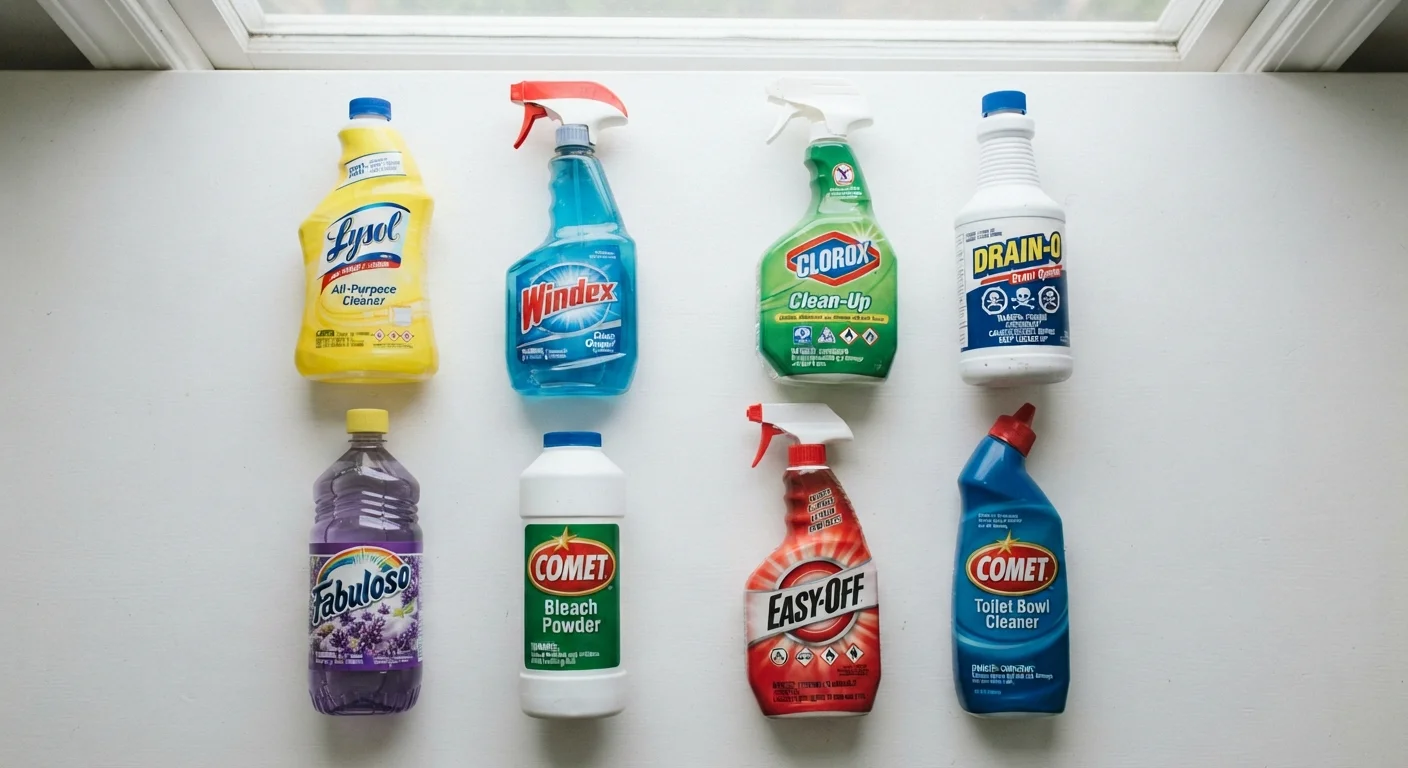
Photo: NemoFinds.com | Search, Explore, Read. editorial
Key Takeaways
- Bleach and ammonia together produce toxic chloramine gas — never combine them.
- Many multi-surface cleaners contain hidden active ingredients that react with common products.
- Ventilation and rinsing between products are your most practical safeguards.
- If accidental exposure occurs, move to fresh air immediately and contact Poison Control.
Why Mixing Cleaners Is a Real Hazard
Most people know not to drink cleaning products. Fewer realize that combining two otherwise ordinary cleaners can create fumes or chemical reactions that are genuinely dangerous — even in a well-meaning attempt to clean more effectively.
The problem isn't exotic chemistry. It's that household cleaners contain active ingredients — acids, bases, oxidizers, chlorine compounds — that are stable on their own but reactive together. Labels rarely spell this out plainly, so the risk stays invisible until something goes wrong.
If you store and organize your cleaning supplies together, it also pays to think about what happens if bottles leak or are grabbed in the wrong order. See our utility closet organization guide for practical storage strategies that reduce that risk.
Mixing bleach with ammonia-based cleaners.
Combining bleach with acidic cleaners like vinegar or certain bathroom scrubs.
Using hydrogen peroxide and vinegar on the same surface simultaneously.
Adding rubbing alcohol to bleach solutions.
Mixing different drain cleaners — or using one immediately after another.
Keeping Your Household Safe
You don't need a chemistry degree to stay safe — you need a few reliable habits. Always read the label of every product before use, paying attention to the "do not mix with" warnings that many manufacturers include. When switching between cleaners on the same surface, rinse thoroughly with water first and allow it to dry before applying the next product.
No Label Doesn't Mean No Risk
Ventilation matters even when you're using a single cleaner. Open windows, run exhaust fans, and leave the room briefly if you notice any irritation. Strong fumes are a signal to stop, not push through.
Households with pets face compounded risk — animals are lower to the ground where fumes concentrate, and they may walk through residue and self-groom. Our pet-proofing guide covers which cleaning products pose the greatest risk to animals and how to minimize exposure.
If someone is exposed to a harmful chemical combination, move them to fresh air immediately, remove contaminated clothing, and contact the U.S. Poison Control Center at 1-800-222-1222. For breathing difficulty, loss of consciousness, or severe symptoms, call 911.
This article is for general informational purposes only. It is not a substitute for professional safety guidance or medical advice. In any emergency, contact emergency services or Poison Control immediately.
The content on this site is for informational purposes only and is not a substitute for professional advice. Always consult a qualified professional for guidance specific to your situation.