
Corded vs. Cordless Vacuums: A Practical Trade-Off Guide

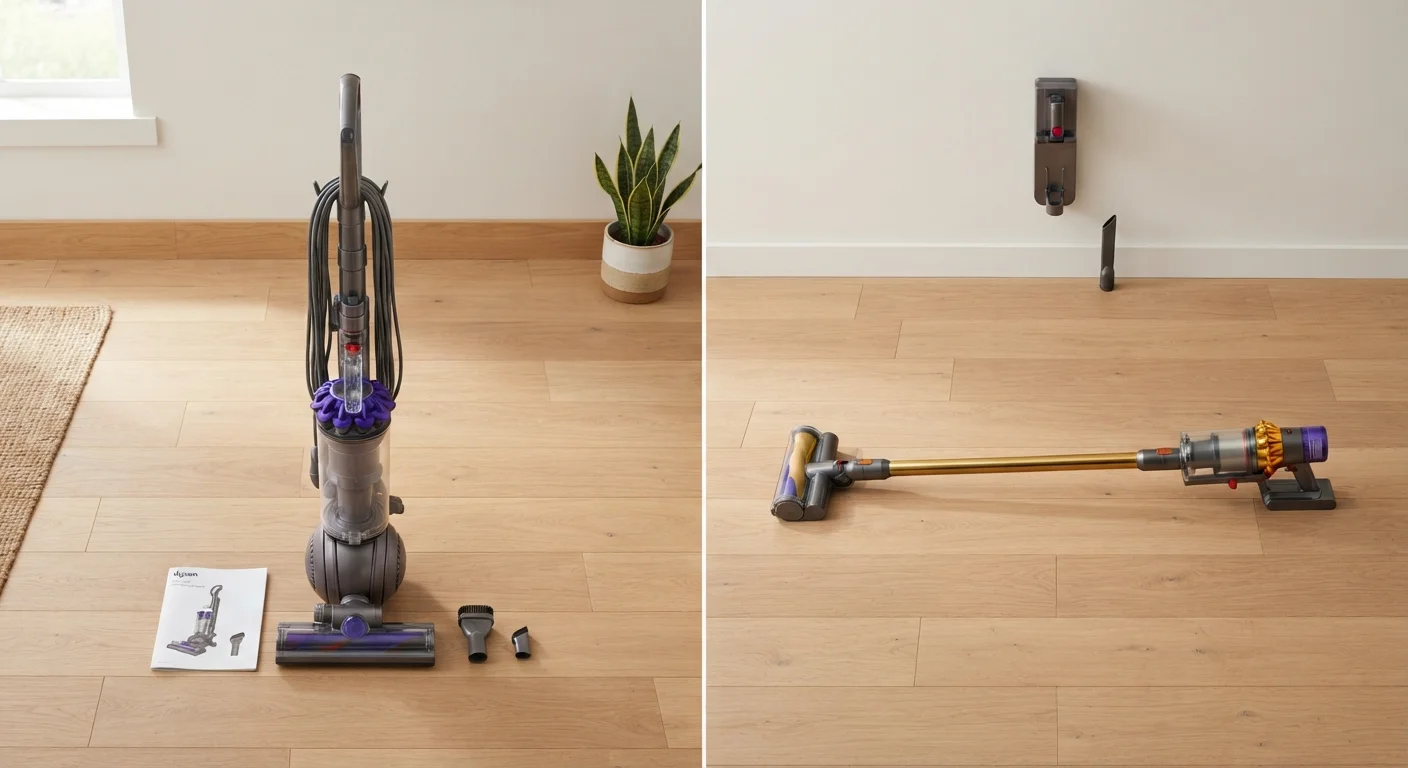
Photo: NemoFinds.com | Search, Explore, Read. editorial
Key Takeaways
- Corded vacuums deliver consistent, uninterrupted suction — cordless models are limited by battery runtime.
- Most cordless vacuums run 20–60 minutes per charge; recharge times vary widely by model.
- Corded vacuums typically outperform on deep carpet cleaning; cordless models excel on hard floors and spot tasks.
- Cordless vacuums often cost more upfront and carry long-term battery replacement costs.
- Your home's size, floor type, and cleaning habits should drive the decision more than marketing specs.
The Core Trade-Off: Power vs. Freedom
Every corded vs. cordless decision comes down to one fundamental tension: a corded vacuum draws power directly from the wall, so suction never drops mid-session. A cordless vacuum runs on a rechargeable battery, which means you gain mobility but accept a ceiling on runtime and, eventually, battery capacity.
That trade-off isn't inherently good or bad — it depends entirely on how you clean. If you vacuum once a week and your home is over 1,500 square feet, a battery cutoff mid-session is a real inconvenience. If you're doing a quick daily sweep of a studio apartment, plugging in a cord every time creates unnecessary friction.
The broader pattern here mirrors decisions across other connected-versus-wired product categories. Our guide to wired vs. wireless trade-offs covers why this tension shows up repeatedly across consumer electronics — and the underlying principles are similar.
| Criterion | Corded Vacuum | Cordless Vacuum |
|---|---|---|
| Suction consistency | Constant throughout session | Decreases as battery drains |
| Runtime | Unlimited (while plugged in) | Typically 20–60 minutes |
| Deep carpet cleaning | Strong advantage | Adequate to moderate |
| Hard floor performance | Effective | Competitive; often preferred |
| Maneuverability | Limited by cord radius | Freely mobile |
| Storage footprint | Bulkier; larger floor space | Compact; wall-mountable |
| Long-term maintenance | Filters, belts, brush rolls | Above plus battery replacement |
| Typical price range | Lower to mid-range | Mid to premium range |
Suction, Floors, and Real-World Performance
Suction power is measured in several ways — air watts, pascals, CFM — and manufacturers don't always use the same metric, which makes direct comparisons tricky. What matters in practice is how well a vacuum moves air through the specific type of debris and flooring you have.
On carpet: Corded vacuums still hold a general advantage, particularly for deep-pile or heavily soiled carpet. Their motors can sustain higher airflow consistently. Many cordless models perform well on low-pile or area rugs, but some struggle with embedded debris over longer sessions as battery charge depletes.
On hard floors: This is where cordless vacuums are most competitive. Hard floors require less suction to clean effectively, and the maneuverability of a lightweight cordless stick is a practical advantage around furniture and baseboards.
20–60 min
Typical cordless vacuum runtime per charge
Runtime varies widely by power mode; high-suction settings drain batteries significantly faster than eco modes.
2–4 years
Average lithium-ion battery useful life
Consumer electronics industry guidance generally places lithium-ion battery degradation in this range under regular use conditions.
Pet hair: High-shedding pets are one of the most common reasons corded vacuums remain relevant. Hair tangles around brush rolls and demands sustained motor power — a task that taxes battery systems more than most users anticipate.
Battery Life, Storage, and Long-Term Cost
Cordless vacuum batteries typically last between 20 and 60 minutes per charge depending on the power mode used. High-suction modes — the ones you'd actually need for carpet — drain batteries significantly faster than eco modes designed for hard floors.
Battery replacement is a cost many buyers overlook. Lithium-ion batteries degrade over time regardless of how carefully you maintain them. After two to four years of regular use, runtime can drop noticeably. Replacement battery packs, when available, add to the total cost of ownership.
Storage is a genuine advantage for cordless models. Most mount on a wall dock or stand upright on their own — compact enough for a small utility closet. Corded upright vacuums are bulkier, though canisters offer a middle ground. If storage is a constraint in your home, see our utility closet organization strategies for practical space-saving approaches.
On the cost side, cordless vacuums at the higher end of the market now rival mid-range corded models in price — sometimes exceeding them. Treating this like any other considered purchase is worthwhile; the same critical thinking that applies to electronics buying decisions generally applies here: weigh upfront cost against long-term running costs, not just sticker price.
Hybrid and Multi-Floor Households
The content on this site is for informational purposes only and is not a substitute for professional advice. Always consult a qualified professional for guidance specific to your situation.