
Wired vs. Wireless: The Real Trade-Offs Behind the Cable

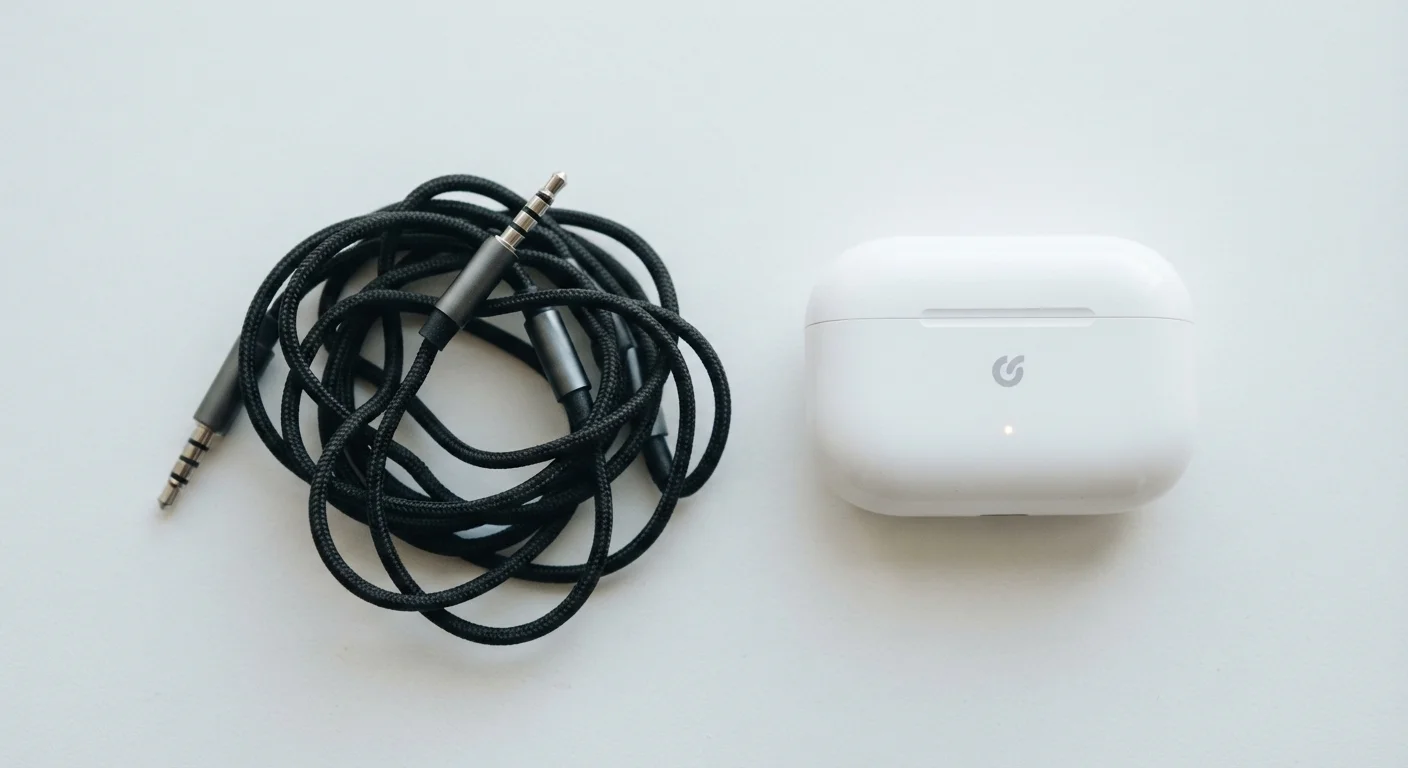
Photo: NemoFinds.com | Search, Explore, Read. editorial
Key Takeaways
- Wired connections deliver consistently lower latency and no battery dependency, making them reliable for critical tasks.
- Wireless connections have closed the quality gap significantly, but interference and battery life remain real limitations.
- The right choice depends on your specific use case — neither option is universally superior.
- Wireless tech adds complexity and potential failure points that wired setups simply don't have.
- For most everyday listeners, modern wireless audio quality is unlikely to be a noticeable weak point.
What You're Actually Comparing
Wired and wireless aren't just about whether a cable is involved — they represent fundamentally different ways of moving data or audio signals between devices. A wired connection sends signal through a physical conductor (copper wire, typically). A wireless connection transmits the same information as radio waves, most commonly via Bluetooth for personal devices or Wi-Fi for networking.
Both methods work well in the right context. The real question is which trade-offs matter for your specific situation. Understanding that starts with knowing what each approach actually costs you — and where each genuinely excels.
For a deeper look at the physical connectors involved in wired setups, see our guide to ports and cables covering HDMI, USB-C, and more.
| Criterion | Wired | Wireless |
|---|---|---|
| Latency | Near-zero (sub-millisecond) | 30–100+ ms (Bluetooth, codec-dependent) |
| Audio/Signal Quality | Lossless, consistent | High with modern codecs; varies by pairing |
| Battery Requirement | None | Yes — degrades over device lifespan |
| Interference Risk | None | Possible in crowded 2.4 GHz environments |
| Freedom of Movement | Limited by cable length | Up to ~30 m (Bluetooth 5.0+) |
| Setup Complexity | Plug in and use | Pairing required; occasional reconnect issues |
| Long-Term Reliability | Cable wear is the main failure point | Battery degradation adds a time limit |
Where Wired Connections Hold a Real Edge
Latency is the most concrete advantage. A wired connection moves signal in fractions of a millisecond. Bluetooth audio, even with modern low-latency codecs like aptX LL, introduces delays typically ranging from 30 to 100+ milliseconds depending on the codec and device pairing. For watching video, software compensates. For competitive gaming or live instrument monitoring, that gap is noticeable and can be disqualifying.
No battery, no failure mode. Wired devices work as long as the cable and connector are intact. There's no charge cycle degradation, no mid-session power death, and no need to remember to plug in the night before. Over a three-to-five year lifespan, wireless device batteries often lose meaningful capacity.
Signal consistency is also more predictable. Wireless connections can be disrupted by crowded frequency bands — busy offices, apartments with many overlapping Bluetooth devices, or interference from microwaves and other 2.4 GHz sources. Wired signals don't fluctuate based on what your neighbors are streaming.
30–100 ms
Typical Bluetooth audio latency range
Latency varies by codec — aptX LL targets under 40 ms; standard SBC Bluetooth can exceed 100 ms depending on implementation.
~30 m
Bluetooth 5.0 open-space range
Bluetooth 5.0 specification supports up to 30 meters in unobstructed conditions; walls and interference reduce real-world range considerably.
300–500 cycles
Typical Li-ion battery lifespan
Most lithium-ion batteries in consumer wireless devices retain around 80% capacity after 300–500 full charge cycles before noticeable degradation begins.
Where Wireless Has Genuinely Caught Up
Wireless audio quality has improved dramatically. Modern Bluetooth codecs — aptX HD, LDAC, and AAC — can transmit high-resolution audio at bitrates sufficient for most listeners to hear no meaningful difference from a wired connection. If you're not listening in a treated room on reference-grade equipment, wireless audio quality is unlikely to be your limiting factor.
Convenience is real value. Not having a cable means no cable management, no port wear, and no physical tether to a device. For keyboards, mice, and earbuds used across multiple devices, the ability to pair and switch wirelessly is genuinely practical — not just a marketing feature.
Wireless connections have also become more robust. Bluetooth 5.0 and newer versions offer stronger range (up to around 30 meters in open space), more stable connections, and better handling of interference than earlier generations.
Cable failures are their own frustration — see our breakdown of why cables fail if you've dealt with that repeatedly.
Bluetooth Codecs: Why They Matter
Making the Call for Your Situation
Context determines the right answer. For headphones used commuting or at the gym, wireless is almost always the practical choice. For a desktop audio setup used for music production or competitive gaming, wired remains the more reliable option. For a home office keyboard and mouse, wireless works fine for most people — the latency difference over Bluetooth is imperceptible for typing and general tasks.
Think about these factors before deciding: How often will the device need charging, and how disruptive is that? Does the use case involve real-time audio monitoring or competitive gaming where latency matters? Will the device be used in a signal-crowded environment? Is cable wear or port availability a concern with your existing hardware?
The same logic applies to larger home devices — our corded vs. cordless vacuum comparison walks through a similar trade-off framework for a different product category.
Neither wired nor wireless is objectively superior. They're different tools. The one that fits your real habits and use case is the right one.
The content on this site is for informational purposes only and is not a substitute for professional advice. Always consult a qualified professional for guidance specific to your situation.