
Stocks, Bonds, and Funds: The Building Blocks of a Portfolio

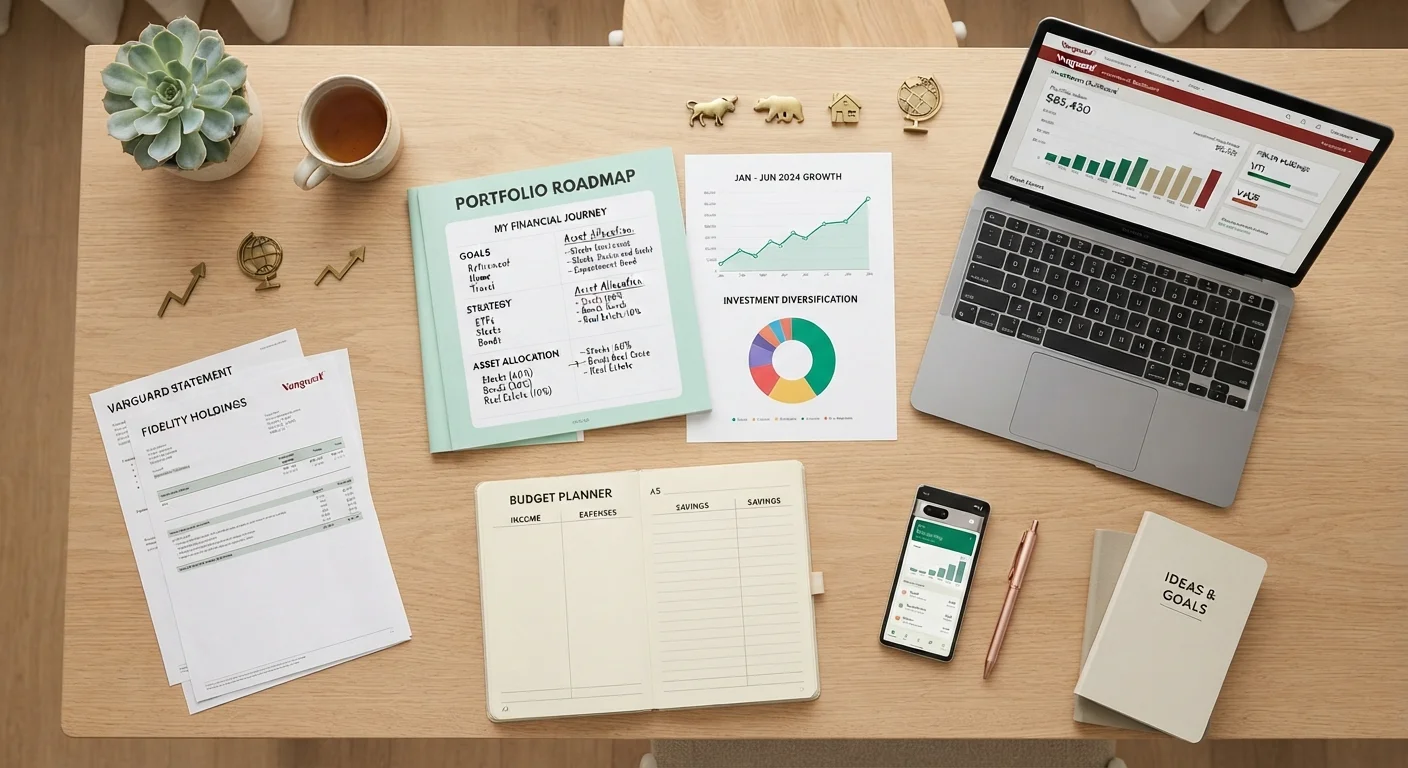
Photo: NemoFinds.com | Search, Explore, Read. editorial
Why Asset Types Matter Before You Invest a Dollar
Before you open an account or move any money, it helps to understand what you're actually buying. Most investment portfolios are built from three core asset classes: stocks, bonds, and funds. Each works differently, carries different levels of risk, and serves a distinct role in a portfolio.
Getting these basics right is foundational — not optional. As you'll see in this readiness checklist, knowing what you're buying is one of the first boxes to check before committing real money to the market.
| Asset type: Stocks | Ownership shares in a publicly traded company |
| Asset type: Bonds | Loans made to governments or corporations in exchange for interest |
| Asset type: Mutual Funds | Pooled investment vehicles holding a basket of securities |
| Asset type: ETFs | Exchange-traded funds that trade on stock exchanges like individual stocks |
| Key risk concept | Higher potential return generally comes with higher potential loss |
| Diversification purpose | Spread risk across multiple asset types so one loss doesn't sink the portfolio |
Stocks: Owning a Piece of a Business
A stock (also called a share or equity) represents a fractional ownership stake in a company. When a company goes public, it issues shares that investors can buy and sell on a stock exchange.
Stockholders can benefit two ways: through price appreciation (the stock's value rises over time) and through dividends (a portion of the company's profits paid out to shareholders, though not all stocks pay dividends).
The trade-off is volatility. Stock prices can swing sharply based on company earnings, economic news, or market sentiment. Over long time horizons, equities have historically outpaced inflation by a meaningful margin — but past performance does not guarantee future results, and individual stocks carry the risk of significant or total loss.
~4,000+
U.S. publicly traded stocks available to investors
The U.S. equity market includes thousands of individual stocks across dozens of sectors, giving investors broad options for diversification.
~$55T
U.S. bond market size
The U.S. bond market is one of the largest in the world, encompassing government, municipal, and corporate debt instruments.
New investors often make the mistake of treating stocks as short-term bets rather than long-term ownership positions. For how behavioral traps affect returns, see why new investors often derail their own returns.
Bonds: Lending Money for a Fixed Return
A bond is a debt instrument. When you buy a bond, you're lending money to the issuer — a government, municipality, or corporation — in exchange for regular interest payments (called a coupon) and the return of the principal when the bond matures.
Bonds are generally considered lower-risk than stocks, though they are not risk-free. Key risks include:
- Credit risk: The issuer could default and fail to repay.
- Interest rate risk: When prevailing interest rates rise, existing bond prices typically fall.
- Inflation risk: Fixed interest payments may lose purchasing power over time.
In a portfolio, bonds often serve as a stabilizer — providing income and reducing overall volatility when stock markets decline. The proportion of bonds versus stocks in a portfolio is usually tied to an investor's time horizon and risk tolerance.
This Is General Education, Not Personal Advice
Funds: Instant Diversification in One Investment
Rather than buying individual stocks or bonds, most everyday investors use funds — pooled vehicles that hold a basket of securities. The two most common types are mutual funds and exchange-traded funds (ETFs).
Mutual funds pool money from many investors and are managed by a professional portfolio manager. They price once per day after markets close.
ETFs work similarly but trade on exchanges throughout the day like individual stocks. Many ETFs track a market index — such as the S&P 500 — aiming to mirror its performance rather than beat it. These are called index funds.
Funds spread your money across many holdings automatically, which reduces the risk that any single company's failure devastates your portfolio. For a deeper look at how index funds and actively managed funds compare in cost and structure, see this side-by-side comparison.
Funds charge fees called an expense ratio — the annual percentage of assets deducted to cover management costs. Even small differences in expense ratios can meaningfully affect long-term returns when compounded over years, as explained in our guide to compound interest.
How These Building Blocks Work Together
No single asset class is ideal for every investor or every goal. The practice of combining stocks, bonds, and funds in deliberate proportions is called asset allocation — and it's one of the most important decisions a long-term investor makes.
A common rule of thumb is that younger investors with longer time horizons can afford more stock exposure (higher potential growth, higher volatility), while those closer to retirement often shift toward a larger bond allocation (more stability, lower growth). These are general frameworks, not personal prescriptions.
Once you understand what these assets are, the logical next step is choosing where to hold them. Your first investment account guide covers brokerage versus retirement accounts and how account type affects taxes on your investments.
Before You Invest Your First Dollar: A Readiness Checklist
Walks through the financial foundations — emergency fund, debt, account type — you should have in place before putting money into any investment.
Your First Investment Account: What to Know Before You Open One
Covers the difference between brokerage and retirement accounts so beginners can choose the right account structure from the start.
Index Funds and Actively Managed Funds: A Side-by-Side Look
Explains how passive index funds differ from actively managed funds in structure, cost, and historical performance context.
This article is for general informational and educational purposes only. It does not constitute personalized investment, financial, tax, or legal advice. Investing involves risk, including the possible loss of principal. Consult a licensed financial professional before making any investment decisions.
The content on this site is for informational purposes only and is not a substitute for professional advice. Always consult a qualified professional for guidance specific to your situation.