
High-Yield Savings vs. Traditional Savings Accounts

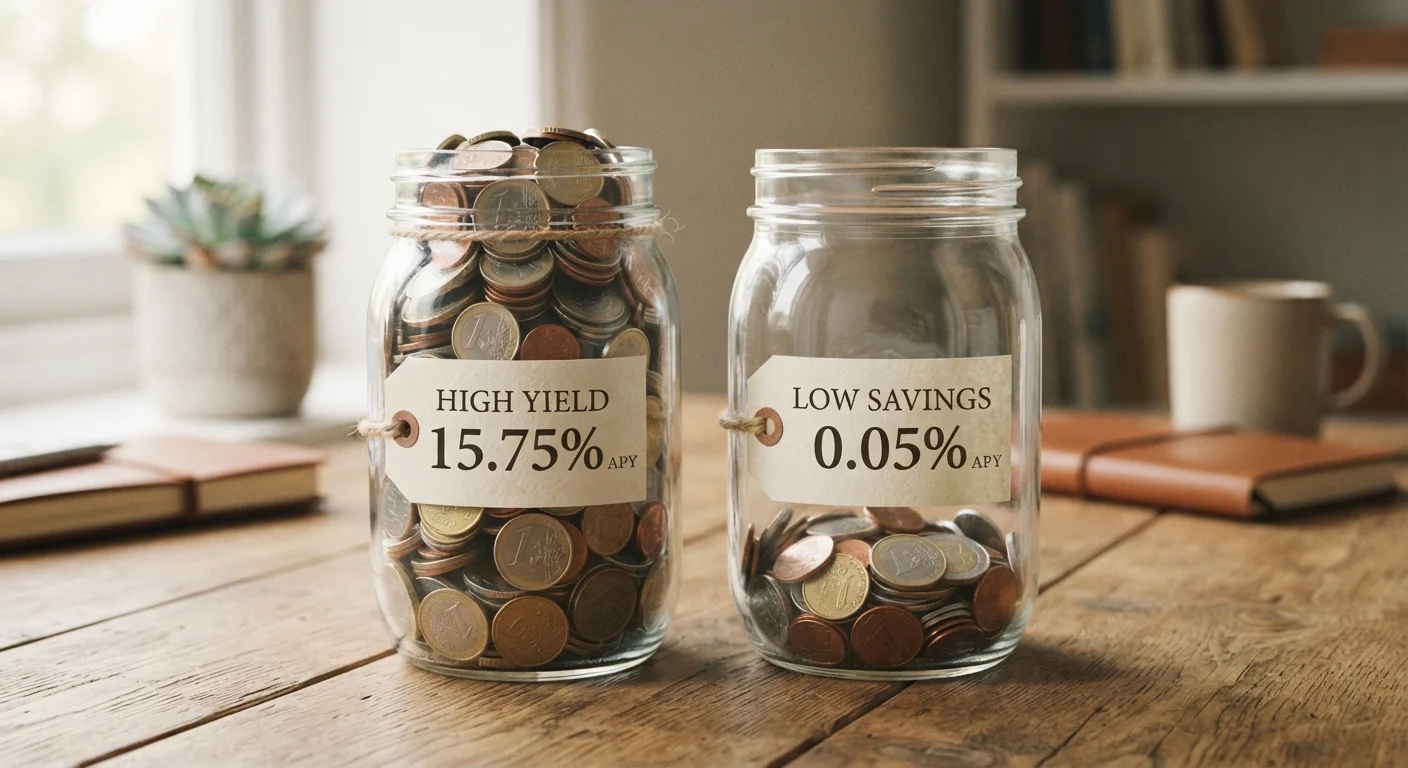
Photo: NemoFinds.com | Search, Explore, Read. editorial
Key Takeaways
- High-yield savings accounts typically offer significantly higher APYs than traditional savings accounts.
- Both account types are generally FDIC-insured up to $250,000, making them equally safe for depositors.
- High-yield accounts are often offered by online banks with lower overhead costs, which enables better rates.
- Traditional savings accounts offer branch access and tighter integration with existing checking accounts.
- Interest earned in both account types is taxable as ordinary income in the year it is received.
- Neither account is a substitute for long-term investing — both are best suited for short-term or emergency funds.
What Sets These Two Account Types Apart
At their core, both high-yield savings accounts (HYSAs) and traditional savings accounts serve the same function: holding cash safely while earning some interest. The critical difference lies in how much interest they pay and where they are typically offered.
Traditional savings accounts are most commonly found at brick-and-mortar banks and credit unions. Their annual percentage yields (APYs) — the rate that reflects compounding over a year — have historically hovered near the national average, which has frequently been below 1%. High-yield savings accounts, by contrast, are largely offered by online-only banks and fintech institutions whose lower overhead costs allow them to pass more interest back to depositors. Rates on HYSAs can be several times the national average, though they are variable and move with broader interest rate conditions.
If you are new to intentional saving, our ground-up introduction to personal savings covers foundational account concepts worth understanding first.
| Criterion | High-Yield Savings Account | Traditional Savings Account |
|---|---|---|
| Typical APY | Often several times national average | Near or at low national average |
| Where offered | Primarily online banks and fintechs | Brick-and-mortar banks and credit unions |
| FDIC insurance | Yes, up to $250,000 | Yes, up to $250,000 |
| Transfer speed | 1–3 business days (often external) | Instant (same-bank transfers) |
| Branch access | Typically none | Available at physical locations |
| Minimum balance | Often none required | Varies; may trigger fees if unmet |
| Rate variability | Variable, moves with Fed rate | Variable, often slower to change |
| Tax treatment | Interest taxed as ordinary income | Interest taxed as ordinary income |
How Interest Works in Each Account
Both account types use compound interest — interest earned on both your principal and previously accumulated interest. Most savings accounts compound daily and credit interest monthly, meaning the longer funds sit, the faster the balance grows. The compounding mechanics are largely the same between the two types; what differs is the rate applied.
Consider a simple illustration: $10,000 held at a 0.50% APY for one year yields roughly $50. The same balance at a 4.50% APY generates approximately $450. Over multiple years, that gap widens substantially. This is why your savings rate and the yield on your accounts both matter for long-term financial resilience.
~0.45%
National average savings account APY
The FDIC publishes a weekly national rate average for savings accounts; as of mid-2024 it remained well below rates offered by many online high-yield accounts.
$250,000
FDIC deposit insurance limit per depositor
Both traditional and high-yield savings accounts at FDIC-member institutions carry the same standard deposit insurance protection.
1–3 days
Typical transfer delay for online HYSA withdrawals
Because most high-yield savings accounts are held at separate online institutions, moving funds to a primary spending account often takes one to three business days.
It is worth noting that HYSA rates are not fixed. They are typically tied to the federal funds rate set by the Federal Reserve, meaning they can rise or fall as monetary policy changes. Traditional savings account rates also float but tend to respond more slowly and move in a narrower range.
Practical Trade-Offs to Weigh
Rate is not the only factor worth considering. Here are the practical differences that affect everyday use:
- Access and convenience: Traditional accounts connect easily to in-branch services, ATMs, and same-bank checking accounts with instant transfers. HYSAs, usually held at separate online banks, may involve a transfer delay of one to three business days when moving funds to your spending account.
- Minimum balance requirements: Both types vary widely. Some traditional accounts charge monthly fees if balances fall below a threshold. Many online HYSAs have no minimum balance requirements at all.
- FDIC insurance: Both account types are covered by FDIC insurance up to $250,000 per depositor per institution, assuming the institution is FDIC-member. Safety is not a differentiator here.
- Tax treatment: Interest earned in either account is taxable as ordinary income. You will receive a Form 1099-INT if you earn $10 or more in interest during the tax year.
HYSAs Are Not Investment Accounts
If you are weighing whether to direct extra cash toward savings or debt repayment, our article on where your extra dollar goes further offers a structured framework for that decision.
Once you have chosen an account, pairing it with automatic transfers can remove friction from the saving process. See our guide on automating your savings for practical setup steps.
Which Account Belongs in Your Financial Plan
Neither account is a wealth-building vehicle on its own. Both are designed for capital preservation and liquidity — not long-term growth. Funds earmarked for retirement or long-term goals are generally better served by investment accounts. For context on how savings accounts fit alongside longer-horizon options, explore our Investing 101 hub.
For your emergency fund, near-term savings goals, and any cash you may need within one to three years, the choice between a HYSA and a traditional savings account largely comes down to how much the rate differential matters to your situation and how much you value branch-based banking. A higher APY is a meaningful advantage when rates are elevated — but only if the account structure fits your actual banking habits.
This article is for general informational and educational purposes only and does not constitute personalized financial advice. Consult a qualified financial professional for guidance specific to your circumstances.
The content on this site is for informational purposes only and is not a substitute for professional advice. Always consult a qualified professional for guidance specific to your situation.