
Where Your Extra Dollar Goes Further — Debt Payoff or Savings

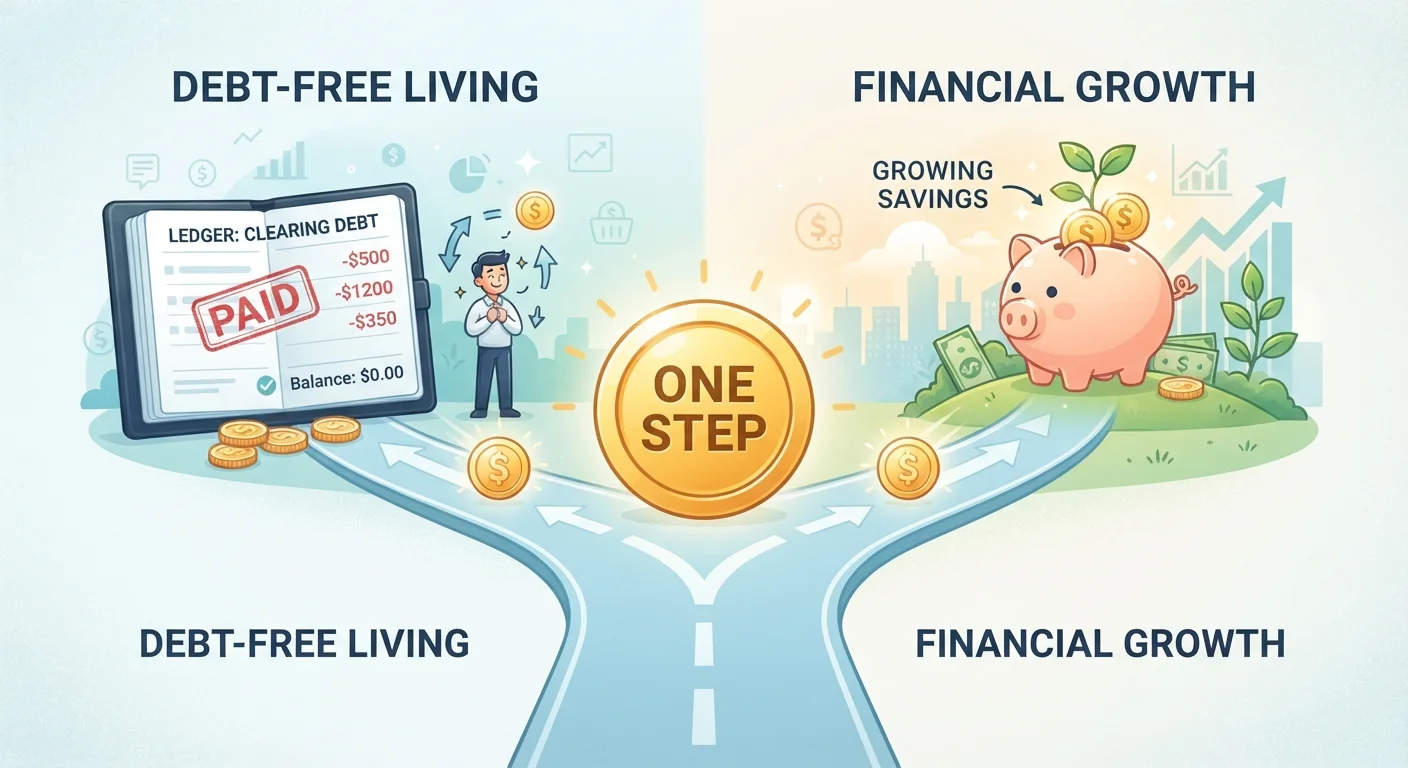
Photo: NemoFinds.com | Search, Explore, Read. editorial
Key Takeaways
- High-interest debt typically costs more than savings can earn, making payoff the mathematically stronger move.
- A small emergency fund can prevent new debt even while you're actively paying down existing balances.
- Employer 401(k) matches represent a guaranteed return that often justifies saving before accelerating debt payoff.
- The best strategy depends on interest rates, financial stability, and personal risk tolerance.
- Many financial educators suggest a hybrid approach rather than a strict either/or choice.
The Core Trade-Off: Interest Rate Math
The simplest framework for this decision is a rate comparison. Every dollar of high-interest debt you carry costs you money in interest charges. Every dollar saved earns you a return. When the cost of debt exceeds what savings can reasonably earn, paying down debt first is the more efficient move.
Consider a common scenario: credit card debt at 20% APR versus a high-yield savings account earning around 4–5%. Paying off that card produces a guaranteed 20% return — effectively, you stop losing that money — whereas the savings account offers a fraction of that benefit. For high-yield vs. traditional savings account comparisons, the gap between savings rates and high-interest debt costs remains significant.
The calculus shifts with low-interest debt. A federal student loan at 5% or a mortgage below 7% may not represent the same urgency. In those cases, directing extra dollars into savings or investments could generate comparable or superior returns over time — though no outcome is guaranteed.
| Debt Payoff | Savings | |
|---|---|---|
| Return certainty | Guaranteed (eliminates known interest cost) | Variable (depends on rates and market) |
| Best suited for | High-interest debt (credit cards, personal loans) | Low-interest debt with stable income |
| Emergency resilience | Lower if savings are depleted | Higher with a funded cash cushion |
| Retirement growth | Misses compounding while paying debt | Captures employer match and compounding |
| Psychological impact | Reduces debt stress and monthly obligations | Provides financial security and flexibility |
| Risk of setback | New debt if unexpected expense occurs | Slower debt reduction; more interest paid |
When Saving Should Come First
Despite the interest-rate argument for aggressive debt payoff, two situations push savings to the front of the line.
No Emergency Fund
Without even a modest cash cushion — commonly cited as one to three months of essential expenses — an unexpected car repair, medical bill, or job disruption forces you back into debt. Many financial educators recommend building a starter emergency fund of around $1,000 before accelerating debt payments. The logic: prevent new high-interest debt from undoing your progress.
Uncaptured Employer 401(k) Match
If your employer matches retirement contributions up to a certain percentage and you're not contributing enough to capture that match, you're leaving guaranteed compensation on the table. A 50% match on up to 6% of salary is a 50% immediate return — a figure most debt interest rates don't rival. Contributing at least enough to claim the full match is widely regarded as a financial priority ahead of extra debt payments.
Start With a Starter Fund
The Case for a Hybrid Approach
An either/or framing can be overly rigid. A split strategy — directing a portion of extra cash toward debt while simultaneously building savings — is a practical middle ground for many households. This approach avoids the psychological risk of depleting all financial flexibility while still making progress on debt.
For example, someone might allocate 70% of discretionary income to debt payoff and 30% to an emergency fund until the fund reaches a target balance, then redirect entirely to debt. The specific split depends on individual factors: the severity of debt, income stability, and how close existing savings are to a meaningful cushion.
If you're ready to build a structured repayment plan, building a debt payoff plan from scratch offers a step-by-step walkthrough. For the broader strategic picture, managing savings and debt at the same time covers the full range of trade-offs.
~$6,500
Average U.S. credit card balance per borrower
According to Federal Reserve and industry data, credit card balances have remained a persistent financial burden for millions of American households.
20%+
Average credit card interest rate
The Federal Reserve has reported average credit card APRs exceeding 20%, making high-interest debt one of the most expensive financial obligations a household can carry.
~27%
Americans with no emergency savings
Federal Reserve surveys have found that a significant share of U.S. adults would struggle to cover an unexpected $400 expense without borrowing, highlighting the importance of maintaining even a modest cash buffer.
Behavioral Factors That Influence the Right Choice
Personal finance isn't purely mathematical. Behavioral elements play a meaningful role in which strategy actually works for you.
Some people find that eliminating individual debts — even smaller ones first — generates momentum that keeps them on track. Others feel more secure knowing savings exist as a buffer. Neither instinct is irrational; both reflect legitimate risk management. The debt snowball and debt avalanche methods each leverage different psychological drivers, and understanding which resonates with you matters.
It's also worth examining whether any everyday money habits are quietly slowing your debt payoff. Sometimes the issue isn't the savings vs. debt allocation — it's spending patterns that leave little extra to allocate at all. A foundation in budgeting basics can surface those patterns before you decide where to direct extra funds.
This article is for general informational purposes only and does not constitute personalized financial, investment, or tax advice. Consult a qualified financial professional before making decisions based on your individual circumstances.
The content on this site is for informational purposes only and is not a substitute for professional advice. Always consult a qualified professional for guidance specific to your situation.