
Dental Disease in Dogs and Cats Is More Common Than Most Owners Realize

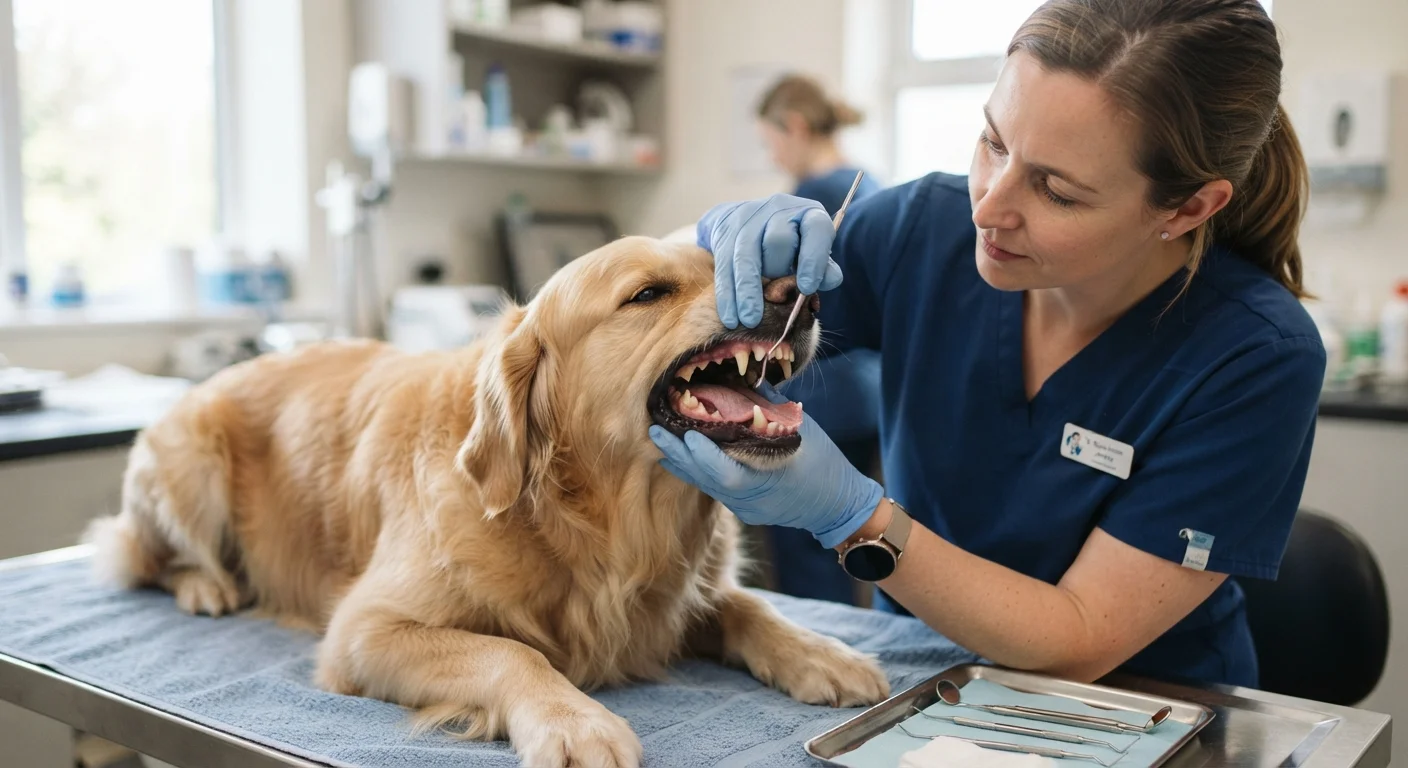
Photo: NemoFinds.com | Search, Explore, Read. editorial
Key Takeaways
- Periodontal disease affects an estimated 80% of dogs and 70% of cats by age three.
- Bad breath is often the first visible sign of dental disease, not just a cosmetic issue.
- Dental disease can progress silently and contribute to organ damage if untreated.
- Daily toothbrushing with pet-safe toothpaste is the most effective at-home prevention method.
- Professional dental cleanings require anesthesia and cannot be safely replaced by anesthesia-free alternatives.
- Early intervention by a veterinarian significantly reduces long-term dental and systemic health risks.
Why Dental Disease Flies Under the Radar
Most pet owners are diligent about vaccinations and flea prevention, yet dental health consistently ranks among the most neglected areas of routine pet care. The reason is straightforward: the early stages of periodontal disease are largely invisible. Plaque — a sticky film of bacteria — accumulates on tooth surfaces daily. Left undisturbed, it hardens into tartar within days, triggering inflammation of the gums (gingivitis) and, over time, destruction of the bone and ligaments holding teeth in place.
Unlike a limp or a visible wound, early gum disease gives few obvious signals. By the time an owner notices something is wrong, the disease may already be at an advanced stage. Veterinary organizations consistently report that periodontal disease is the most common clinical condition diagnosed in adult dogs and cats — yet surveys repeatedly show that relatively few owners take their pets for annual dental evaluations.
Understanding the disease process — and the real risks of leaving it untreated — is the first step toward breaking that cycle. See our overview of preventive pet care costs for a broader look at what delayed care tends to mean medically and financially.
Common Myths About Pet Dental Health — Corrected
Misconceptions about pet dental care are widespread and genuinely consequential. The myth-and-fact pairs below address the beliefs most likely to delay care or lead owners toward ineffective routines.
Myth
Bad breath in pets is normal — it's just "dog breath" or "cat breath."
Fact
Persistent bad breath (halitosis) in pets is almost always a sign of bacterial overgrowth and active dental disease, not a normal condition.
The idea that pets naturally have unpleasant-smelling breath has given generations of owners a reason to ignore a genuinely meaningful warning sign. In healthy animals with clean teeth and gums, breath should be relatively neutral. A strong, consistently foul odor typically signals an accumulation of bacteria producing volatile sulfur compounds — a hallmark of periodontal disease. Halitosis that persists despite normal eating habits warrants a veterinary dental evaluation, not acceptance as a fact of pet ownership.
Myth
If my pet is still eating normally, their teeth must be fine.
Fact
Dogs and cats are biologically driven to eat even when experiencing significant oral pain, so continued appetite is not a reliable indicator of dental health.
Prey animals and their domesticated descendants are hardwired to suppress signs of weakness, including pain. Many pets with advanced dental disease — fractured teeth, deep periodontal pockets, oral infections — continue to eat, play, and behave relatively normally. Owners often discover serious dental problems only during a routine veterinary exam. Relying on eating behavior as a proxy for oral health means disease can progress for months or years before it becomes unmistakably apparent.
Myth
Dry kibble keeps teeth clean, so pets that eat dry food don't need brushing.
Fact
While some dental diets are specifically formulated to reduce plaque, standard dry kibble provides minimal mechanical cleaning benefit.
The widespread belief that crunching kibble scrubs teeth comes from a reasonable-sounding premise, but the reality is more nuanced. Most standard kibble fractures and crumbles on contact, providing very little abrasive action along the gumline where periodontal disease actually begins. Veterinary-dental diets — those with a specific fiber matrix or larger kibble geometry — are a different matter and may help when combined with other preventive measures. Neither, however, replaces daily toothbrushing. Diet alone is insufficient as a dental care strategy.
Myth
Anesthesia-free dental cleanings are a safe and effective alternative to professional cleanings.
Fact
Anesthesia-free dental procedures remove visible tartar from tooth surfaces but cannot address subgingival disease and carry their own safety risks.
Anesthesia-free scaling (also called non-professional dental scaling) can make a pet's teeth look cleaner, but appearance is not the same as health. The most damaging dental disease occurs below the gumline, where bacteria cause bone loss and tissue destruction. Examining below the gumline, probing for pockets, taking radiographs, and performing thorough subgingival scaling all require a fully anesthetized, motionless patient. Performing these steps in an awake animal is not possible and risks injury to the pet or handler. Major veterinary organizations, including the American Veterinary Dental College, explicitly discourage anesthesia-free dental procedures as a substitute for comprehensive professional cleanings.
Myth
Dental disease only affects the mouth.
Fact
Chronic oral infection creates a persistent bacterial load that research has associated with changes in heart, kidney, and liver tissue in some animals.
The mouth is not isolated from the rest of the body. Bacteria from inflamed, infected gum tissue can enter the bloodstream — a process called bacteremia — and may affect distant organs over time. Veterinary studies have found associations between severe periodontal disease and changes in cardiac and renal tissue in dogs, though the exact nature and degree of causation is still an area of active research. What is well-established is that untreated dental disease represents a chronic, low-grade inflammatory and infectious burden that has effects beyond the oral cavity. This is one reason veterinarians treat dental health as a whole-body issue, not a cosmetic one.
What Effective Prevention Actually Looks Like
Veterinary dental care is a two-track effort: what happens at home between visits and what happens in the clinic.
~80%
Dogs with periodontal disease by age 3
According to the American Veterinary Medical Association, periodontal disease is the most commonly diagnosed health problem in adult dogs.
~70%
Cats affected by dental disease by middle age
Veterinary dental literature consistently places the prevalence of periodontal disease in cats at or above 70% in adults over age two.
1 in 3
Pet owners who brush their pet's teeth regularly
Owner surveys indicate that most pet owners are aware dental care is recommended, but regular at-home brushing remains uncommon in practice.
At-Home Care
Daily toothbrushing using a soft-bristled pet toothbrush and enzymatic pet toothpaste is the gold standard for at-home plaque control. Introduce the process gradually — finger brushing for a few days before introducing a full brush — to build tolerance. Dental chews, water additives, and dental diets may offer supplemental benefit, but none replaces mechanical brushing. Look for products bearing the Veterinary Oral Health Council (VOHC) seal, which indicates the product has met published standards for plaque or tartar reduction. Avoid human toothpaste entirely, as fluoride and xylitol are toxic to pets. For guidance on avoiding common mistakes in home care routines, see at-home pet care habits that frequently go wrong.
Professional Cleanings
Annual or biannual professional dental cleanings performed under general anesthesia allow a veterinarian or veterinary technician to scale below the gumline, probe each tooth for pocketing, take dental radiographs, and extract non-viable teeth. These steps are simply not possible in a fully awake animal. If your pet is a senior, regular dental evaluations become even more critical — read more about how health needs shift in older pets.
This article is for general informational purposes only and does not constitute veterinary advice. Always consult a licensed veterinarian for guidance specific to your pet's health needs.
The content on this site is for informational purposes only and is not a substitute for professional advice. Always consult a qualified professional for guidance specific to your situation.