
Skin Type vs. Skin Condition: Understanding the Difference

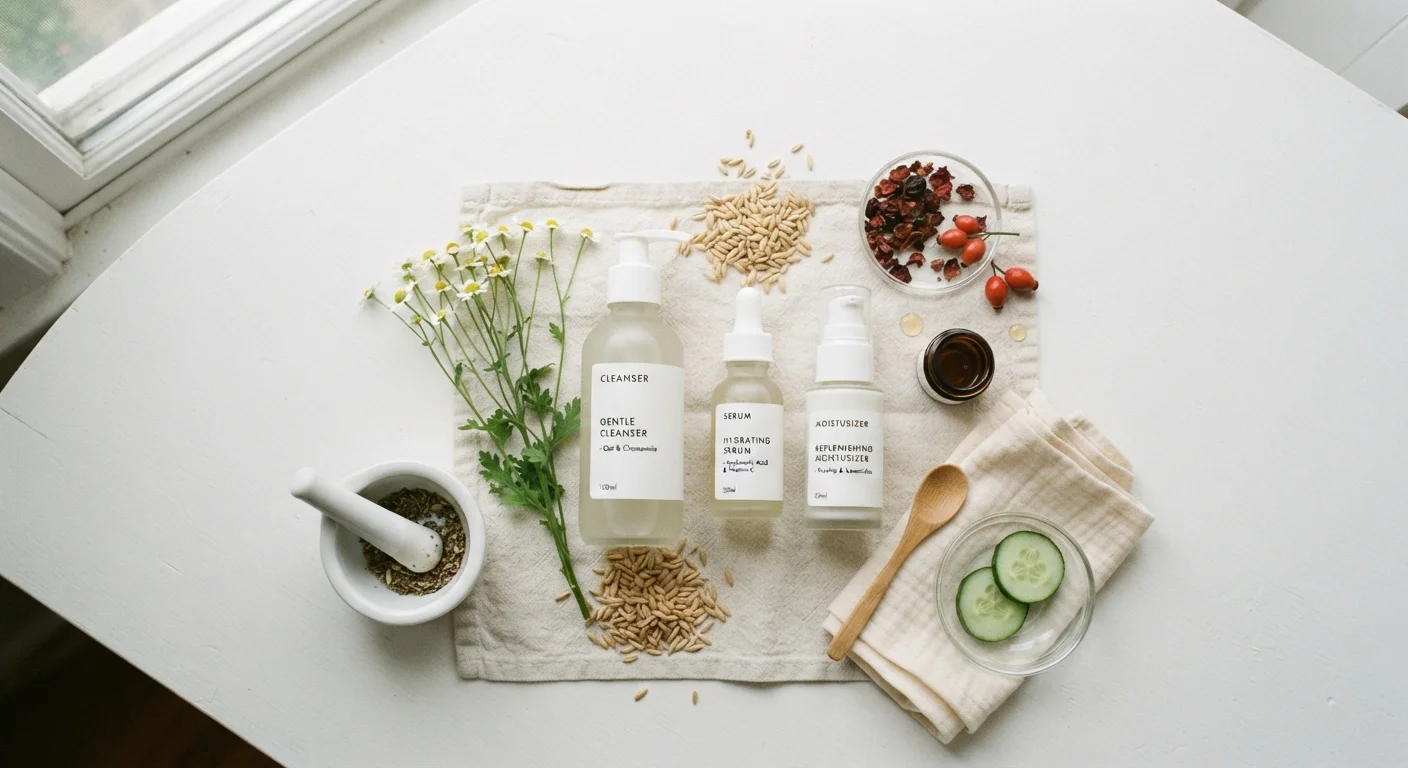
Photo: NemoFinds.com | Search, Explore, Read. editorial
Key Takeaways
- Skin type is genetically determined and stays largely stable throughout your life.
- Skin conditions are temporary states triggered by lifestyle, environment, or health factors.
- Many people misidentify their skin type because they're actually reacting to a current condition.
- Treating a skin condition as a fixed type can lead to a counterproductive routine.
- Addressing conditions first often reveals your true underlying skin type.
What Is Skin Type?
Skin type refers to the inherent characteristics your skin was born with — determined largely by genetics and sebaceous (oil) gland activity. Dermatologists generally recognize four primary skin types: oily, dry, combination, and normal. Some frameworks also include sensitive as a fifth type, though sensitivity can also be a condition (more on that in a moment).
Your skin type is relatively stable over decades, though it can shift gradually with major hormonal changes — puberty, pregnancy, or menopause, for example. If you've always noticed a shine by midday no matter what you do, that's oily skin type at work. If your skin consistently feels tight after cleansing regardless of the season, that points toward dry type.
The key word here is consistently. Skin type shows up reliably across different circumstances — it's not triggered by a specific event or environment.
| Criterion | Skin Type | Skin Condition |
|---|---|---|
| Origin | Genetic, largely fixed | Triggered by external or internal factors |
| Duration | Lifelong (shifts slowly) | Temporary or manageable |
| Examples | Oily, dry, combination, normal | Acne, dehydration, rosacea, dermatitis |
| Routine approach | Consistent, long-term strategy | Targeted, short-term adjustments |
| Can change quickly? | No — only with major hormonal shifts | Yes — with lifestyle or treatment changes |
What Is a Skin Condition?
A skin condition is a temporary or manageable state that can affect any skin type. Common examples include acne, dehydration (distinct from dryness — more on that below), hyperpigmentation, rosacea flare-ups, contact dermatitis, and barrier disruption. Unlike skin type, conditions have identifiable triggers: stress, diet, climate changes, a new product, illness, or hormonal fluctuations.
Here's a common mix-up: dehydrated skin is a condition, not a type. Even oily skin can be dehydrated — it lacks water, not oil. When people with oily skin slather on heavy moisturizers to combat unusual tightness, they may actually be misreading dehydration (a condition) as dryness (a type), potentially making congestion worse.
Similarly, sensitive can be either a type or a condition. Someone whose skin is genetically reactive to most products has sensitive skin type. Someone who develops sensitivity after overusing exfoliants has triggered a temporary condition. That distinction matters enormously for how you respond. For a closer look at how products interact with reactive skin, see what non-comedogenic really means.
Sensitive Skin: Type or Condition?
Why Getting This Wrong Derails Your Routine
When you treat a skin condition as if it were your permanent type, you risk locking yourself into a routine that fights your skin rather than working with it. Someone whose skin is oily because of a hormonal flare might strip it aggressively with harsh cleansers — disrupting the moisture barrier and prompting even more oil production. That's the opposite of helpful.
The more useful approach is to stabilize any active conditions first — with gentle, consistent care — and then observe what your skin does once it's calm. That baseline is much closer to your true skin type. If you're also dealing with exfoliation questions as part of resetting your routine, exfoliation done right walks through physical and chemical methods by skin type.
67%
People who self-identify as having sensitive skin
Surveys conducted across multiple countries consistently show that a majority of consumers report sensitive skin, though dermatologists note this figure likely blends true genetic sensitivity with reactive skin conditions.
2–4 weeks
Typical skin barrier recovery window
Dermatology literature generally estimates that a disrupted skin barrier — a common cause of sudden condition flares — can begin to recover within a few weeks of simplified, gentle care.
The same logic applies beyond the face. On the scalp, for instance, a dry or flaky scalp might be a genetic tendency — or it might be a reaction to product buildup or weather. Understanding that distinction, just as with facial skin, shapes how you care for it. See our guide on dandruff vs. dry scalp for a parallel example of type-versus-condition thinking in action.
This article is for general informational purposes only and does not constitute medical or dermatological advice. If you have persistent or concerning skin symptoms, consult a qualified dermatologist or healthcare professional.
The content on this site is for informational purposes only and is not a substitute for professional advice. Always consult a qualified professional for guidance specific to your situation.