
SPF in Your Moisturizer vs. a Standalone Sunscreen

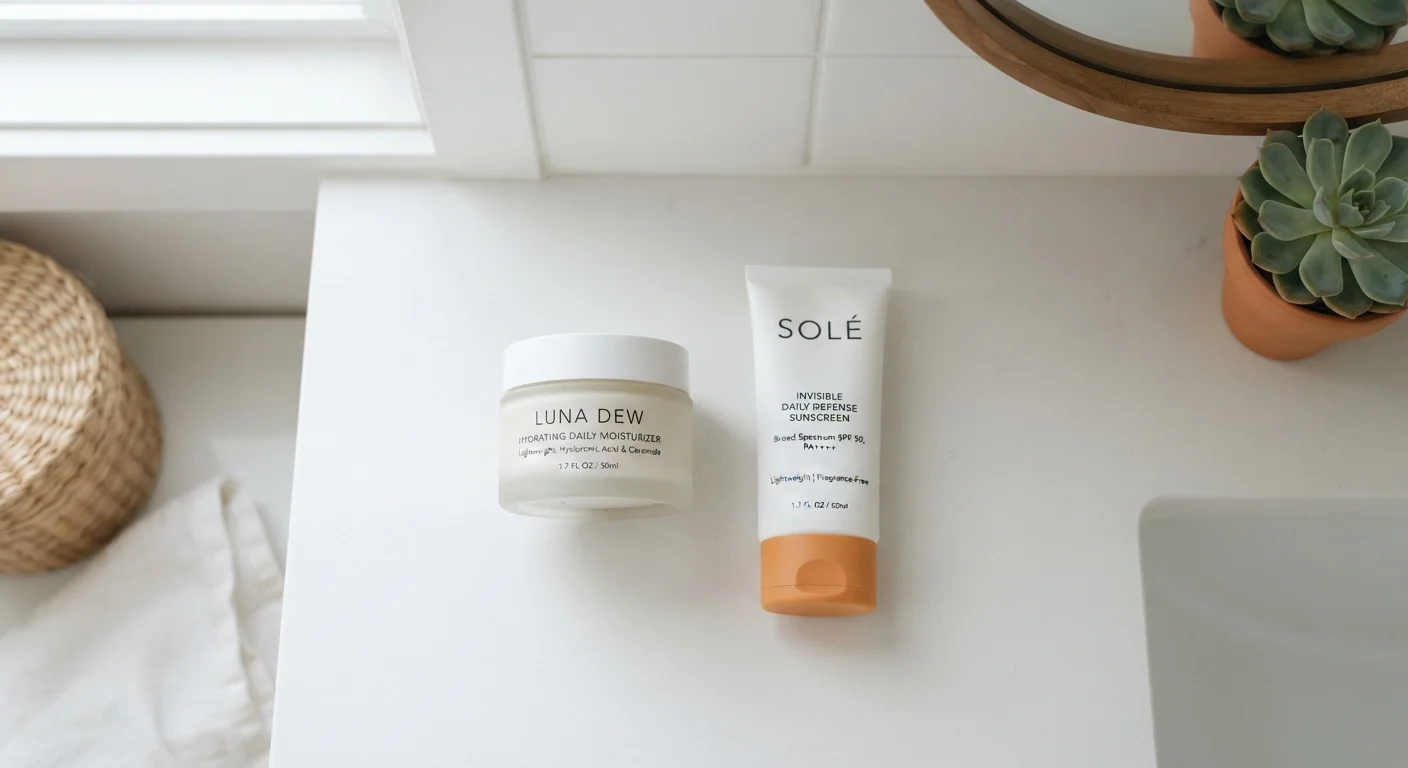
Photo: NemoFinds.com | Search, Explore, Read. editorial
Key Takeaways
- SPF moisturizers offer convenience but are often applied too thinly to deliver their labeled protection.
- Standalone sunscreens are formulated and tested specifically for UV protection, making them more reliable.
- Most people apply far less SPF product than the amount used in lab testing, reducing real-world effectiveness.
- For everyday, mostly-indoor days, a quality SPF moisturizer can be a reasonable baseline choice.
- Reapplication is critical for both types — and nearly impossible to do over makeup without special tools.
What's Actually Different Between These Two Products
At first glance, SPF moisturizers and dedicated sunscreens seem to do the same job. Both carry an SPF number on the label, both claim to protect your skin — so what's the difference? Quite a bit, actually.
Standalone sunscreens are formulated with UV protection as their primary purpose. The active sunscreen ingredients — whether chemical filters like avobenzone or physical blockers like zinc oxide — are present at concentrations specifically designed to meet the FDA's testing standards for that SPF rating. SPF moisturizers, by contrast, are hydrating products that incorporate sun-filtering ingredients as a secondary feature. The moisturizing agents, emollients, and other actives in the formula can dilute or interfere with the UV filters.
This distinction matters especially when it comes to application thickness. The SPF number on any product is determined by applying 2 mg of product per square centimeter of skin — a fairly generous amount. Most people apply moisturizer in a thin, quick layer, which can dramatically reduce the protection actually delivered. Common sunscreen habits that undermine UV protection like under-application are even more pronounced with moisturizers, since we're conditioned to use them sparingly.
| Criterion | SPF Moisturizer | Standalone Sunscreen |
|---|---|---|
| Primary purpose | Hydration + incidental UV defense | Dedicated UV protection |
| Typical SPF range | SPF 15–30 most common | SPF 30–50+ widely available |
| Application consistency | Often applied too thinly | Easier to apply correct amount |
| Routine simplicity | Combines two steps into one | Requires a separate application step |
| Formulation testing | Tested as a combined product | Tested specifically for UV performance |
| Best daily scenario | Mostly indoor days, brief sun | Outdoor activities, extended exposure |
Where Each One Earns Its Place in Your Routine
Understanding how these products fit into a broader skincare routine helps you use them more strategically. If you're building a layered morning routine, product order matters — and so does knowing which step each product is meant to handle. For a deeper look at sequencing, see why skincare layering order affects results.
For a quick weekday routine where you're commuting and working primarily indoors, an SPF moisturizer can cover both hydration and basic UV defense in one efficient step. It's a reasonable choice when the alternative is skipping sunscreen entirely.
For weekend hikes, beach trips, or any day with meaningful sun exposure, a standalone sunscreen applied over your moisturizer is the more dependable choice. Look for broad-spectrum protection covering both UVA and UVB rays. If you wear makeup, a dedicated sunscreen applied before foundation also tends to sit better under cosmetics than a thick SPF moisturizer.
~25%
Typical real-world SPF delivery vs. label
Research suggests people generally apply only one-quarter to one-half the amount of sunscreen used in SPF testing, significantly reducing actual protection.
2 mg/cm²
Application amount used in FDA SPF testing
This is the standardized amount applied in lab conditions — most people use far less, which reduces the effective SPF they receive.
One practical reality: reapplication. Neither product is easy to reapply over a full face of makeup. Sunscreen sticks and setting sprays with SPF can help, but they're not equivalent replacements for a full reapplication. Plan accordingly on high-exposure days.
Making the Right Call for Your Skin and Lifestyle
The honest answer is that the "right" choice depends on your daily routine, how much time you spend outdoors, and how consistently you'll actually use the product. The best sunscreen — or SPF moisturizer — is the one you'll apply every day without skipping.
If you're drawn to SPF moisturizers because they simplify your routine, that's a legitimate reason to use one — just apply it more generously than you think you need to, and consider whether your skin type is well-served by the formula. If you have acne-prone skin, check whether the moisturizer is non-comedogenic before committing.
If you already use a moisturizer you love and don't want to switch, simply layer a dedicated sunscreen on top. It adds one small step but keeps both products working at their best. Either way, daily SPF use — in whatever form you'll stick to — is one of the most consistently supported habits in skin health.
Broad-Spectrum Matters More Than the Number
This article is for general informational and educational purposes only. For personalized skincare advice, particularly if you have specific skin conditions or concerns, consult a qualified dermatologist.
The content on this site is for informational purposes only and is not a substitute for professional advice. Always consult a qualified professional for guidance specific to your situation.