
How Vehicle Depreciation Works - and Why It Matters for Owners

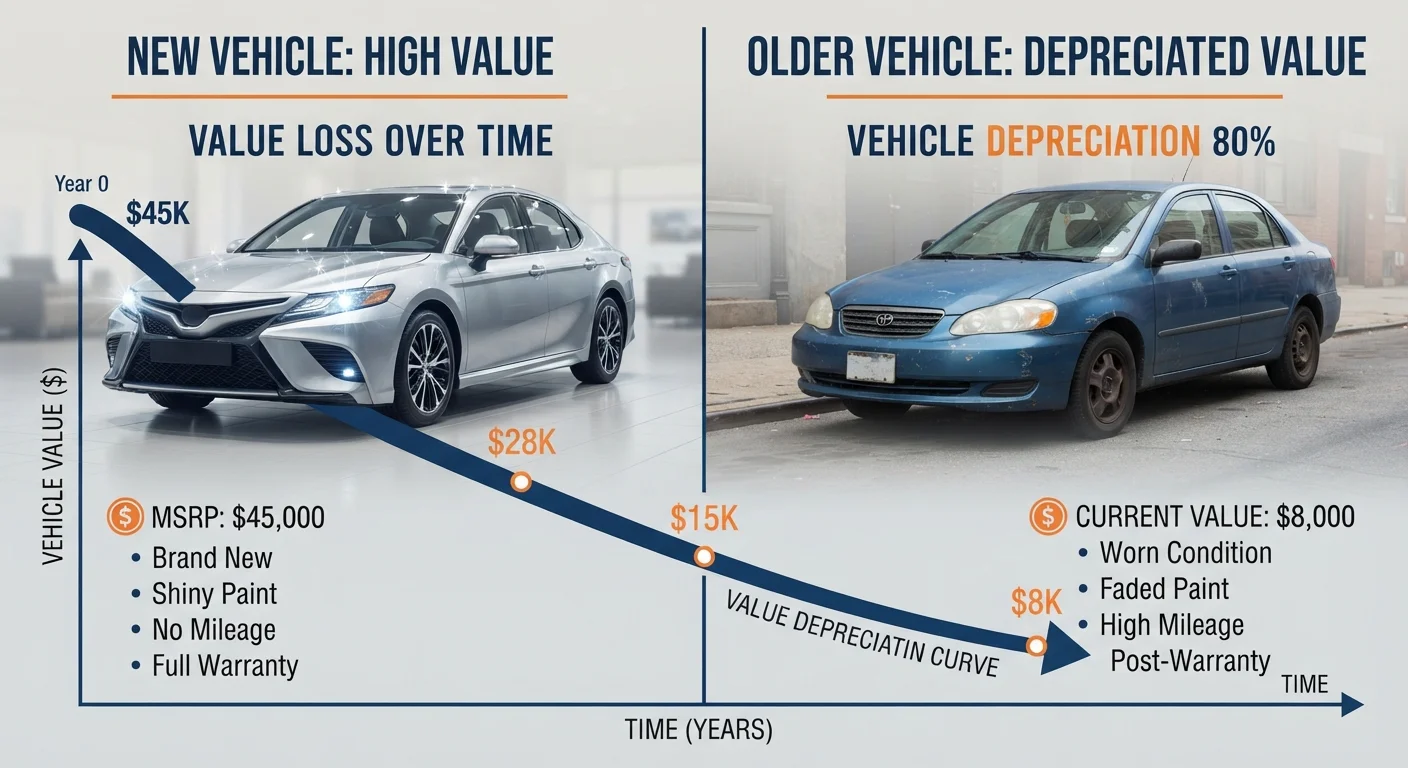
Photo: NemoFinds.com | Search, Explore, Read. editorial
Key Takeaways
- Most vehicles lose 15-25% of their value in the first year of ownership.
- A car can lose roughly half its original value within five years of purchase.
- Depreciation directly affects loan balance, insurance payouts, and resale or trade-in value.
- Mileage, condition, and market demand all influence how quickly a specific vehicle depreciates.
- Understanding depreciation helps you avoid owing more on a loan than your car is worth.
The Depreciation Curve: How Value Drops Over Time
When you drive a new vehicle off the lot, its market value drops almost immediately - often by several thousand dollars before you've completed your first commute. This isn't a quirk of the system; it's simply how the used-vehicle market works. A car that has been titled and driven, even briefly, is no longer brand-new, and buyers expect a lower price to reflect that.
After that initial drop, depreciation continues on a curve rather than a straight line. Industry data consistently shows that new vehicles lose roughly 15-25% of their value in year one, with the pace slowing gradually over time. By the five-year mark, many vehicles have lost close to half their original purchase price.
~20%
Average first-year new vehicle value loss
Industry estimates from automotive valuation services consistently place first-year depreciation for most new vehicles in the 15-25% range.
~50%
Value remaining after five years
Many vehicles retain only around half their original value after five years of typical use, according to long-term vehicle valuation data.
72 months
Common loan term length in the U.S.
Six-year auto loans have become increasingly common, extending the window during which owners may carry negative equity relative to vehicle value.
This pattern matters for every major financial decision tied to your vehicle. It's a core component of the true total cost of car ownership, alongside fuel, insurance, and maintenance.
What Drives Depreciation - and What Slows It
Depreciation is not the same for every vehicle. Several factors push the rate faster or slower:
- Mileage: Higher annual mileage accelerates value loss because it signals more wear on mechanical components.
- Condition: Vehicles with documented maintenance histories and minimal cosmetic damage retain value better than those without. See our car maintenance guide for first-time owners to understand which upkeep tasks preserve your vehicle longest.
- Market demand: Supply and demand affect resale prices. A vehicle model that's popular or in short supply may hold its value better than one with oversupply in the used market.
- Fuel type and technology: Shifts in consumer preferences - such as growing interest in fuel-efficient or electric vehicles - can affect resale value for vehicles that fall outside those trends.
- Original purchase price: Luxury vehicles often depreciate more in absolute dollar terms, even if the percentage rate is similar to a less expensive model.
Protect Resale Value With Service Records
One important takeaway: the factors you control - mileage management, maintenance, and condition - can meaningfully influence your vehicle's eventual resale or trade-in outcome.
Depreciation's Impact on Loans and Insurance
Understanding depreciation isn't just an academic exercise - it has direct financial consequences for borrowers and insured drivers.
Auto Loans and Negative Equity
When you finance a vehicle, your loan balance decreases on a schedule set by your lender. Your vehicle's value decreases on a schedule set by the market - and those two timelines don't always match. In the early months of a long loan term, it's common for the loan balance to exceed the car's current market value. This gap is called negative equity, or being "upside down" on a loan.
If you need to sell or trade in the vehicle during this period, you'd owe the difference out of pocket. Understanding how auto loan terms work - including how interest front-loads the early payments - helps you anticipate when negative equity is likely to occur.
Insurance and Actual Cash Value
Standard auto insurance policies that include collision and comprehensive coverage typically pay out the actual cash value (ACV) of your vehicle if it's totaled - meaning its depreciated market value at the time of the loss, not what you originally paid. If you owe more on your loan than the ACV payout, you'd face an out-of-pocket gap. A type of optional coverage called GAP insurance is designed to address this difference, though coverage terms and availability vary by provider and policy. For general information on how auto coverage works, see our overview of home and auto insurance.
GAP Coverage: A Brief Explanation
Using Depreciation Knowledge to Make Better Decisions
Once you understand depreciation's mechanics, you can factor it into smarter ownership choices - without any guarantees about specific outcomes.
Buying used vs. new: Purchasing a vehicle that's already a few years old means someone else absorbed the steepest early depreciation. The trade-off is typically a shorter remaining warranty period and potentially higher maintenance needs.
Loan term length: Longer loan terms lower monthly payments but extend the period of potential negative equity. Shorter terms cost more per month but align your payoff timeline more closely with your vehicle's value curve.
Holding vs. replacing: Once a vehicle has depreciated significantly, the annual dollar value it loses each year often shrinks - which can make holding an older vehicle the more cost-efficient choice, assuming repair costs remain manageable.
For practical strategies that help manage costs across your ownership period, see our guide to keeping ownership costs manageable over the life of a vehicle.
This article provides general educational information about vehicle depreciation and is not financial, investment, or insurance advice. For guidance tailored to your specific situation, consult a qualified financial or insurance professional.
Frequently Asked Questions
The content on this site is for informational purposes only and is not a substitute for professional advice. Always consult a qualified professional for guidance specific to your situation.