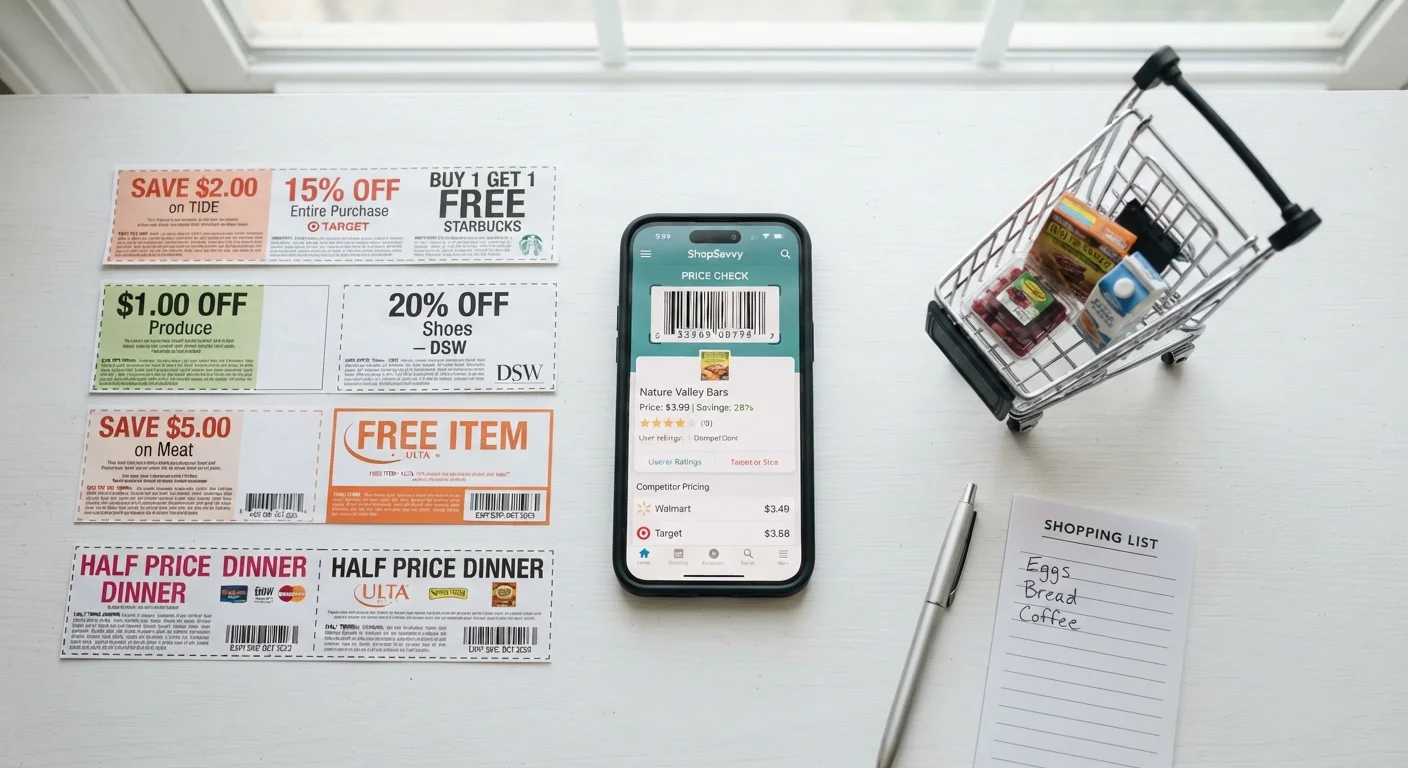
Online vs. In-Store: Choosing the Right Channel for What You're Buying

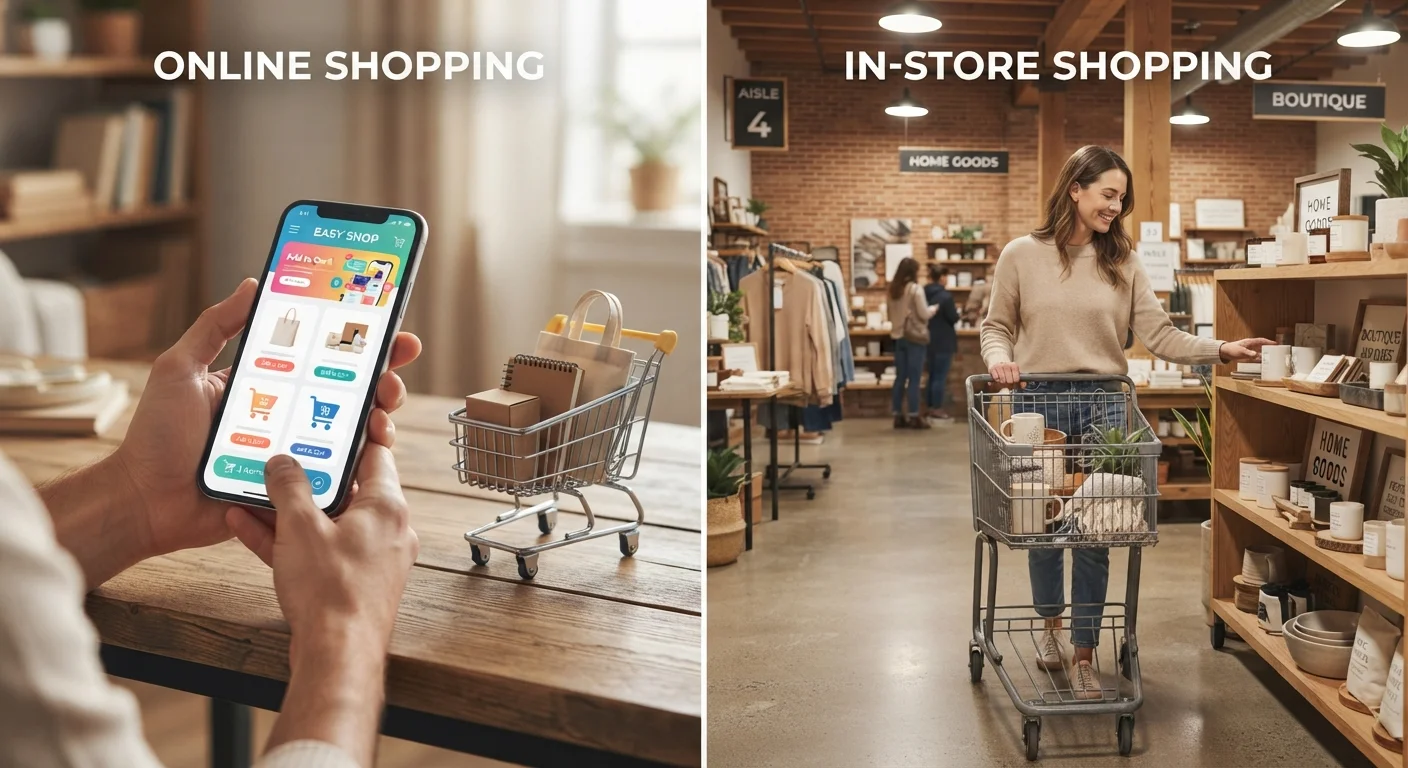
Photo: NemoFinds.com | Search, Explore, Read. editorial
Key Takeaways
- Online shopping excels for commodity items, price comparison, and products with clear specifications.
- In-store is better when fit, texture, or immediate availability matters — such as clothing, mattresses, or perishables.
- Shipping costs, return friction, and restocking fees can quietly erode any online price advantage.
- Blending both channels — researching online, then buying in-store, or vice versa — often produces the smartest outcome.
- Return policies differ significantly between channels; always check before committing to a purchase.
Why Channel Choice Matters More Than Most Shoppers Realize
Defaulting to one shopping channel out of habit — always clicking "add to cart" or always heading to the store — means you're optimizing for comfort rather than value. The actual cost of a purchase includes return hassle, shipping fees, and the risk of receiving something that doesn't meet your needs. Each of those factors shifts depending on where you buy.
The question isn't which channel is universally better. It's which channel reduces friction and risk for a specific type of product. That framing changes the decision meaningfully. Before any significant purchase, consider running through a pre-purchase checklist that covers need, price, alternatives, and return conditions.
| Online Shopping | In-Store Shopping | |
|---|---|---|
| Price comparison | Easy across multiple sellers | Limited to nearby stores |
| Product selection | Broader, including niche items | Limited to store inventory |
| Tactile evaluation | Not possible | Full hands-on assessment |
| Immediacy | Typically 1–5 day shipping | Take it home same day |
| Return friction | Often involves shipping costs or fees | Usually straightforward in-store exchange |
| Impulse spending risk | Moderate (recommendations, upsells) | Higher (store layout, displays) |
| Best product types | Spec-driven, commodity goods | Fit-dependent, sensory, or urgent items |
Where Online Shopping Has a Genuine Edge
Online channels consistently outperform for commodity and specification-driven purchases — items where what you see in the product listing accurately reflects what arrives. Cables, small appliances with clear specs, books, and software all fall into this category. When a product's quality is fully described by measurable attributes, there's little benefit to standing in a store to evaluate it.
Price comparison is also substantially easier online. In seconds, you can check multiple sellers for the same model number — something that requires driving to several stores in person. Online shopping also opens access to a broader product selection than most physical stores can stock.
Use Reviews as a Long-Term Data Source
One underappreciated advantage: user reviews aggregated across thousands of purchases surface durability and reliability issues that no in-store demo can replicate. For electronics especially, reading substantive reviews over time gives a more reliable signal than handling a display unit for five minutes. That said, review manipulation is real — look for verified purchases and patterns across a large review base rather than a handful of five-star comments.
Where In-Store Still Wins
Physical retail earns its place for any purchase where tactile evaluation is part of the value judgment. Clothing fit, mattress firmness, sofa cushion depth, paint color under natural light — these simply cannot be accurately conveyed through a product image or a written description. The return-and-reorder cycle for high-stakes fit purchases online often ends up costing more in time and shipping than the original convenience justified.
In-store also wins on immediacy. If you need something today — a replacement part, a household item for a repair, groceries — the logistics of online delivery don't compete with walking out with the item. And for high-value purchases where a sales associate's expertise genuinely matters, like a custom-fitted piece of furniture or a specialized tool, that interaction has real worth.
It's also worth noting that store layouts are deliberately engineered to encourage unplanned spending. Knowing this lets you shop more deliberately in-store rather than reactively.
The Hidden Costs That Shift the Calculation
Sticker price comparisons between channels are often misleading. Online purchases can carry shipping costs, and returns online frequently involve restocking fees or require you to cover return shipping. Understanding what a return policy actually says before you buy can prevent expensive surprises — especially for larger items like appliances or electronics where restocking fees can be significant.
In-store purchases have their own cost leakage: impulse buys driven by in-aisle displays, end caps, and eye-level product placement. Showing up without a list and a firm budget tends to inflate the final receipt reliably.
Return Policies Vary Significantly by Channel
For bulk or multi-unit purchases, the channel question intersects with storage and shelf-life factors. The logic behind bulk buying applies regardless of channel — but warehouse stores and online bulk sellers each carry distinct trade-offs in minimum quantities and return options.
A Practical Framework: Match the Channel to the Category
Rather than choosing a default channel, apply a quick mental filter by product type:
- Standardized goods with clear specs (electronics, cables, media, consumables): Online is typically efficient and low-risk.
- Fit-dependent or sensory goods (clothing, footwear, furniture, mattresses): In-store evaluation reduces the likelihood of a costly return cycle.
- Time-sensitive needs (same-day repairs, perishables, urgent replacements): In-store wins on logistics.
- Research-heavy big-ticket items (appliances, electronics): Research online, then buy where the return policy and price work best together.
The blended approach — using one channel to research and another to purchase — often delivers the most reliable outcome. Viewing a television's specifications and user reviews online, then checking its picture quality in a showroom before purchasing, is a reasonable use of both channels. The home essentials category covers many of these higher-stakes household decisions in further depth.
The content on this site is for informational purposes only and is not a substitute for professional advice. Always consult a qualified professional for guidance specific to your situation.