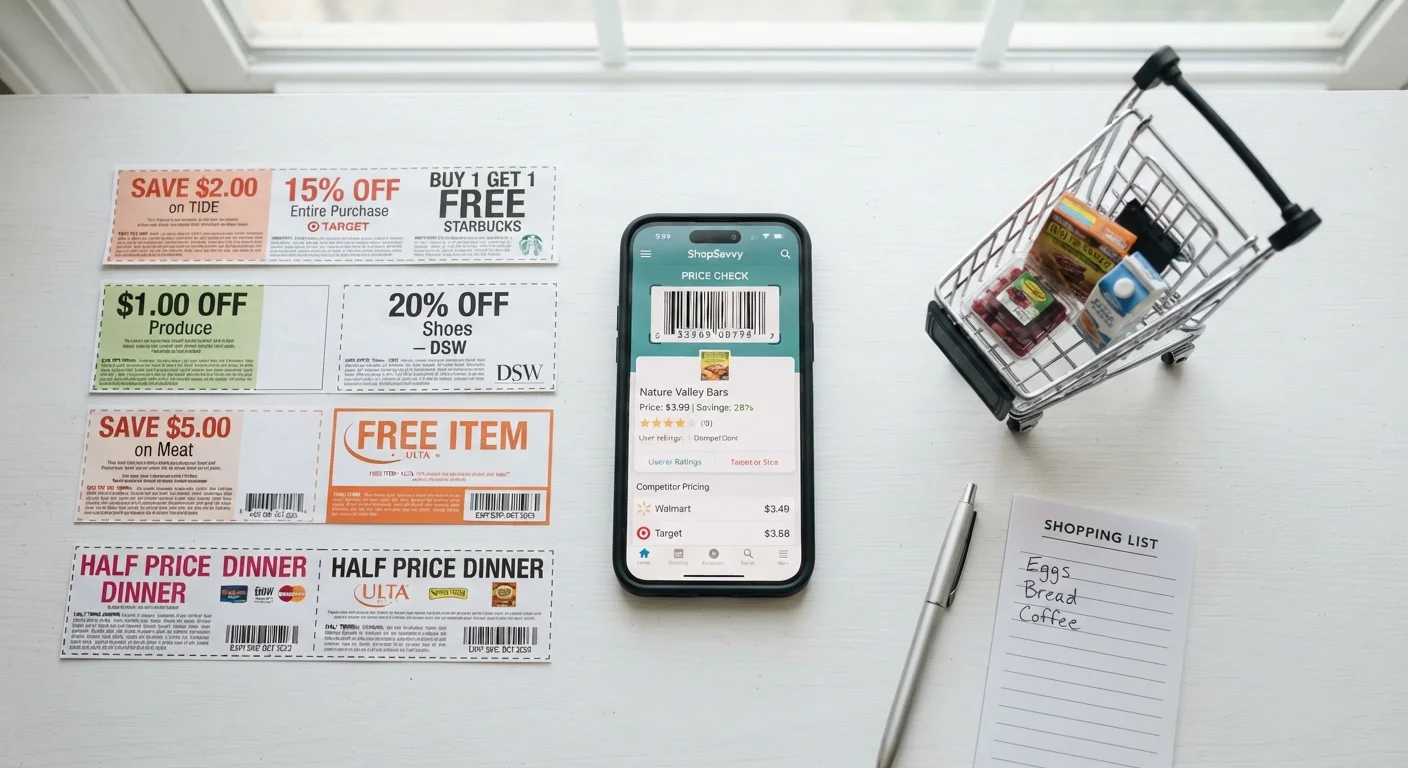
Unit Pricing: The Shelf Tag Number Most Shoppers Ignore

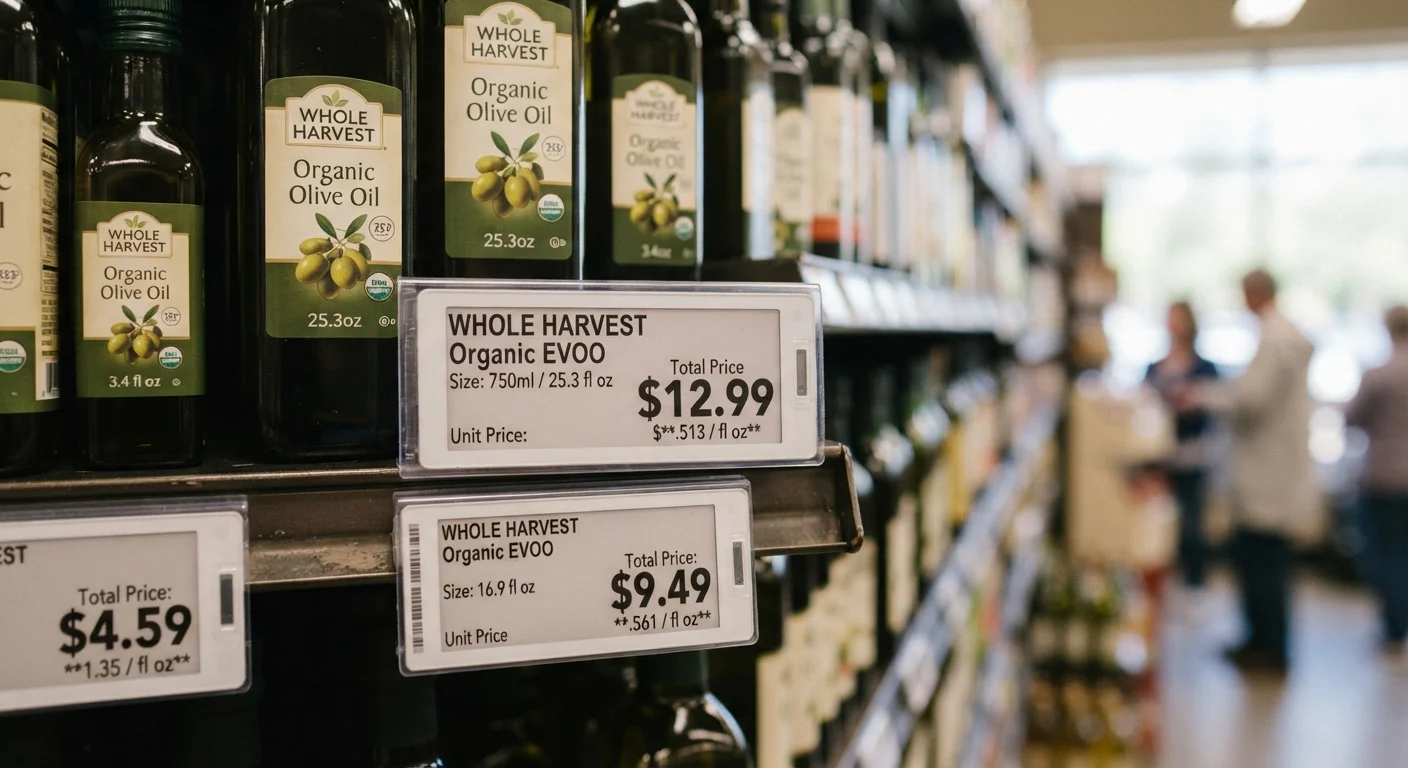
Photo: NemoFinds.com | Search, Explore, Read. editorial
Key Takeaways
- Unit price shows cost per standard measure, making different package sizes directly comparable.
- Bigger packages don't always have a lower unit price — the math sometimes surprises you.
- Sales and store brands can flip the unit-price equation even on sizes you'd normally skip.
- Shrinkflation can quietly raise unit prices even when the sticker price stays the same.
- Most U.S. grocery stores are legally required to display unit prices on shelf tags.
What Unit Price Actually Tells You
Every shelf tag in a grocery store carries two prices. The large number is the total price you'll pay at the register. The smaller number — often tucked into a corner of the tag — is the unit price, and it's doing the heavy lifting that the big number can't.
Unit price translates the total cost into a standardized measure: dollars per ounce, cents per count, dollars per square foot. That standardization is what makes it useful. Without it, comparing a 12-ounce jar of peanut butter to a 28-ounce jar requires mental arithmetic most of us don't do in the aisle. The unit price does it for you.
The measure used depends on the product category. Dry goods and liquids typically show price per ounce. Paper products often use price per sheet or per square foot. Items sold by count — batteries, vitamins, individually wrapped snacks — show price per unit. The key habit is making sure you're comparing the same denominator when evaluating two products.
Unit pricing laws vary by state
Why Bigger Isn't Always Cheaper
The assumption that larger packages always win on unit price is one of the most persistent myths in everyday shopping. It's true often enough to feel like a rule — but it's not.
~30+
U.S. states with some form of unit pricing law
Requirements vary widely by state in terms of which retailers must comply, which product categories are covered, and how unit price must be displayed.
10–30%
Typical unit-price variance within the same product category
Consumer research consistently finds meaningful per-unit cost differences between package sizes of the same product, depending on brand, format, and current promotions.
A few scenarios routinely flip the expected outcome. Store-brand products in mid-size packaging can undercut name-brand bulk sizes on a per-ounce basis. A sale on a smaller size can temporarily push its unit price below the warehouse-size equivalent. Specialty or organic items sometimes price their larger formats at a premium rather than a discount.
The practical move is simple: before you reach for the bigger package out of habit, look at the unit price on both tags. If one is missing or unclear, divide the total price by the net weight or count printed on the package. The math takes about ten seconds and can change your decision.
For a deeper look at when bulk buying genuinely pays off — accounting for storage space, shelf life, and household size — see when warehouse prices are actually worth it.
Unit Price and the Tricks That Distort It
Unit pricing is a reliable tool, but it works best when you understand what can muddy the comparison.
Sales and promotions: A sale price reduces the unit price, sometimes dramatically. A crossed-out "original" price next to a sale price is designed to make the discount feel larger than it may be — a dynamic worth understanding before you load up on a deal. The anchoring effect explains why those crossed-out numbers are so persuasive even when the actual savings are modest.
Shrinkflation: Manufacturers sometimes reduce the amount of product in a package while holding the price steady. The sticker price looks unchanged, but the unit price quietly rises. If a product you buy regularly seems to be running out faster, it's worth checking the net weight against what you remember — or what's shown on understanding shrinkflation for more detail.
Different units on competing products: Two competing products sometimes display their unit prices in different measures — one in price per ounce, another in price per count. This makes direct comparison impossible without converting one figure. When this happens, fall back to dividing each total price by a common measure you extract from the package label yourself.
Quick calculation when the tag is unclear
Store layout: Stores often place higher-margin products at eye level. Unit pricing helps neutralize that because the number on the tag doesn't care about shelf position.
Making Unit Price Part of Your Routine
You don't need to scrutinize every tag in the store. A targeted approach makes unit pricing practical rather than exhausting.
Focus on product categories you buy repeatedly — pantry staples, cleaning supplies, paper goods, personal care. These are the purchases where even a small per-unit difference compounds into meaningful savings over months. One-off purchases or items you rarely buy don't warrant the same attention.
When comparing store brands to name brands, unit price is particularly powerful. It strips away packaging aesthetics and brand recognition and leaves only the cost per use. The number either justifies the premium or it doesn't.
Finally, keep in mind that unit price covers cost but not everything. Package size still matters if storage is limited, if the product has a short shelf life, or if you're unlikely to use a large quantity before it expires. Cost per unit is one input into a decision, not the entire decision.
If you're already in the habit of reading nutrition labels for serving sizes, you're partway there — the same number-parsing mindset applies to shelf tags.
This article is for general informational and educational purposes only. Individual prices, product availability, and applicable unit pricing laws vary by location and retailer.
Frequently Asked Questions
The content on this site is for informational purposes only and is not a substitute for professional advice. Always consult a qualified professional for guidance specific to your situation.