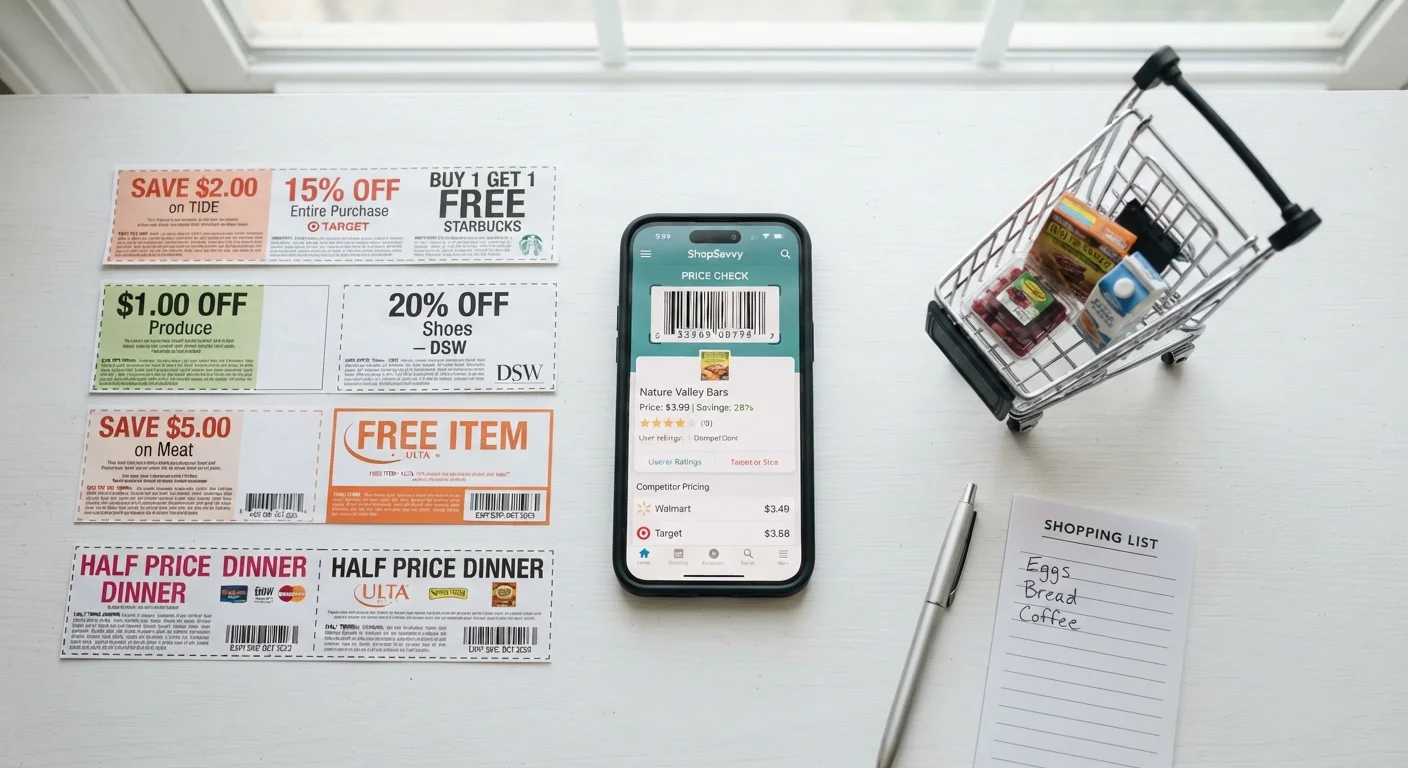
The Anchoring Effect and Why That Crossed-Out Price Messes With Your Judgment

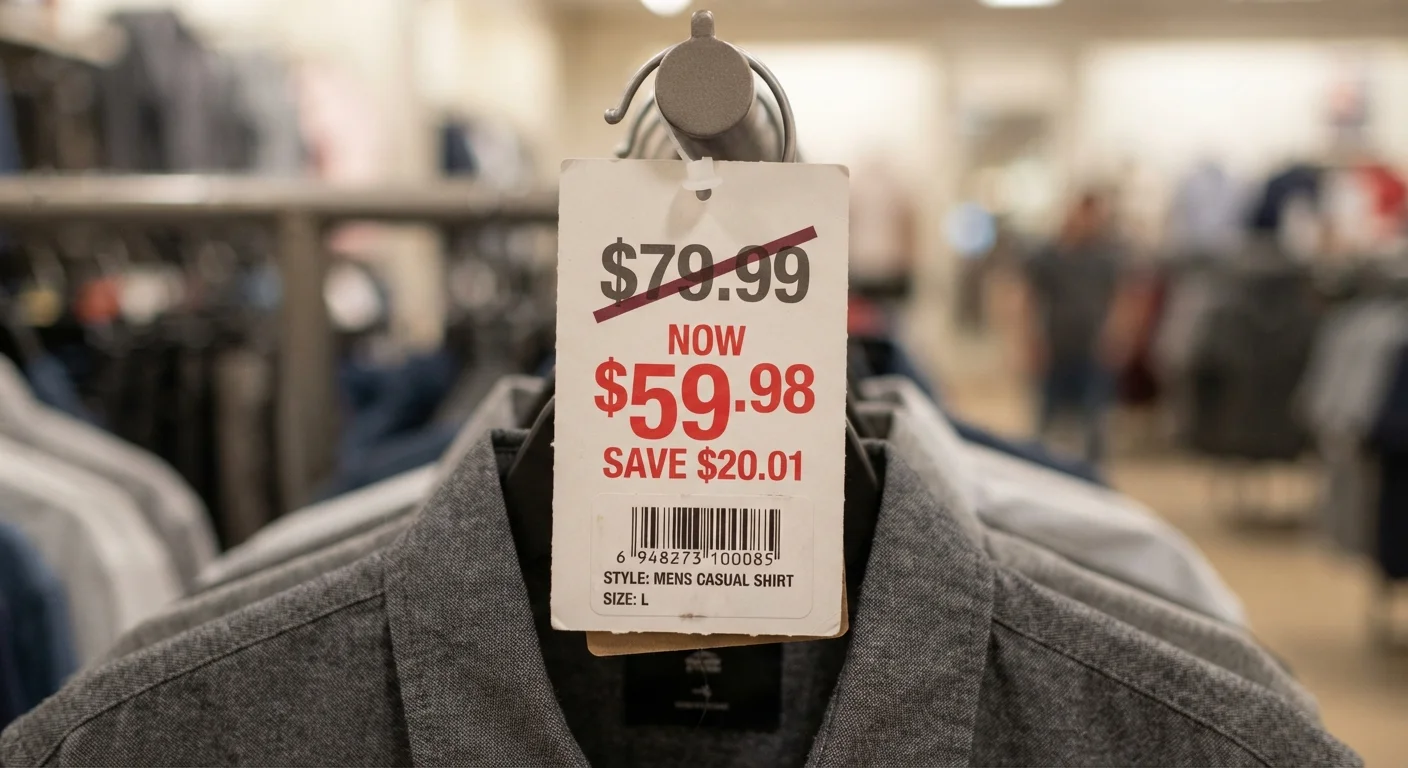
Photo: NemoFinds.com | Search, Explore, Read. editorial
Key Takeaways
- The first price you see shapes how you evaluate every price that follows.
- Crossed-out "original" prices may not reflect what anyone actually paid.
- Feeling like you're saving money is not the same as getting a good deal.
- Comparing prices across retailers resets the anchor to a more accurate number.
- Ask what the item is worth to you — before you look at any price tag.
How Anchoring Works in a Retail Setting
Walk into almost any store — or scroll through an online retailer — and you'll see the same pattern: a number in gray, struck through, sitting above a bolder, lower number in red. That visual design isn't accidental. It's engineered to trigger the anchoring effect before you've had a chance to think.
Here's the mechanism: when your brain encounters any numerical comparison, it doesn't evaluate figures in isolation. It processes them relative to each other. The crossed-out price becomes the reference point, and the sale price is judged against it — not against competing products, your budget, or the item's actual market value. The result is that a $60 item marked down from $120 can feel like a better purchase than a $50 item with no listed original price, even though the second item costs less.
This isn't a weakness unique to impulsive shoppers. Anchoring affects trained negotiators, experienced buyers, and financial professionals. The bias operates largely below conscious awareness, which is precisely why it's so effective.
Anchoring Isn't Unique to Prices
Are "Original" Prices Always Real?
Not always — and that's the core problem. A legitimate anchor reflects a price at which the item was genuinely offered for a meaningful period of time. But some retailers set inflated reference prices specifically to manufacture the appearance of a discount. If a product is almost never actually sold at the "original" price, the anchor is misleading rather than informative.
Regulatory bodies in the US have rules about this — the FTC's guidelines require that comparison prices reflect real prior offers — but enforcement is imperfect. As a practical matter, shoppers cannot assume every crossed-out price is accurate. This is especially relevant for categories like bedding, luggage, and furniture, where perpetual "sales" are common and the stated original price may have limited real-world history.
~$1,200
Estimated annual household spending influenced by promotional pricing
Consumer behavior researchers estimate that psychological pricing tactics, including anchor pricing, meaningfully affect a significant share of discretionary retail spending for average US households.
30–40%
Portion of retail "original" prices that may be inflated reference prices
Consumer advocacy analyses and investigative retail reporting have found that a substantial minority of crossed-out prices in major retail categories do not reflect prices at which goods were consistently sold.
Understanding this is part of a broader set of shopping smarts. For instance, sale and clearance tags signal very different things, and recognizing those differences gives you better context for evaluating any marked-down price.
Practical Ways to Reset the Anchor
The most effective countermeasure is to deliberately introduce a competing reference point before the retailer's anchor takes hold.
Set Your Own Price Ceiling First
- Research the price before you shop. Looking up typical prices for an item — across multiple retailers, or using a price-history tool — gives your brain a more accurate anchor to work with.
- Ask what you'd pay if there were no original price shown. Strip away the comparison mentally. Is $60 a reasonable amount for this item, independently of what it used to cost?
- Check unit pricing. Anchors can distort perception even at the unit level. Unit pricing — the cost per ounce, count, or measure — cuts through misleading package pricing and gives you a cleaner comparison.
- Notice perpetual sales. If an item is always on sale, the "original" price is the anchor, not the reality. Several widely held shopping beliefs don't hold up under scrutiny — the assumption that a sale price is inherently a good price is one of them.
Anchoring is also compounded by other pricing tactics. Retailers sometimes pair it with shrinkflation — reducing product quantity without changing the price — making it worth checking whether you're comparing equivalent amounts. Shrinkflation can make a "good deal" look better than it is when unit quantities have quietly changed.
What Anchoring Tells Us About Smart Shopping
The anchoring effect is a reminder that feeling like you're saving money and actually saving money are two different things. Retailers are skilled at creating the sensation of value without necessarily delivering it. That's not a moral failing on their part — it's a predictable outcome of operating in a competitive retail environment where perception drives purchasing decisions.
The practical response isn't cynicism; it's a modest shift in how you orient yourself before evaluating any price. Ground your judgment in external data — price history, competing offers, your own valuation of the item — rather than in whatever number a retailer has chosen to cross out. Combined with understanding mechanics like price matching and discount stacking, this approach keeps your decision-making anchored to reality rather than to a retailer's framing.
“The anchoring effect is one of the most robust findings in the psychology of judgment. People are influenced by a reference number even when they know it is arbitrary.”
— Daniel Kahneman, Nobel laureate in Economic Sciences; author of research on cognitive biases and decision-making
Frequently Asked Questions
The content on this site is for informational purposes only and is not a substitute for professional advice. Always consult a qualified professional for guidance specific to your situation.