
Natural Hair Care: Understanding Curl Patterns, Shrinkage, and Moisture Retention

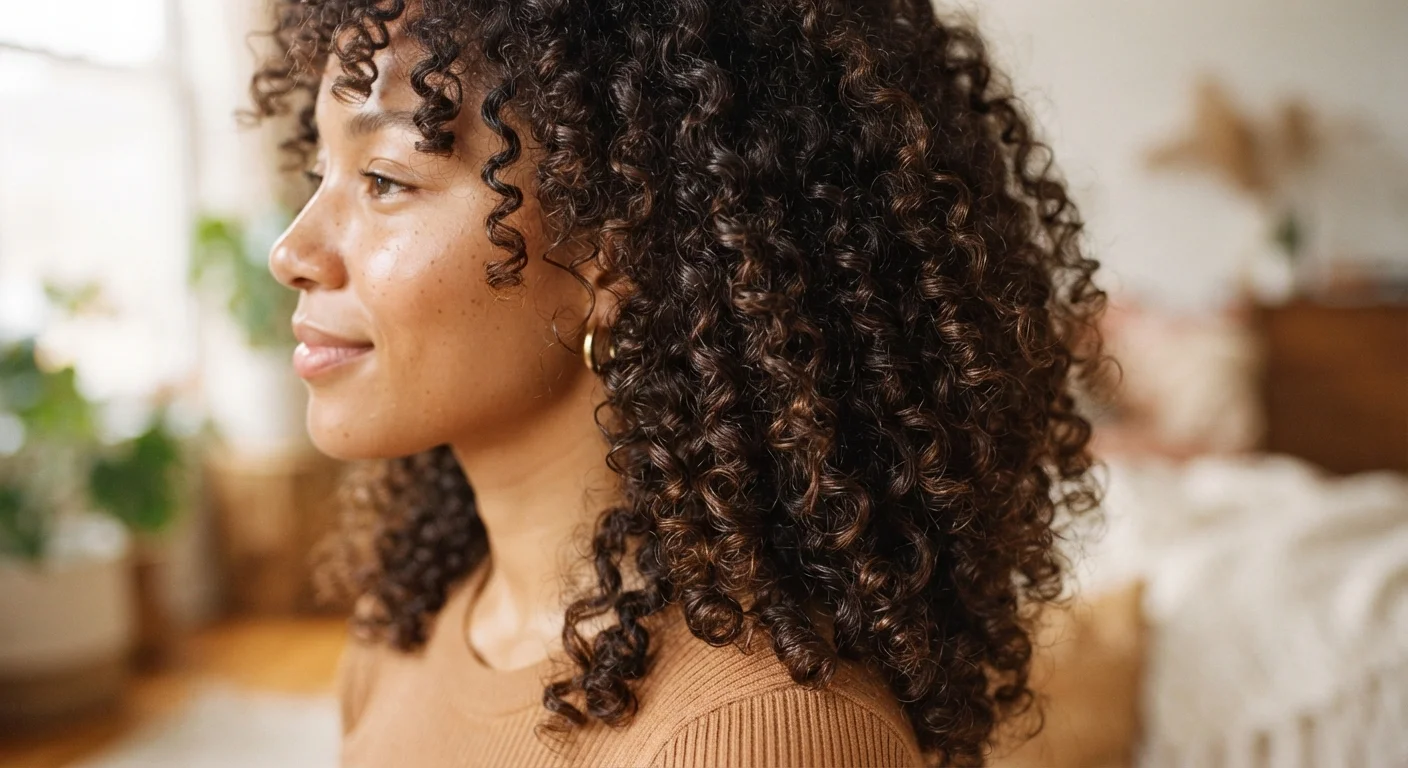
Photo: NemoFinds.com | Search, Explore, Read. editorial
Key Takeaways
- Curl typing is a starting point, not a complete picture — porosity and density matter just as much.
- Shrinkage is a sign of healthy elasticity, not a problem that needs fixing.
- Natural hair is structurally drier than straight hair; moisture retention requires consistent effort.
- The LOC or LCO method (liquid, oil, cream) helps seal moisture into the strand effectively.
- Scalp health and strand health are connected — a balanced scalp supports stronger hair growth.
What Curl Typing Actually Tells You
You've probably seen the curl typing system that runs from Type 1 (straight) through Type 4 (coily), with letter subcategories like 3A, 3C, or 4B. It's a useful shorthand, but it only describes the shape of your curl — not how your hair behaves.
Two people with 4C hair can have entirely different moisture needs depending on their strand thickness (fine vs. coarse), hair density (how many strands per square inch), and — perhaps most importantly — their hair's porosity. Porosity refers to how readily your strands absorb and hold water. If you want to go deep on that topic, the porosity guide covers how to assess yours and why it shapes everything from wash-day timing to product choice.
Use curl typing as an entry point, not a rulebook. Pay attention to how your own hair behaves after wash day — does it feel dry within hours? Does it tangle easily when wet? Those observations are more actionable than any number-letter label.
Before committing to any new product, do a strand test: apply it to a small section and observe how your hair looks and feels after drying. This saves you from full-head disappointment.
Detangle your hair in sections using a wide-tooth comb or your fingers — always starting from the ends and working toward the roots. Never start at the root.
Shrinkage: Why It Happens and What It Means
Shrinkage is the dramatic reduction in length that happens when natural hair dries. Coily hair can shrink anywhere from 50% to over 75% of its stretched length — meaning hair that stretches to 8 inches may appear as only 2 inches when fully dry. This surprises many people who are new to wearing their hair naturally.
Shrinkage happens because the curl coils back on itself as water evaporates. It's actually a sign of good elasticity — hair that springs back vigorously is hair with intact protein bonds. Hair that doesn't spring back (or that breaks when stretched) may be a sign of damage or over-processing.
Stretching Methods and Heat: Know the Risk
That said, extreme shrinkage can make it harder to detangle and to see your hair's actual length. If you want to temporarily reduce shrinkage for styling, stretching methods like banding, African threading, or tension blow-drying on low heat can elongate the curl without permanently altering its pattern. For a breakdown of how heat affects curl pattern over time, the air drying vs. blow drying comparison is worth reading before you reach for the heat tools.
Moisture Retention: The Core Challenge of Natural Hair
Natural hair — particularly coily and tightly curled types — is structurally prone to dryness. The tight curl pattern makes it physically harder for the scalp's natural oils (sebum) to travel down each strand, which means the ends are often the first to dry out and the last to receive nourishment.
50–75%+
Typical shrinkage range for coily hair textures
Hair scientists and trichologists generally cite this range for 4-type curl patterns when hair transitions from wet to fully dry.
~1/2 inch
Average monthly hair growth rate
The American Academy of Dermatology notes that scalp hair grows roughly half an inch per month on average, regardless of texture.
This is why moisture retention is the central conversation in natural hair care. It's not just about adding water — it's about keeping it in. Water alone evaporates quickly; the goal is to layer products in a sequence that traps moisture inside the cuticle.
Understanding ingredient labels can help you identify which formulas are genuinely hydrating versus which are mostly marketing. Look for humectants (ingredients that draw water into the strand, like glycerin or aloe vera) and emollients (ingredients that smooth the cuticle and reduce moisture loss, like shea butter or plant-based oils).
Don't overlook the foundation: a clean, balanced scalp is essential for healthy growth. The Scalp Health 101 guide can help you assess your own scalp and catch issues before they affect your strands.
Building a Moisture-First Routine
The most widely used framework for locking moisture into natural hair is called the LOC method — standing for Liquid, Oil, Cream — or its variation, the LCO method (Liquid, Cream, Oil). The idea is to layer products in a specific sequence so each one seals in what came before it.
- Liquid: Water or a water-based leave-in conditioner applied to damp hair opens the door for moisture absorption.
- Oil: A lightweight oil (like jojoba or argan) helps fill gaps in the cuticle and slows water evaporation. In the LCO sequence, oil goes on last to seal everything in.
- Cream: A moisturizing cream or butter adds slip, reduces frizz, and provides a final layer of protection.
Which sequence works better — LOC or LCO — varies by hair porosity and density, so it's worth experimenting on wash day. Detangling is generally easiest when hair is wet and product-coated; working in sections from ends to roots reduces breakage significantly.
For deeper hydration between wash days, a deep conditioner or hair mask used once or twice a month can help replenish moisture. These are not the same as a rinse-out conditioner — each serves a different function. If you rely on protective styles like braids or twists, maintaining moisture underneath them is equally important.
Moisturize on Wash Day, Not After
Common Mistakes and How to Avoid Them
Even with the best intentions, a few habits can quietly undermine a natural hair routine. Here are the ones that come up most often:
- Skipping the pre-poo step
- Applying a light oil or conditioner before shampooing (called a pre-poo) helps reduce the harsh stripping effect of cleansing on dry, coily hair. It's optional but often worth it.
- Over-washing or under-washing
- Washing too frequently strips natural oils; not washing often enough allows buildup that blocks moisture. Most natural hair textures do well with once-a-week to once-every-two-weeks washing, but your scalp's needs should guide you.
- Applying products to dry hair
- Natural hair absorbs product most effectively when wet or damp. Applying creams and oils to fully dry hair often results in a surface coat rather than real absorption.
- Ignoring the ends
- The oldest parts of your hair are the ends — they need the most moisture and are the least protected. Focus extra product there during every wash day.
For a broader view of how different textures call for different approaches, the grooming habits guide across hair textures offers a helpful side-by-side reference. Natural hair care is genuinely personal — what works for one curl type or household may not work for another, and that's completely normal.
This article is for general informational purposes only. It does not constitute professional cosmetology or medical advice. If you are experiencing significant hair loss, scalp irritation, or other concerns, consult a licensed dermatologist or trichologist.
The content on this site is for informational purposes only and is not a substitute for professional advice. Always consult a qualified professional for guidance specific to your situation.