
Protective Styles: What They Do for Hair Health and What They Don't

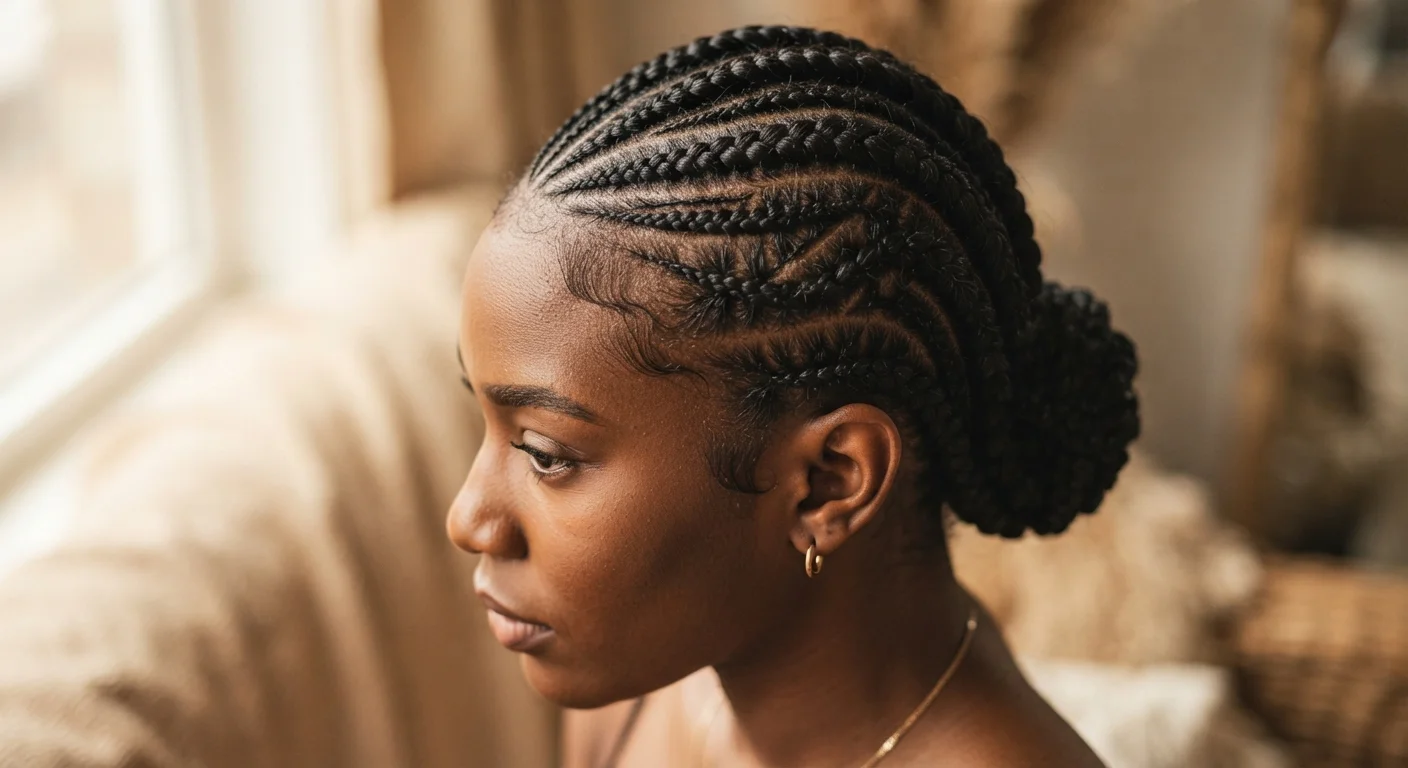
Photo: NemoFinds.com | Search, Explore, Read. editorial
Key Takeaways
- Protective styles reduce daily manipulation, which is a leading cause of breakage for many hair types.
- Tension at the hairline and scalp is a real risk — tightness is never a sign of a style done well.
- Moisture still needs to reach the scalp and strands while hair is tucked away.
- Protective styles work best as part of a consistent routine, not a substitute for one.
- Any style that causes pain, flaking, or thinning at the edges should come out immediately.
Reduces daily mechanical manipulation and breakage
Every time you comb, brush, or style hair, there's friction. Protective styles dramatically cut down on that exposure, which is particularly beneficial for fragile or textured hair that's prone to tangling.
Helps retain length over time
By keeping ends tucked and protected, hair that would otherwise break off mid-strand has a better chance of staying intact, which contributes to visible length retention over weeks and months.
Saves time in daily styling routines
Once a protective style is installed, the daily time investment drops significantly — a meaningful benefit for anyone with a demanding schedule or a low-manipulation hair care goal.
Shields hair from environmental stressors
Sun exposure, dry air, and friction from clothing or pillowcases can all degrade the hair cuticle over time. Tucked styles offer a physical buffer against these everyday aggressors.
Excessive tension can cause traction alopecia
Styles installed too tightly put chronic stress on hair follicles, particularly around the edges and nape. Over time, this can lead to thinning or even permanent follicle damage if the pattern is repeated.
Scalp hygiene is harder to maintain
With hair braided or twisted close to the scalp, thoroughly cleansing and treating the scalp becomes more difficult. Product buildup and dryness can accumulate unnoticed beneath the style.
Leaving styles in too long causes matting
New growth interweaves with the installed style over time. Exceeding the recommended wear period can make takedown extremely difficult and result in significant breakage or even the need to cut matted sections.
Extensions add weight that strains follicles
Heavier extension hair — especially in styles like box braids or faux locs — increases the load on each follicle. Lightweight options and proper sectioning can reduce this risk, but it's rarely eliminated entirely.
Hair still needs active moisture care
A common misconception is that protective styles are maintenance-free. In reality, scalp oiling and light moisturizing throughout the wear period are essential to prevent dryness and brittleness.
What Counts as a Protective Style?
Protective styles are any hairstyle that tucks away the ends of your hair — the oldest and most fragile part of each strand — and minimizes how often you're combing, brushing, or otherwise handling your hair. Common examples include braids (cornrows and box braids), twists, locs, buns, updos, and styles with extensions like faux locs or crochet hair.
They're especially popular among people with coily and curly textures, but protective styling applies across hair types. A low bun for straight hair, a twisted updo for wavy hair, or a set of box braids for coily hair all share the same core purpose: reducing the friction and tension that accumulates with daily styling. For a deeper look at how texture influences your approach, see grooming habits across hair textures.
The Real Benefits of Protective Styling
When done thoughtfully, protective styles offer several meaningful advantages for hair health.
Reduces daily mechanical manipulation and breakage
Every time you comb, brush, or style hair, there's friction. Protective styles dramatically cut down on that exposure, which is particularly beneficial for fragile or textured hair that's prone to tangling.
Helps retain length over time
By keeping ends tucked and protected, hair that would otherwise break off mid-strand has a better chance of staying intact, which contributes to visible length retention over weeks and months.
Saves time in daily styling routines
Once a protective style is installed, the daily time investment drops significantly — a meaningful benefit for anyone with a demanding schedule or a low-manipulation hair care goal.
Shields hair from environmental stressors
Sun exposure, dry air, and friction from clothing or pillowcases can all degrade the hair cuticle over time. Tucked styles offer a physical buffer against these everyday aggressors.
Length retention is probably the most cited benefit — and it holds up. Because the ends are tucked and hair isn't being manipulated daily, there's less opportunity for split ends, tangling, or breakage to accumulate. This doesn't mean hair grows faster; it means less of what grows gets lost. If you've been comparing protective styling to other low-manipulation approaches like heat-free methods, protective styles consistently come out ahead on minimizing mechanical stress.
The Risks You Shouldn't Overlook
Protective styles come with a significant asterisk. The same features that make them protective can backfire when the style is too tight, left in too long, or installed on a scalp that needs attention.
Excessive tension can cause traction alopecia
Styles installed too tightly put chronic stress on hair follicles, particularly around the edges and nape. Over time, this can lead to thinning or even permanent follicle damage if the pattern is repeated.
Scalp hygiene is harder to maintain
With hair braided or twisted close to the scalp, thoroughly cleansing and treating the scalp becomes more difficult. Product buildup and dryness can accumulate unnoticed beneath the style.
Leaving styles in too long causes matting
New growth interweaves with the installed style over time. Exceeding the recommended wear period can make takedown extremely difficult and result in significant breakage or even the need to cut matted sections.
Extensions add weight that strains follicles
Heavier extension hair — especially in styles like box braids or faux locs — increases the load on each follicle. Lightweight options and proper sectioning can reduce this risk, but it's rarely eliminated entirely.
Hair still needs active moisture care
A common misconception is that protective styles are maintenance-free. In reality, scalp oiling and light moisturizing throughout the wear period are essential to prevent dryness and brittleness.
Traction alopecia — hair loss caused by prolonged tension on the follicle — is one of the most serious risks. It most commonly affects the edges and hairline, and repeated tension over time can lead to permanent follicle damage. A tight style that causes pain at installation is a warning sign, not a minor inconvenience. Scalp health also matters enormously here; understanding your scalp baseline before installing a style helps you catch early signs of irritation or buildup.
Pain Is Always a Signal to Act
What Protective Styles Don't Do
It's worth naming a few common misconceptions directly. Protective styles do not make hair grow faster — growth rate is determined by genetics and overall health, not styling. They also don't eliminate the need for moisture. Hair still needs hydration while it's braided or tucked; a dry, neglected scalp under a style can lead to flaking, itching, and weakened strands. Deep conditioning before installation primes strands for the weeks ahead, and light oil or moisturizer applied to the scalp during the style helps maintain balance.
Finally, protective styles aren't a reset button. If your hair is already significantly damaged or broken, a protective style can prevent further loss — but it won't repair existing damage. For that, consistent conditioning and gentle handling over time are what actually move the needle.
~33%
Estimated prevalence of traction alopecia in high-risk groups
Research published in dermatology literature estimates traction alopecia affects roughly one-third of individuals in populations with frequent use of tight hairstyles, making it one of the most preventable forms of hair loss.
4–8 weeks
General recommended wear time for most protective styles
Hair care professionals broadly suggest this range as a guideline, though individual factors like hair growth rate, style type, and scalp condition all influence the right duration for each person.
Getting the Most Out of Your Protective Style
A few practical principles make a meaningful difference in outcomes:
- Start with clean, moisturized hair. Installing a style on buildup or dry strands creates problems the style can't fix.
- Don't keep it in too long. Most stylists suggest four to eight weeks as a general range, though this varies by style and hair type. Longer than that, and new growth can mat and tangle with the style, making removal damaging.
- Remove gently. Rushing takedown causes more breakage than almost anything else. Work in sections, use a detangling product, and take your time. Follow removal with a thorough wash and a moisture-first routine to restore what the style period may have depleted.
- Give your hair a break between styles. Back-to-back protective styles without recovery time can compound tension and dryness rather than prevent them.
The content on this site is for informational purposes only and is not a substitute for professional advice. Always consult a qualified professional for guidance specific to your situation.