
Warning Lights on Your Dashboard and What They're Actually Telling You

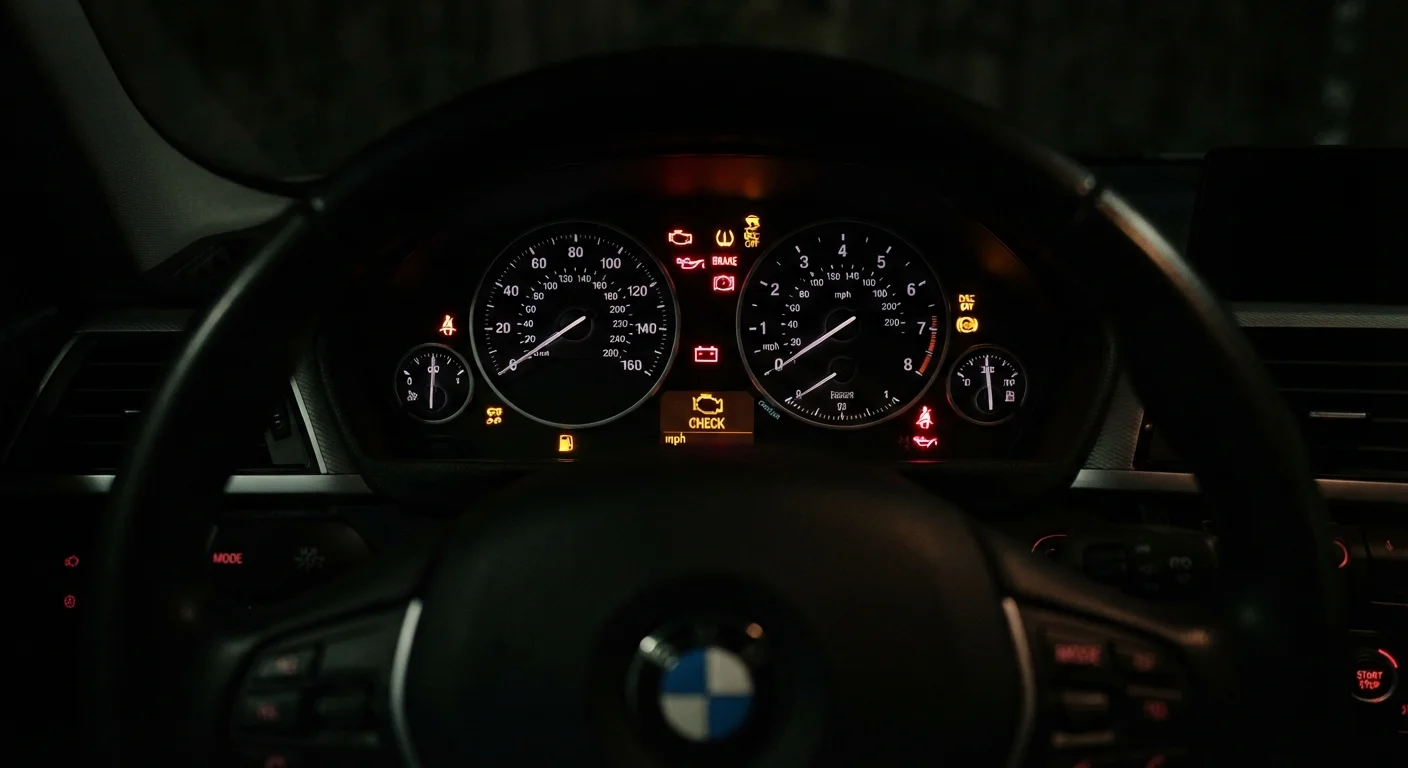
Photo: NemoFinds.com | Search, Explore, Read. editorial
How Dashboard Warning Lights Work
Modern vehicles use an OBD system to continuously monitor dozens of sensors across your engine, transmission, brakes, and emissions systems. When a sensor detects a value outside normal parameters, it triggers a warning light on your instrument cluster. Think of these lights as your car's way of flagging a problem before it becomes a breakdown.
Warning lights generally fall into three urgency tiers:
- Red lights — Require immediate attention. Stop driving as soon as it is safe to do so.
- Amber/yellow lights — Indicate a developing issue. Schedule service soon but driving short distances is often acceptable.
- Green or blue lights — Informational only (e.g., high beams active, turn signal on). No action required.
Color alone is your first decision-making tool. Pairing color with the specific symbol narrows down exactly what your vehicle needs.
| OBD-II Standard Adopted | Required in all US cars from 1996 onward (U.S. Environmental Protection Agency) |
| Number of Possible DTC Codes | Over 5,000 standardized codes (SAE International OBD-II standards) |
| Most Common Warning Light | Check Engine Light (Automotive industry surveys, various years) |
| Recommended Action for Red Lights | Stop driving as soon as safely possible (General manufacturer guidance) |
| TPMS Mandatory In | All new US passenger vehicles since 2008 (NHTSA TPMS final rule) |
The Most Common Warning Lights, Decoded
Below are the warning lights drivers encounter most often, what triggers them, and how urgently you should respond.
Check Engine Light (Amber)
This is the most misunderstood light on any dashboard. It can signal something as minor as a loose gas cap or as serious as a failing catalytic converter. A steady amber light means schedule a diagnostic scan soon. A flashing check engine light indicates an active engine misfire that can damage the catalytic converter — reduce speed and seek service immediately. A mechanic will retrieve the stored diagnostic trouble code (DTC) to pinpoint the cause.
Oil Pressure Warning (Red)
If this light comes on while driving, pull over safely and turn off the engine promptly. Low oil pressure can cause severe and rapid engine damage. Check your oil level using the dipstick; if levels are adequate, the issue may be a failing oil pump or a sensor fault. Either way, do not continue driving until the cause is confirmed. See our guide to checking fluid levels for step-by-step dipstick instructions.
Temperature Warning (Red)
An overheating engine can warp cylinder heads and cause catastrophic damage within minutes. Turn off the air conditioning, pull over, and let the engine cool before opening the hood. Never open a hot radiator cap. Low coolant, a faulty thermostat, or a failing water pump are common culprits.
Battery / Charging System (Red)
This light indicates the battery is not being charged while the vehicle is running — typically a failing alternator, a worn serpentine belt, or a weak battery. Your car may continue running briefly on battery reserve, but electrical systems will begin shutting down. Drive directly to a service location. Learn more about signs your battery is nearing the end of its life.
Brake Warning Light (Red)
This light has two common triggers: the parking brake is engaged, or brake fluid is low. If you've released the parking brake and the light remains on, check fluid levels immediately. Persistent brake warning lights — especially paired with a soft pedal or pulling — warrant same-day inspection. Our article on what brake symptoms signal covers the warning signs in detail.
Tire Pressure Monitoring System — TPMS (Amber)
The TPMS light activates when one or more tires drop significantly below the manufacturer's recommended pressure (found on the driver's door jamb sticker). Check and adjust pressure at a gas station air pump. A blinking TPMS light usually indicates a sensor malfunction rather than a pressure issue.
OBD-II
On-Board Diagnostics, second generation — a standardized system built into all US vehicles from 1996 onward that monitors vehicle systems and stores fault codes when a problem is detected.
Diagnostic Trouble Code (DTC)
A standardized alphanumeric code stored by the OBD-II system when a sensor reading falls outside acceptable limits. A mechanic or scan tool reads these codes to identify the source of a warning light.
TPMS
Tire Pressure Monitoring System — sensors in each wheel that alert the driver when tire pressure drops significantly below the recommended level.
Catalytic Converter
An emissions control device in the exhaust system that converts harmful combustion byproducts into less harmful gases. Engine misfires can overheat and permanently damage it.
Serpentine Belt
A single, continuous belt that drives multiple engine accessories including the alternator, power steering pump, and air conditioning compressor. A broken serpentine belt can cause several systems to fail simultaneously.
What to Do When a Light Comes On
Your response should match the urgency level of the light:
- Stay calm. Panicking causes accidents; a warning light rarely means immediate catastrophic failure.
- Note the color and symbol. Use this article or your owner's manual to identify it.
- Red light? Find a safe place to stop. Do not ignore it or assume it will resolve itself.
- Amber light? Reduce unnecessary driving and schedule a diagnostic appointment within a few days.
- Get a scan. Many auto parts retailers offer free OBD-II diagnostic code reads. This narrows the problem before you visit a mechanic.
Keeping up with routine service intervals significantly reduces the chance of unexpected warning lights. Our maintenance schedule guide explains exactly what service intervals cover and why they matter. Adding a pre-trip safety walkthrough to your routine helps you catch developing issues before they trigger dashboard warnings.
This article provides general vehicle information for educational purposes only. Always consult a qualified mechanic for diagnosis and repair of specific vehicle issues.
The content on this site is for informational purposes only and is not a substitute for professional advice. Always consult a qualified professional for guidance specific to your situation.