
Coupon Stacking, Price Matching, and Other Discount Mechanics Worth Understanding

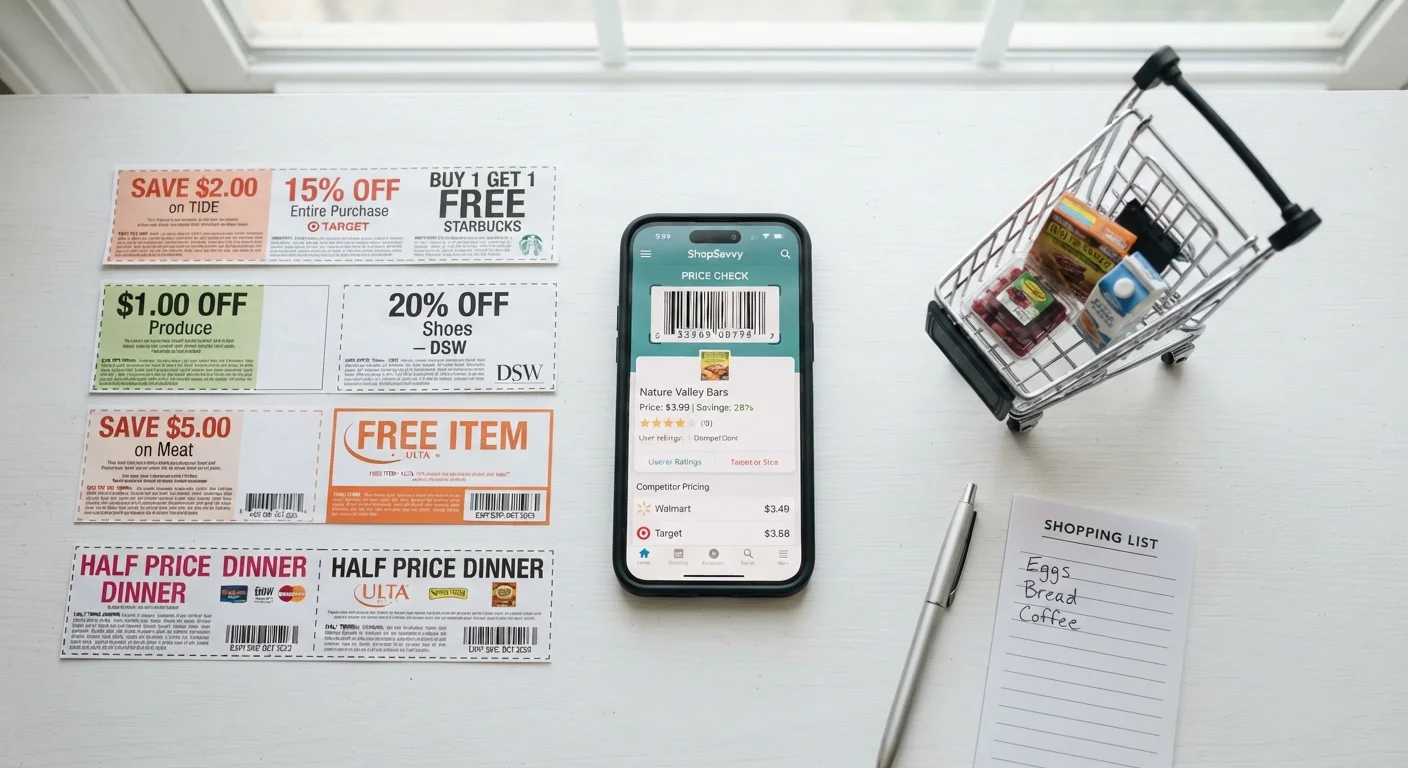
Photo: NemoFinds.com | Search, Explore, Read. editorial
What These Discount Mechanics Actually Mean
Retailers use a range of discount tools — coupons, price matches, loyalty rewards, and promotional codes — that each follow distinct rules. Knowing how they work individually is the first step; knowing how they interact (or don't) is where most shoppers run into friction.
| Coupon stacking allowed | Varies by retailer; often limited to one manufacturer + one store coupon per item |
| Online promo codes | Typically one code per transaction; multiple codes rarely stack |
| Price match: item requirement | Must be identical product (same model, color, condition) at an approved competitor |
| Post-purchase price match window | Commonly 7–14 days; varies significantly by retailer |
| Rebate risk | Discount is deferred; value only realized if claim submitted correctly and on time |
| Price match + coupon combo | Most retailers prohibit combining both on the same item |
Misreading a discount mechanic can lead to a failed checkout, a rejected price match, or a stacked deal that violates store policy. Before assuming savings, it pays to check what the retailer's current terms actually say — policies shift frequently and vary significantly between stores.
For a broader look at how pricing signals can mislead, see our piece on how anchor prices affect your judgment.
Coupon Stacking: The Rules Behind Combining Discounts
Coupon stacking refers to applying more than one coupon or discount code to a single purchase. Whether it's allowed — and to what degree — depends entirely on the retailer.
Coupon stacking
The practice of applying more than one coupon or discount code to a single item or transaction. Whether it's permitted depends on each retailer's policy and coupon type.
Manufacturer coupon
A discount issued by the product's brand, not the retailer. These are typically accepted across multiple stores and may combine with store coupons where policies allow.
Store coupon
A discount issued directly by a retailer, valid only at that retailer's locations or online store. May stack with manufacturer coupons at some retailers but not all.
Price matching
A retailer policy allowing shoppers to request the lower price a qualifying competitor is currently advertising for an identical item. Conditions such as stock availability and competitor eligibility apply.
Rebate
A partial refund offered after purchase, typically requiring the buyer to submit a claim. The discount is deferred and only realized if the claim is completed correctly and within the deadline.
Threshold promotion
A deal structured around a spending minimum, such as "spend $50, get $10 off." The discount only activates once the cart value reaches or exceeds the stated threshold.
Post-purchase price match
A retailer's policy allowing customers to claim a refund of the price difference if the same retailer lowers its own price on an item within a defined window after purchase.
A common structure at many retailers distinguishes between a manufacturer coupon (issued by the brand) and a store coupon (issued by the retailer). Some stores allow one of each on the same item because they treat them as separate discount pools. Digital codes and loyalty discounts may occupy a third category with their own stacking rules.
Common stacking limits to watch for:
- One coupon per item — Only one discount applies per individual product, regardless of how many coupons you have.
- One code per transaction — Online checkouts typically accept only one promo code per order, even if multiple codes exist.
- Exclusions on sale items — Many coupons explicitly exclude items already marked down, which is often buried in fine print.
- Loyalty point caps — Reward point redemptions may not combine with percentage-off promotions.
The clearest way to verify stacking rules is to read the coupon's terms directly and, for in-store use, check with a cashier before reaching the register. Don't assume a combination works until checkout confirms it.
Price Matching: What Qualifies and What Doesn't
Price matching is a retailer policy that allows a shopper to request the lower price a competitor is currently advertising for the same item. It's a genuine tool — but its conditions are specific and enforced.
Marketplace Sellers Usually Don't Count
Standard qualifying conditions across retailers that offer price matching:
- The competitor must be on the retailer's approved list (typically major national retailers, not marketplace sellers or auction sites).
- The item must be identical — same model number, color, size, and condition (new vs. open-box matters).
- The competitor's price must be currently in stock and verifiable, not a flash sale that has ended.
- Third-party sellers on a platform (e.g., a seller on a marketplace site) usually don't qualify — only the platform's own pricing does.
Some retailers also offer a post-purchase price match: if the price drops at their own store within a set window (often 7–14 days), you can request a refund of the difference. This is separate from competitor matching and has its own time limits. Always read the return and adjustment policy before assuming this applies.
Price matching and coupon stacking rarely combine. Most retailers prohibit applying a coupon on top of a price-matched price, and vice versa. Check the policy explicitly before counting on both.
Other Discount Mechanics Worth Knowing
Beyond coupons and price matching, a few other common discount structures operate under their own logic:
- Rebates
- You pay full price at checkout, then submit a claim (mail-in or digital) to receive a refund later. The discount is deferred and conditional on completing the submission correctly and on time. Unclaimed rebates are common — factor this in before treating a rebate price as your actual cost.
- Threshold promotions
- "Spend $50, get $10 off" deals require hitting a minimum. Adding a low-value filler item to reach the threshold can reduce net savings — run the math before adding to cart. Our article on shopping myths that lead to overpaying addresses this pattern directly.
- Loyalty points and cash back
- These function as delayed discounts — value accrues over multiple purchases, not immediately. Their usefulness depends on whether you'll actually redeem the balance. Points that expire or require large redemption minimums may deliver less value than they appear to.
- Clearance vs. sale pricing
- These tags signal different things about inventory status and return options. For a detailed breakdown, see what sale and clearance tags actually mean.
Discount mechanics work best when used with a clear sense of what you were already going to buy. A solid pre-purchase habit — like running through a pre-purchase checklist — keeps deal-chasing from substituting for genuine need.
The content on this site is for informational purposes only and is not a substitute for professional advice. Always consult a qualified professional for guidance specific to your situation.