Sale Price vs. Clearance Price: What the Tags Are Really Telling You

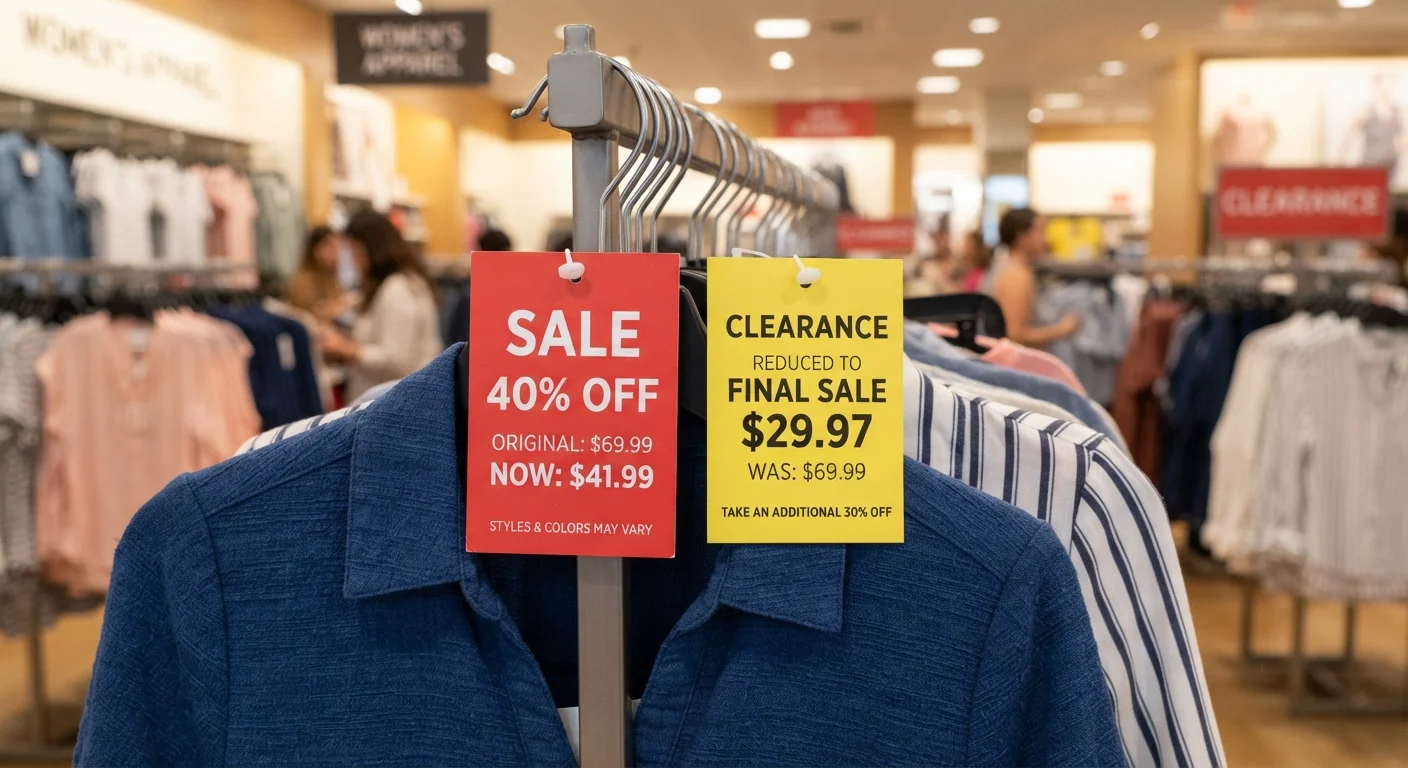
Photo: NemoFinds.com | Search, Explore, Read. editorial
Key Takeaways
- Sale prices are temporary discounts on items a retailer plans to keep selling at regular price.
- Clearance prices signal the retailer is permanently discontinuing or liquidating that item.
- Clearance items often carry stricter return policies, sometimes final sale with no refunds.
- A sale item can go back to full price; a clearance item will not be restocked once it's gone.
- Understanding which tag you're reading helps you avoid buyer's remorse and poor return outcomes.
- Neither tag guarantees the markdown is as large as it appears — the original price matters.
What 'Sale' Actually Means
A sale price is a deliberate, time-limited reduction applied to products a retailer continues to carry. Think of it as a promotional window: the item goes on sale for a defined period — a holiday weekend, a seasonal event — and then returns to its regular price. The retailer fully intends to keep selling that product afterward.
That context matters for a few practical reasons. First, sale items are generally available in full size runs, multiple colors, and standard quantities because the retailer hasn't started winding them down. Second, standard return policies almost always apply — you're buying a live, active product, not a remnant. Third, if you miss the sale, there's a good chance another one will come around.
One important caution: the size of a sale discount is only meaningful relative to the item's genuine regular price. Retailers sometimes inflate reference prices to make markdowns appear larger. Understanding how anchor pricing works helps you evaluate whether a sale is actually good value or just good optics.
| Criterion | Sale Price | Clearance Price |
|---|---|---|
| Purpose | Promotional, time-limited markdown | Inventory liquidation, permanent exit |
| Restocking | Yes — item remains in regular inventory | No — sold as-is until stock runs out |
| Typical discount depth | Moderate (10–40% common) | Steeper (30–75% common) |
| Return policy | Standard policy usually applies | Often final sale or restricted |
| Size/color availability | Usually full selection | Limited to remaining stock |
| Price after the event | Returns to regular price | Item is discontinued — no future price |
| Urgency level | Often lower — sales recur | Higher — stock is truly finite |
What 'Clearance' Actually Means
A clearance price is a liquidation signal. The retailer is telling you, in pricing language, that this item is on its way out — whether that's an older model, an end-of-season style, discontinued merchandise, or overstock that didn't move. Once it's gone, it won't be replenished.
That changes the shopping calculus significantly. Selection is limited to what's physically left — possibly only one or two sizes or colors. More importantly, clearance items frequently fall under stricter return conditions. Many retailers mark clearance as final sale, meaning no returns, no exchanges. Before you buy, it's worth reading the return policy carefully — clearance purchases are one of the most common situations where shoppers discover their item is non-refundable only after the fact.
Clearance discounts are typically steeper than standard sale discounts precisely because the goal is to clear shelf space, not to drive promotional traffic. That's a genuine advantage if you're confident in the purchase.
Online Clearance Works the Same Way
Side-by-Side: Key Differences at a Glance
The table above captures the structural differences between these two pricing types. But a few points deserve emphasis when you're standing in an aisle or scrolling a product page.
Restocking is the clearest dividing line. If a sale item sells out, a retailer will reorder it. If a clearance item sells out, that's the end. This affects urgency: with clearance, the scarcity is real. With sale, urgency is often manufactured.
Return flexibility is the second critical difference. Running through a pre-purchase checklist that includes return conditions can prevent you from committing to a clearance item you haven't fully thought through. A low price loses its appeal fast if you're stuck with something that doesn't fit or doesn't work.
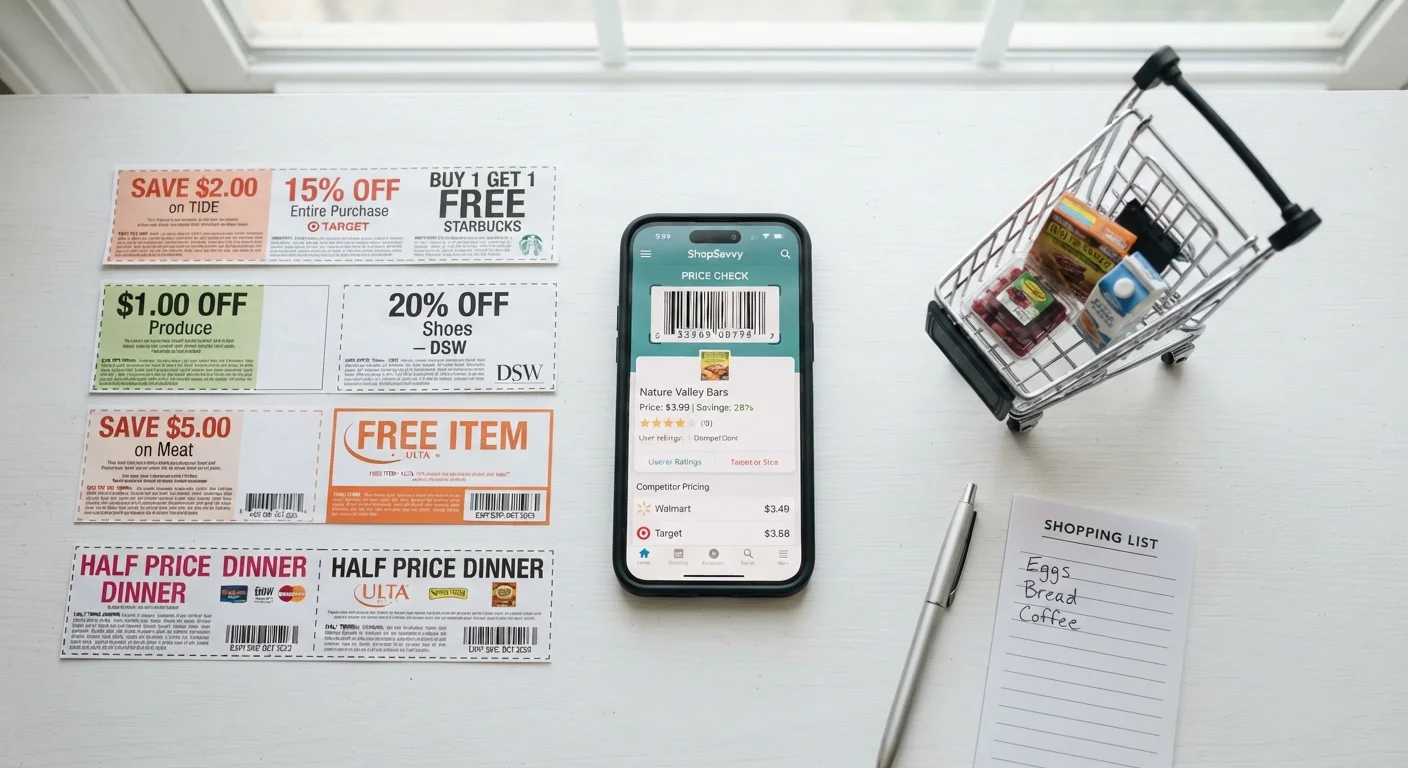
Finally, neither tag tells you whether the price is actually competitive. Unit pricing and comparative cost tools can help you verify that a marked-down price is genuinely lower than alternatives.
60%+
US shoppers who make impulse buys during sales events
Consumer research from the National Retail Federation has consistently found that promotional pricing is a leading driver of unplanned purchases among US adults.
Final Sale
Return status for many clearance items
Many major US retailers designate clearance merchandise as final sale by policy, meaning no returns or exchanges are accepted regardless of condition.
Using This Knowledge in Practice
When you see a sale tag, ask yourself whether you'd buy this item at full price in a few weeks. If not, the sale shouldn't be the reason you buy it — the item itself should be. Sale windows end, but regret from impulse purchases doesn't.
When you see a clearance tag, treat it as a final decision. Check the return policy before anything else. Confirm the size, condition, and completeness of the item (especially for electronics, which may be open-box). If there's any doubt, walk away — clearance pricing doesn't fix the wrong product.
It's also worth knowing that stacking coupons or price-matching on clearance items is frequently restricted by retailer policy, so the price you see is often the final price, with no further room for reduction.
Both tags can represent genuine value. The difference is that sale items give you more room for error — more flexibility, more availability, more recourse. Clearance items demand more confidence upfront. Know which situation you're in, and you'll make fewer decisions you regret.
The content on this site is for informational purposes only and is not a substitute for professional advice. Always consult a qualified professional for guidance specific to your situation.