Store Brands vs. Name Brands: Where the Quality Gap Is Real and Where It Isn't

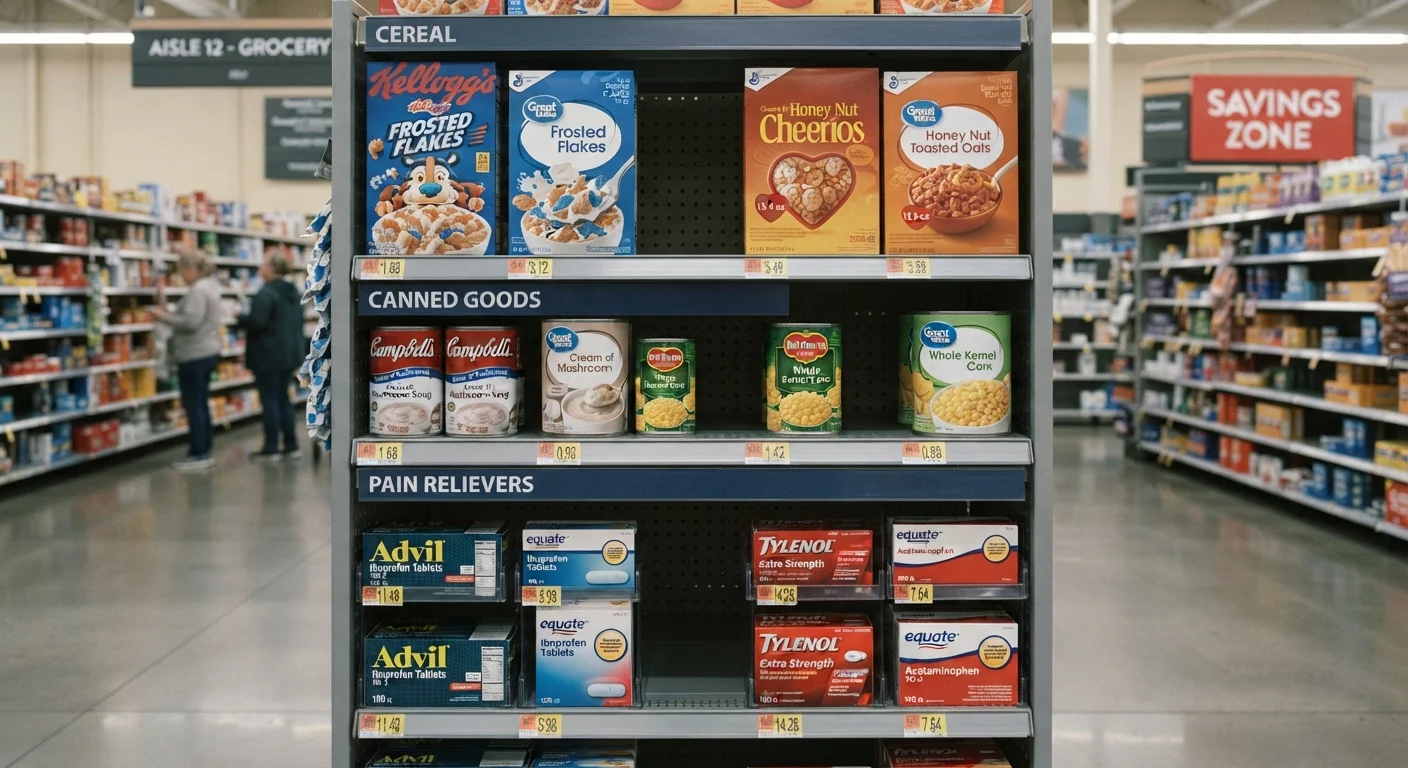
Photo: NemoFinds.com | Search, Explore, Read. editorial
Key Takeaways
- Store brands and name brands sometimes share the same manufacturer, especially in grocery and household staples.
- Quality gaps are most significant in categories where formulation, technology, or brand R&D actually drives performance.
- OTC medications with identical active ingredients are regulated to the same standard regardless of brand.
- Checking ingredient lists and unit prices — not logos — is the most reliable shopping shortcut.
- Switching selectively, not universally, is the most practical approach to store-brand shopping.
Why the Store Brand Question Is More Complicated Than It Looks
The instinct to equate price with quality runs deep, but in retail it's often misleading. Store brands — also called private-label products — are manufactured goods sold under a retailer's own label rather than a national brand's name. What many shoppers don't realize is that a significant share of private-label products come off the same production lines as their name-brand counterparts. Manufacturers frequently run store-brand contracts alongside their branded output.
That said, "sometimes identical" isn't the same as "always identical." In some product categories, name brands invest heavily in proprietary formulas, ingredients, or technology that genuinely differentiates what's in the package. The challenge is knowing which is which before you spend.
This comparison examines the categories where switching to store brands is a straightforward win, the categories where name brands still earn their premium, and the factors that help you tell the difference yourself. For a related look at how marketing language can obscure rather than clarify product quality, see our piece on decoding beauty product claims.
Where Store Brands Hold Up Just as Well
Certain product categories have little room for meaningful quality variation because the standards, formulations, or raw materials are effectively fixed.
Over-the-Counter Medications
This is the clearest case for store brands. The FDA requires that generic OTC drugs contain the same active ingredient at the same dosage as their branded equivalents. A store-brand ibuprofen tablet is held to the same standard as any nationally advertised one. The inactive ingredients — binders, coatings, flavorings — may differ slightly, which occasionally matters for people with specific sensitivities, but efficacy is regulated to parity.
Pantry Staples and Basic Grocery Items
Canned vegetables, dried pasta, flour, sugar, salt, rice, and similar commodities offer little opportunity for proprietary differentiation. These items are often produced by the same food manufacturers, and the ingredient lists are nearly identical. The exception is items where the brand's specific blend or recipe is the product — certain spice mixes or sauces, for instance, where flavor profile is the entire point.
Basic Cleaning Supplies
Dish soap, all-purpose spray cleaners, trash bags, and similar household supplies are categories where store-brand quality has substantially caught up with national brands. For most routine tasks, the functional difference is minimal.
| Store Brands | Name Brands | |
|---|---|---|
| OTC Medications | Same active ingredients, FDA-regulated parity | Higher cost, same regulated efficacy |
| Pantry Staples | Usually near-identical ingredients | Often from same manufacturer, higher margin |
| Cleaning Supplies | Adequate for most routine tasks | May offer specialized formulas or scents |
| Adhesives & Hardware | Acceptable for light-duty use | Proprietary chemistry, higher reliability |
| Batteries & Electronics | Fine for low-drain devices | More consistent in high-drain applications |
| Skincare & Personal Care | Varies; check full ingredient list | May invest in formulation R&D and stability testing |
Where Name Brands Still Earn the Premium
In some categories, the price gap reflects a real performance difference — not just packaging and marketing spend.
Adhesives and Specialty Hardware
Epoxies, heavy-duty tapes, and construction adhesives are areas where proprietary chemistry can make a genuine difference in bond strength, curing time, and durability under stress. The cost of a failure here often exceeds the savings from a cheaper product.
Electronics and Batteries
Premium batteries from established manufacturers often deliver more consistent performance in high-drain devices — things like digital cameras or smoke detectors — compared to store-brand alternatives. The gap is less pronounced in low-drain applications like TV remotes. For electronic accessories like cables and chargers, safety certifications from recognized testing organizations (look for marks like UL or ETL) matter more than the brand name itself.
Certain Personal Care and Cosmetics
Skincare and hair care can be trickier territory. Some store brands genuinely replicate the active ingredient concentrations found in name-brand products. Others cut corners on delivery systems, preservative efficacy, or stability testing. Comparing full ingredient lists — especially the active ingredients and their order of appearance — is more useful than comparing prices or labels. For a deeper look at how to evaluate product claims in this space, our guide on separating useful beauty ideas from marketing noise covers the fundamentals well.
Use the Ingredient List as Your Shortcut
How to Make the Call at the Shelf
A few practical habits cut through most of the guesswork.
- Read the ingredient list, not the front label. In food, medications, and personal care, ingredients are listed in descending order by quantity. If the lists match closely, the products are likely similar in composition.
- Check unit price, not package price. Retailers are required to display unit pricing in most states, which makes a fair comparison straightforward. This principle extends well beyond the store-brand debate — see our breakdown of when bulk buying actually saves money for more on using unit price effectively.
- Look for safety or quality certifications. For electronics accessories, cleaning products marketed as disinfectants, and some hardware, third-party certification marks signal that independent testing has occurred.
- Account for return and replacement costs. A store-brand item that fails at half the lifespan isn't actually cheaper. In categories where durability matters — tools, appliances, certain hardware — factor in likely longevity.
Smart shopping also means understanding the context in which you're buying. Whether you're in a warehouse club or a neighborhood grocery, the pricing signals around you are doing specific jobs. Our article on what sale and clearance tags are really communicating explains those signals clearly. And if you're deciding whether to shop in person or online for a specific item, the channel itself affects what information you can gather — something covered in detail in our guide to choosing the right shopping channel.
~19%
Store brand share of US grocery unit sales
Private Label Manufacturers Association data has consistently shown store brands representing roughly one in five units sold in US grocery channels.
20–30%
Typical price discount vs. name brand
Retail industry research commonly finds store brands priced 20 to 30 percent below comparable national brand products, though the range varies by category.
The content on this site is for informational purposes only and is not a substitute for professional advice. Always consult a qualified professional for guidance specific to your situation.