
Standard Homeowners Policy vs. Named-Perils Policy

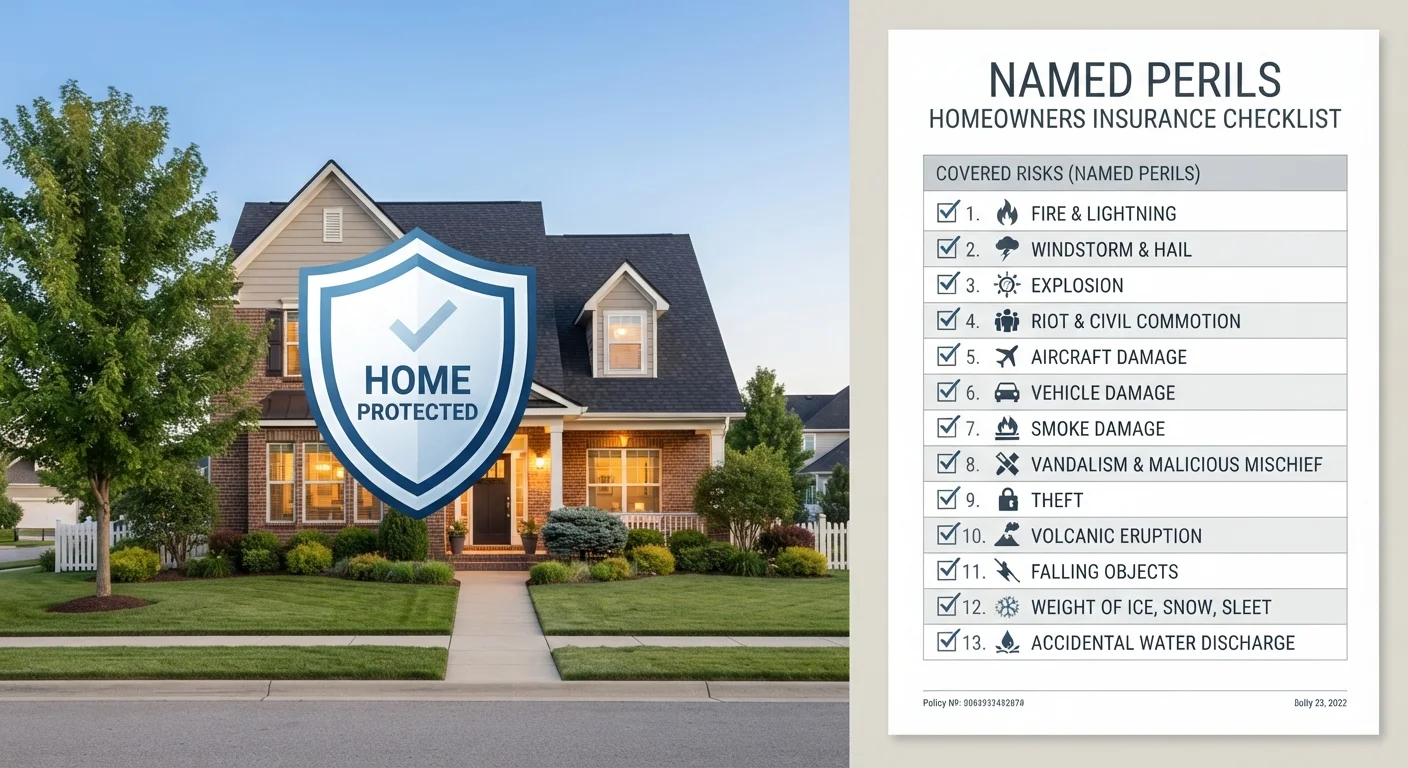
Photo: NemoFinds.com | Search, Explore, Read. editorial
Key Takeaways
- Open-perils policies cover all causes of loss except those explicitly excluded; named-perils policies cover only the causes explicitly listed.
- Most standard HO-3 homeowners policies use an open-perils approach for the dwelling and named-perils for personal property.
- Named-perils policies are generally less expensive but leave more gaps; open-perils policies offer broader default protection.
- Neither policy type covers every possible loss — floods, earthquakes, and sewer backups typically require separate coverage.
- Always read the exclusions section of any policy carefully; the coverage type alone doesn't tell the full story.
The Core Difference: Who Bears the Burden of Proof?
The most important distinction between an open-perils policy and a named-perils policy isn't a list of covered events — it's where the burden of proof sits when you file a claim.
With an open-perils policy (sometimes called an "all-risk" policy), the insurer covers any cause of loss unless that cause is specifically excluded in the policy. If a strange, unlisted event damages your home, you're generally covered. The insurer must point to an exclusion to deny the claim.
With a named-perils policy, only the causes of loss explicitly listed in the policy are covered. If a damaging event isn't on the list — even if it seems obvious that it should be — there's no coverage. The burden falls on you to show the loss was caused by a listed peril.
This structural difference has real consequences at claim time. Homeowners with open-perils coverage who experience an unusual loss often have an easier path to payment. Those with named-perils coverage may find themselves in disputes over whether the damage fits a listed category.
How These Policy Types Show Up in Common Homeowners Policies
Most homeowners policies sold in the U.S. are built around standardized Insurance Services Office (ISO) policy forms, each of which applies perils coverage differently:
- HO-1 and HO-2 (Basic and Broad Form): Named-perils policies that cover a short list of events such as fire, lightning, windstorm, hail, theft, and vandalism. HO-1 is increasingly rare; HO-2 is more common but still limited.
- HO-3 (Special Form): The most widely sold homeowners policy in the U.S. It uses open-perils coverage for the dwelling (the physical structure) but named-perils coverage for personal property inside the home. This split structure is worth understanding clearly — see how dwelling and personal property coverage differ for a closer look.
- HO-5 (Comprehensive Form): Open-perils coverage for both the dwelling and personal property. Generally the broadest standard homeowners form available.
- HO-4 and HO-6 (Renters and Condo): Named-perils forms covering personal property for renters and condo unit owners, respectively.
Knowing which form underlies your policy tells you immediately which coverage structure you're working with.
| Open-Perils (e.g., HO-3 Dwelling / HO-5) | Named-Perils (e.g., HO-2 / HO-3 Personal Property) | |
|---|---|---|
| Coverage trigger | Any cause not explicitly excluded | Only causes explicitly listed in policy |
| Burden of proof at claim | Insurer must cite an exclusion to deny | Policyholder must show loss fits a listed peril |
| Typical premium cost | Generally higher | Generally lower |
| Coverage for unusual events | Often covered if not excluded | Not covered if not listed |
| Flood and earthquake | Still excluded; separate policy needed | Still excluded; separate policy needed |
| Common policy forms | HO-3 (dwelling), HO-5 (full) | HO-1, HO-2, HO-3 (personal property), HO-4, HO-6 |
What Neither Policy Type Covers
It's tempting to assume that "open-perils" means everything is covered. It doesn't. Both policy types carry standard exclusions that apply regardless of which perils structure is used. The most consequential ones include:
- Flooding — excluded across virtually all standard homeowners policies; separate flood insurance through the National Flood Insurance Program (NFIP) or a private insurer is required.
- Earthquakes and earth movement — typically excluded; earthquake endorsements or standalone policies are available in high-risk areas.
- Sewer and drain backup — often excluded unless an endorsement is added.
- Normal wear and maintenance issues — neither policy type is a home warranty; gradual deterioration is not a covered loss.
For a full rundown of what standard policies don't cover, see what homeowners insurance doesn't cover and why it matters. These exclusions apply equally whether your policy is open-perils or named-perils — they're carved out before the perils structure even comes into play.
"All-Risk" Doesn't Mean All Losses Are Covered
Making the Right Call for Your Situation
Choosing between these coverage structures involves more than picking the lower premium. Consider a few practical questions:
- What does your mortgage lender require? Lenders typically require at minimum an HO-3 level of coverage, which means open-perils on the dwelling. Check your loan documents before assuming a named-perils policy qualifies.
- How much personal property do you own? Because HO-3 policies use named-perils for personal property, high-value items or unusual belongings may have limited coverage. An HO-5 policy or a scheduled personal property endorsement may close that gap.
- What are the specific exclusions? Two open-perils policies from different insurers can have very different exclusion lists. Don't compare policy types without comparing exclusion sections side by side.
Keep in mind that homeowners policies also include liability protection — and understanding how that component works is just as important as the perils structure. See liability coverage in home and auto policies for more on that side of your coverage.
If you encounter coverage gaps you weren't expecting, common home insurance myths explains many of the misunderstandings that leave policyholders underprotected.
Ask Your Agent About the Perils Structure
This article provides general insurance education and is not personalized insurance or legal advice. Coverage terms, exclusions, and availability vary by insurer and state. Always read your full policy documents and consult a licensed insurance agent or adviser for guidance specific to your situation.
The content on this site is for informational purposes only and is not a substitute for professional advice. Always consult a qualified professional for guidance specific to your situation.